
WRONG WAY CRASHES
Wrong-way driving crashes occur when a driver does not observe the posted traffic sign, travels the wrong direction in the lane and collides with another vehicle. Unfortunately, these crashes are all too common.
If you were involved in a wrong-way crash, you may not know what to do. A car accident attorney like RHINO Lawyers can help. With our free consultation, we can inform you of your rights under the law.
TIPS FOR AVOIDING A WRONG-WAY CRASH
These crashes are more prevalent at night, dusk, and dawn. Considering, most wrong-way crashes are head-on crashes following these safety tips from the FLHSMV could help you avoid a crash:
- Stay Right at Night. This will help you to avoid crashes with wrong-way drivers.
- Call 911 immediately. Immediately reduce your speed and pull off the roadway to report the wrong-way driver.
- Stay alert. Do not drive distracted and never drive under the influence of alcohol or drugs.
- Learn and obey all traffic signs. If you drive past a wrong way sign, turn around immediately. When you see a posted red sign, think: “Stop.” “Do Not Enter.” “Wrong-Way.”
- Look for FDOT dynamic messaging signs for wrong-way driver alerts. When you see an alert, reduce your speed, move over to the right and proceed with extreme caution.
CONTACT
RHINO Lawyers know that car accidents can happen at any time. After a car accident, you may not know what to do or who to call. Don’t struggle through the process alone. Our personal injury team is here to help you with any legal needs you might have regarding injuries from a car accident.
Let the Tampa auto accident attorneys at RHINO Lawyers answer your questions and review the facts of your case with a Free Consultation. Get started by completing the “Free Instant Case Evaluation” or by calling us any time, day or night, at 844.329.3491.
Read More
DANGERS OF SOCIAL MEDIA

Don’t Let Social Media Destroy Your Car Accident Claim
Social media has become a major part of our daily lives over the last decade. With many kids and adults using social outlets like Facebook, Instagram, and Twitter to connect with friends, family, and share stories of their life. Unfortunately, these sites can become your worst enemy if you suffer injuries from a car accident.
Incidentally, most people have the temptation to share their car accident on social media. However, this is a terrible idea. Posting pictures of your accident, your injuries, or even commenting on your condition you risk hurting your case. At RHINO Lawyers we want to help you avoid that risk.
It is important to seek legal representation quickly. The more time that passes since your accident, the more chances for losing evidence and for making these and other simple mistakes that could hurt your case. Contact our personal injury team today so we can help you protect and get the most from your injury case.
Call RHINO Lawyers at 844.329.3491 or complete the “Free Instant Case Evaluation” and we will answer your questions and review the facts of your case.
How They Use Social Media Against You
For instance, if you file a personal injury claim, the insurance company or the opposing party will likely research you on social media. Here are four ways your social media posts can damage your case:
- Accident Scene Photos – The other side can use these photos and take them out of context to weaken your claim.
- Talking about the Accident – Everything you post on social media they can use against you. Therefore, don’t mention your case at all. This includes posts about lawyer meetings, doctor’s appointments, and case frustrations. Even comments with good intentions can be construed in negative ways by the other insurance company.
- Comments from Witnesses or Friends – Posting a status update about your accident could attract comments from someone that may have seen it or the people with you. These too can be twisted and taken out of context to weaken your case.
- Posting about your Medical Condition – Avoid posting updates about your injuries while you are recovering. The defense can use this information to suggest that your injuries were not as serious as you are claiming.
Information Unrelated to your Claim Can Hurt You
Surprisingly, even posting updates that don’t reference your injury can still hurt your claim. For example, if you injured your back in a car accident and are seeking compensation for your pain and suffering, don’t post photos of your recent trip to Disney World. Even if the photos of you don’t show you doing any strenuous physical activities, they could show a picture of you smiling and laughing to a jury. And use it as proof that your injuries are not as serious as you are claiming.
Safe Practices for Social Media after an Accident Claim
So, with insurance companies, their adjusters, investigators, and defense attorneys trying to find “dirt” on a person who is making the injury claim they are handling. Social media makes for an easy source to find this information. Here are a few tips you can follow if you have a personal injury claim.
- Set account to private – setting accounts to “private” will make it more difficult for investigators to access your profiles. Use H2 privacy settings to prevent being tagged in images, or being mentioned, on any social media sites.
- Don’t post anything – Yes, we said it! Don’t post anything. However, we know that is not always possible so if you must post something DON’T post about the accident, injuries, anything related to travel, or physical activities.
- Don’t accept friend requests – Insurance agents may pose as alternate personas to access your account. Also, do not accept requests from your insurance adjuster as they have no business sending you any friend requests on social media.
Contact RHINO Lawyers
Lastly, do not use social media to discuss your car accident claim. It’s best to keep all details about the accident, injuries, and the claim progress to yourself. Remember, the less you say after an accident, the better off your claim will be.
Let the Tampa auto accident attorneys at RHINO Lawyers answer your questions and review the facts of your case with a Free Consultation. Get started by completing the “Free Instant Case Evaluation” or by calling us any time, day or night, at 844.329.3491.
Read More
DAMAGES CAN GO BEYOND PAIN & SUFFERING
If you’ve been injured in a car or truck wreck, there’s no question that pain and suffering are some of the most serious harms you may have to endure. These are the injuries that affect your quality of life and the very essence of who you are. But, many people don’t realize that damages can go way beyond pain and suffering. There are a myriad other ways a serious accident can impact their lives.
The following list, while not exhaustive or complete, is designed to give you an idea about some of the different types of damages that may be available to you (in addition to pain and suffering) if you suffer injuries as a result of someone else’s negligence in a motor vehicle wreck:
|
|
|
|
|
|
|
|
|
|
|
|
|
|
|
|
As you can see from this list, it is vitally important that you receive a comprehensive evaluation to determine the injuries and harm you’ve sustained after an accident. Your lawyer will use this information to help him or her decide what would constitute a fair and full settlement and jury verdict with respect to the injuries you have suffered.
CONTACT
RHINO Lawyers know that car accidents can happen at any time. After a car accident, you may not know what to do or who to call. Don’t struggle through the process alone. Our personal injury team is here to help you with any legal needs you might have regarding injuries from a car accident.
Let the Tampa auto accident attorneys at RHINO Lawyers answer your questions and review the facts of your case with a Free Consultation. Get started by completing the “Free Instant Case Evaluation” or by calling us any time, day or night, at 844.329.3491.
Read More
MOVING VIOLATION POINT SYSTEM
Receiving a traffic ticket is a nuisance and inconvenience. In many cases, a traffic ticket will raise your insurance rate and follow you for years. Others could cause you to lose your license or result in jail time.
Even the most common traffic violation can be damaging if you accrue too many points. Which moving violations incur points? Here is a list of common violations and the associated moving violation point system:
3 POINT VIOLATIONS
- CARELESS DRIVING
- SPEEDING
- Fail to stop at STEADY RED signal
- TRAFFIC CONTROL DEVICE Fail to obey traffic control device (sign)
4 POINT VIOLATIONS
- RECKLESS DRIVING
- Violation of 316.183(2), 316.187, or 316.189, Speed in excess of 50 MPH
- SCHOOL BUS – failure to stop for (school election available to have adjudication withheld)
6 POINT VIOLATIONS
- Leaving the scene of an accident
- Speeding resulting in an accident
- A moving violation resulting in bodily harm
Points are assigned based on the type of conviction and remain on the driver record for at least three years from the date of disposition (conviction). If a driver accumulates too many points in a set time frame, their driving privileges will be suspended.
| POINTS | SUSPENSION |
| 12 points within 12 months | 30-day suspension |
| 18 points within 18 months | Three-month suspension |
| 24 points within 36 months | One-year suspension |
While you can remove points from your driving record, tickets in Florida are not dismissed or removed by taking a BDI course (Basic Driver Improvement course). The only way you can keep a traffic ticket off your record is to prove you were not breaking the law or fight your ticket in court and win. If you’re planning to fight your ticket, you should consider hiring an attorney to represent you.
CONTACT
RHINO Lawyers can help and guide you through a system that has been molded by law enforcement, judges, and lawyers for decades. Having won cases for our clients in similar circumstances, our criminal defense team knows what it takes to fight on your behalf.
Let the Tampa traffic ticket attorneys at RHINO Lawyers answer your questions and review the facts of your case with a Free Consultation. Get started by completing the “Free Instant Case Evaluation” or by calling us any time, day or night, at 844.329.3491.
Read More
HOLIDAY ROAD SAFETY TIPS
Fall is officially upon us, which means that the holiday season is about to begin. From Halloween until the New Year, you can bet that many Americans will be traveling to celebrate the holidays with family and friends. If you plan on traveling to celebrate with family and friends, you’ll need to prepare your car for colder weather travel and for emergencies. Here are some holiday road safety tips from RHINO Lawyers to ensure that your holidays are fun-filled and safe.
Prepare Your Vehicle
Though we have some of the warmest winters. There are a few things you can do to reduce the risk of getting into a crash or needing roadside assistance while driving this holiday season. Here are some useful tips to help get you prepared:
- Make sure your car is ready. Basic maintenance is essential to maintaining the life of your vehicle. Just follow the maintenance schedule found in your owner’s manual. Because being stranded on the side of the road is not fun in any temperature.
- Check your tires. Your tires lose air faster at colder temperatures. While this is not as much of a concern for Florida residents, your tires do wear down. Check your tires’ tread and tire pressure often to make sure they don’t need rotating or replaced. If you aren’t sure about your tires, a tire shop attendant will check them for you.
- Be prepared for anything. Carry emergency supplies with you when you travel. Things like water, nutrition bars, a first-aid kit, and other emergency supplies are beneficial in case you are involved in a crash or are left stuck by a weather occurrence that causes an extensive delay.
- Don’t Drive Drowsy or Under the Influence. Driving drowsy or under the influence can affect your ability to drive, don’t get behind the wheel as you’re more at risk to cause a crash. Instead, use an option like UBER or Lyft to get you home safely.
Bad Winter Weather Driving Safety Tips
Whether you do see snow flurries this winter or you travel to a snowy destination here are a few things to make your travels safer:
- Check the weather forecast before traveling. Being caught in a blizzard by surprise or a thunderstorm is no way to spend your holiday.
- Let someone know where you’re going. Make sure to give them addresses to where you plan on staying and information about the other people that you are traveling with. Additionally, check in with your loved ones regularly so they don’t worry.
- Before heading out defrost your car. Take the time to clear the snow off your entire car and double-check that you can see out of all the windows.
- Reduce driving speed and increase your following distance. When road conditions this will ensure you have enough time to come to a safe stop.
What to Do After an Accident
Even, after all, we do to prevent an accident, it still can happen. If you find yourself in this position RHINO Lawyers recommend doing the following:
- After the accident, immediately put your emergency lights on to warn other drivers. If possible, move your car to a safe place.
- If you are not alone, check your passengers for injuries, and if needed call emergency numbers. Call the police if another vehicle has been involved or if you need further assistance.
- Exchange required insurance information with the other driver. Do not discuss the accident with the other person; wait until the police arrive.
CONTACT TAMPA AUTO ACCIDENT ATTORNEYS
If you receive a ticket or you’re in an accident this holiday season contact RHINO Lawyers. We can help and guide you through a system that has been molded by law enforcement, judges, and lawyers for decades. Having won cases for our clients in similar circumstances, our personal injury team knows what it takes to fight on your behalf.
Let the Tampa traffic ticket attorneys at RHINO Lawyers answer your questions and review the facts of your case with a Free Consultation. Get started by completing the “Free Instant Case Evaluation” or by calling us any time, day or night, at 844.329.3491.
Read More
HAPPY HALLOWEEN!
Help keep your children safe if they’re trick-or-treating this year with these great tips from Safe Kids Worldwide:
- A parent or responsible adult should always accompany young children on their neighborhood rounds of trick-or-treating.
- Obtain flashlights with fresh batteries for all children and their escorts.
- If your older children are going trick-or-treating alone, plan and review the route that is acceptable to you. Agree on a specific time when they should return home.
- Only go to homes with a porch light on and never enter a home or car for a treat.
- Because pedestrian injuries are the most common injuries to children on Halloween, remind trick-or-treaters:
- Stay in a group and communicate where they will be going.
- Remember reflective tape for costumes and trick-or-treat bags.
- Carry a cellphone for quick communication.
- Remain on well-lit streets and always use the sidewalk.
- If no sidewalk is available, walk at the far edge of the roadway facing traffic.
- Never cut across yards or use alleys.
- Only cross the street as a group in established crosswalks (as recognized by local custom). Never cross between parked cars or driveways.
- Don’t assume the right of way. Motorists may have trouble seeing trick-or-treaters. Just because one car stops, doesn’t mean others will!
- Law enforcement authorities should be notified immediately of any suspicious or unlawful activity.
Have a safe and happy Halloween.
CONTACT RHINO LAWYERS
Injured or Arrested? Our mission is to form a lasting partnership with every client. Our passion is the people we help and the lives that we help change. Don’t become just another case.
Lastly, let the personal injury team at RHINO Lawyers answer your questions and review the facts of your case with a Free Consultation. Get started by completing the “Free Instant Case Evaluation” or by calling us any time, day or night, at 844.329.3491.
Read More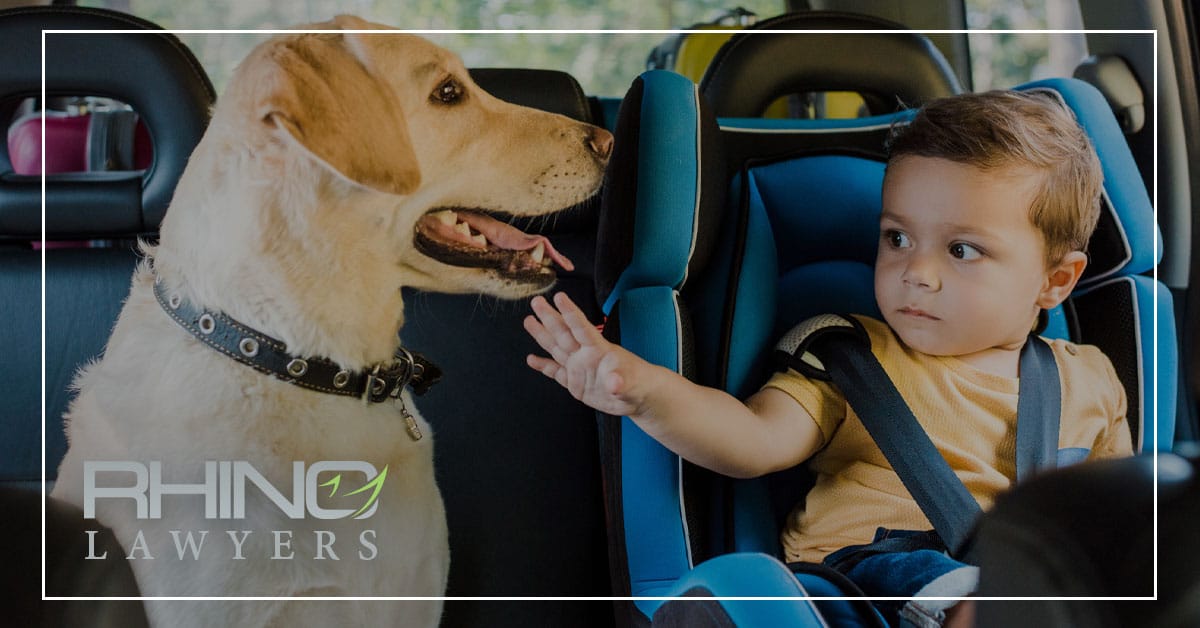
THE HEAT IS ON – SAFETY TIP
First of all, according to the National Weather Service, heat is one of the leading weather-related killers in the United States, and it results in hundreds of deaths each year. Surprisingly, excessive heat claims more lives on average each year than other seemingly more sinister weather events. Like, floods, lightning, tornadoes, and hurricanes combined. So, here is a safety tip to help keep your kids and pets safe as the temperature rises.
Safety Tip: Parked Cars, and Warm Temps – a Bad Mix
To begin with, leaving children or animals alone in parked vehicles is never a good idea, but it’s especially dangerous on warm and hot days. Thus, dozens of children die each year after being left unattended (knowingly or not) in vehicles. Yet, sometimes even it happens when they are left for just a short amount of time. Consequently, the temperature inside a vehicle – even on a warm day that’s just 80 degrees – can rise to levels well over 120 degrees in a matter of minutes, leading to heatstroke once the child’s body can not cool itself down. Furthermore, this applies to animals too. So, remember if it is unsafe for humans, then it is unsafe for animals too.
Save a life. Please call 911 immediately if you see a child or an animal left unattended in a vehicle.
CONTACT RHINO Lawyers
Injured or Arrested? Our mission is to form a lasting partnership with every client. Our passion is the people we help and the lives that we help change. So, don’t become just another case.
Lastly, let the personal injury team at RHINO Lawyers answer your questions and review the facts of your case with a Free Consultation. Get started by completing the “Free Instant Case Evaluation” or by calling us any time, day or night, at 844.329.3491.
Read More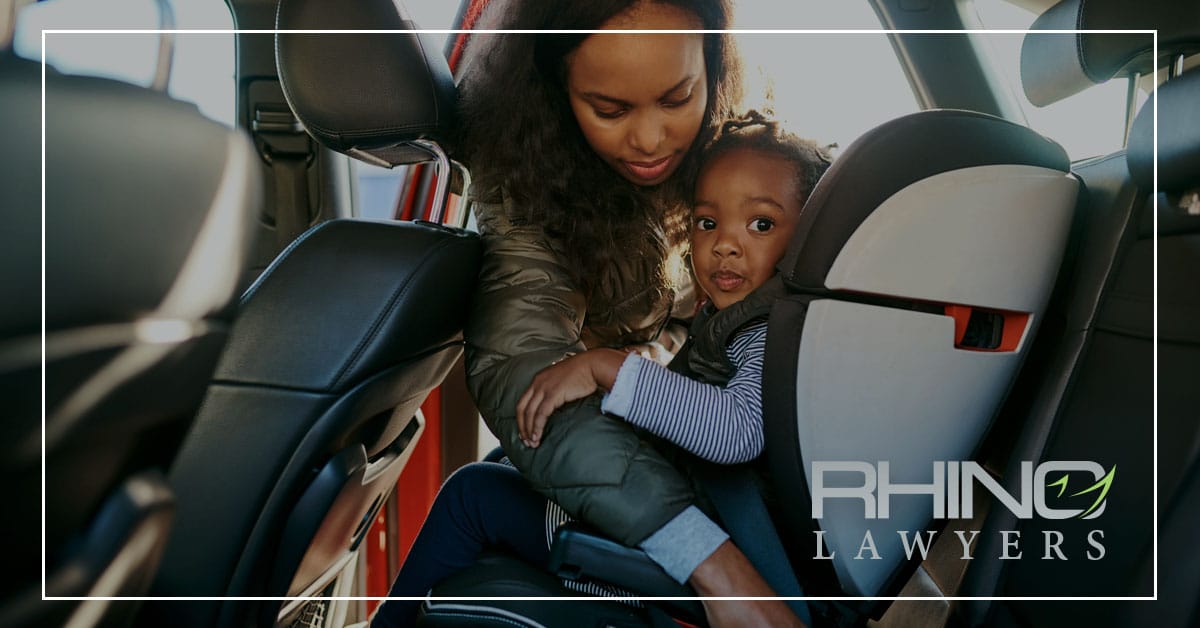
KIDS & CAR ACCIDENTS
According to the Centers for Disease Control and Prevention (CDC), nearly 150 kids between ages 0 and 19 are treated every hour in emergency departments for injuries sustained in car accidents and more children ages 5 to 19 die from crash-related injuries than from any other type of injury.
KIDS & CAR SAFETY TIPS
One of the best ways to help keep your kids safe in vehicles is to know and understand the appropriate age, height & weight limits for car seats, booster seats, and seat belt use:
- Birth up to Age 2 – For the best possible protection, infants and children should be buckled in a rear-facing car seat, in the back seat. Keep the seat rear-facing until age 2 or when they reach the upper weight or height limit of their seat.
- Age 2 up to at least Age 5 – When children outgrow their rear-facing seat they should be buckled in a forward-facing car seat, in the back seat. Use car seats until at least age 5 or when they reach the upper weight/height limit of their seat.
- Age 5 up until seat belts fit properly – When children outgrow their forward-facing seat, use a belt-positioning booster seat until seat belts fit. Seat belts fit when the lap belt lays across the upper thighs and not the stomach. Also, the shoulder belt will lay across the chest and not the neck.
- Back Seat is Safest. Buckle all children aged 12 and under in the back seat. Airbags can kill young children riding in the front seat. Never place a rear-facing car seat in front of an airbag. Buckle children in the middle of the back seat when possible, because it is the safest spot in the vehicle.
CONTACT
RHINO Lawyers know that car accidents can happen at any time. After a car accident, you may not know what to do or who to call. Don’t struggle through the process alone. Our personal injury team is here to help you with any legal needs you might have regarding injuries from a car accident.
Let the Tampa auto accident attorneys at RHINO Lawyers answer your questions and review the facts of your case with a Free Consultation. Get started by completing the “Free Instant Case Evaluation” or by calling us any time, day or night, at 844.329.3491.
Read More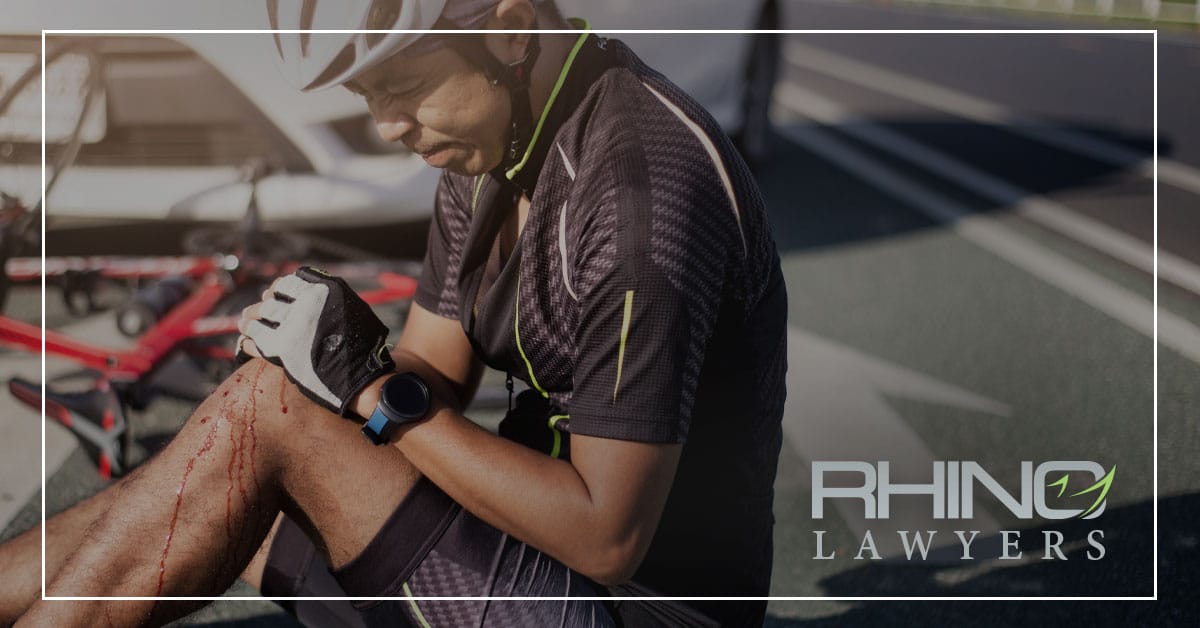
WHAT TO DO AFTER A BIKE ACCIDENT
No matter your level of experience or how careful you ride – a bicycle accident can happen. Unfortunately, these accidents can result in serious injury. It is important to know what to do if you are involved in a bike-car accident.
Being prepared will help you during this tragic event. According to Consumer Reports, there are 10 steps you should do after a bike accident. Where all are important, I believe these steps are essential for your safety and recovery:
- Get to safety. This will prevent more damage from occurring.
- Contact the police. It is important to make sure there is a police report.
- Seek medical attention. Often, injuries are not immediately apparent. Don’t wait, seek medical attention at your local emergency room or by seeing your family physician right away.
- Get your bike checked. Take your bike to a shop to have a professional assess any damages.
- Get Legal Help. Most importantly, consult with an auto accident lawyer.
PROPER SAFETY COULD PREVENT A BIKE ACCIDENT
Bicycle safety is important for both the cyclist and motorist. FLSMV (Florida Highway Safety and Motor Vehicles) states motorists must pay special attention when driving around cyclists. Here are some safety tips for everyone to follow:
Motorists
- Drivers MUST give bicyclists a minimum of three feet of clearance when driving alongside or passing them. It’s the law.
- When turning, yield to any bicyclist in the bike lane and make your turn behind the cyclist.
- Avoid using high beam headlights when you see a bicyclist approaching.
- Before opening a car door, check for bicyclists who may be approaching from behind.
Cyclist
- Always wear a properly fitted helmet and securely fasten the strap.
- Be seen. Wear bright colors when riding or wear something that reflects light (reflective shoes, reflective tape, etc.)
- Pay attention. Do not wear headphones so that you can hear the traffic and pedestrians around you. Never text and ride.
- Ride in the same direction as traffic and stay as far to the right as possible. Use bike lanes whenever you can.
- Obey all traffic laws, including signs, signals, and lane markings, when riding on the roadway. If crossing a roadway upon or along a crosswalk, abide by pedestrian crossing guidelines.
- If riding between the hours of sunset and sunrise, Florida Law requires that the front of the bike be equipped with a headlight lamp which exhibits a white light visible for 500 feet, and the rear of the bike equipped with a taillight lamp and reflector visible for 600 feet.
CONTACT
If you are a victim of a bike-car accident don’t struggle through the process alone. Our personal injury team is here to help you with any legal needs you might have regarding injuries from a bike-car accident.
Let the Tampa auto accident attorneys at RHINO Lawyers answer your questions and review the facts of your case with a Free Consultation. Get started by completing the “Free Instant Case Evaluation” or by calling us any time, day or night, at 844.329.3491.
Read More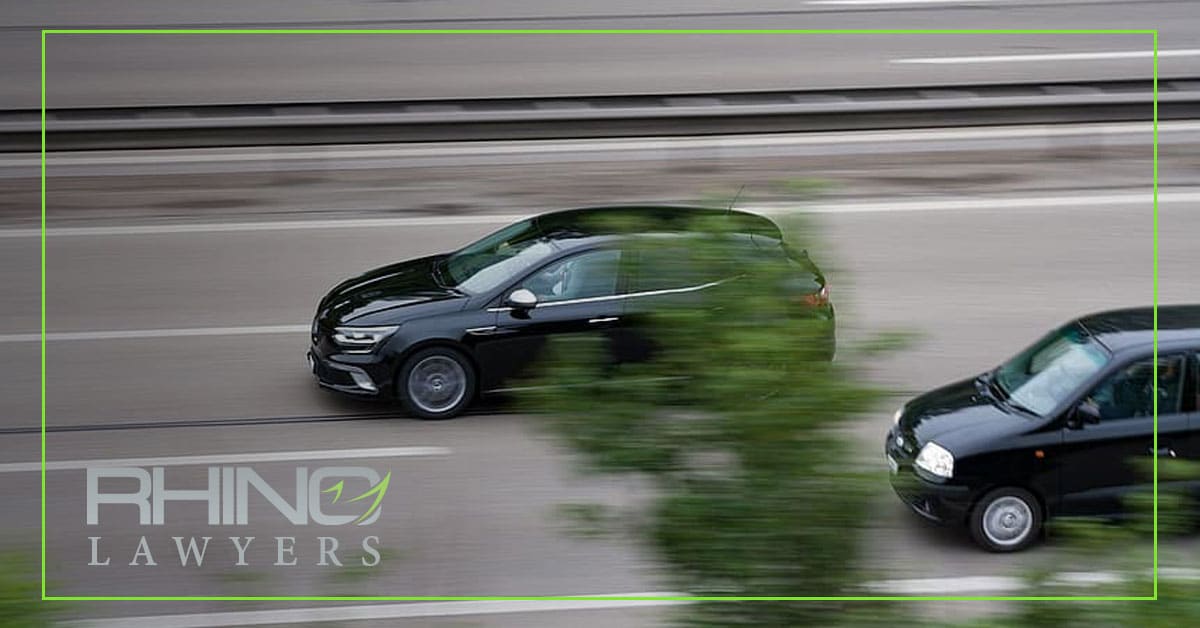
Improper Passing
From time to time, we’ve all passed other vehicles that we share the roadway with. In Tampa, and the rest of Florida, there’s a right way of passing, and three wrong ways of passing. Florida Statute 316.083 addresses each form of improper passing. If a police officer witnesses a driver making an improper passing maneuver, it’s likely the officer will cite the driver. If an officer doesn’t witness the maneuver, the driver can still expect a ticket for the offense after an accident. Here are the three ways that a driver can expect to receive an improper passing ticket:
- Passing on the Right: This usually occurs on a four-lane road when a vehicle is traveling too slowly in the left lane. Both vehicles are in violation of the law under these circumstances.
- Blind Passing: This occurs on curves or hills when passing in the oncoming traffic lane and the passing driver can’t see oncoming traffic at a safe distance.
- Dangerous Passing: This offense involves cutting another vehicle off after making a pass. At one time or another, we’ve all gotten cut off by another driver.
Improper Lane Changes
Lane change violations are contemplated by Florida Statute 316.085. To legally change lanes in Florida, a driver must first learn that the maneuver can be completed with a clear path. That includes lane changes when passing another vehicle. When passing another car complete it before coming within 200 feet of an oncoming vehicle. A violation can also occur when approached or passed by another vehicle. The driver must make a lane change in a safe and careful manner. A police officer will usually write an improper lane change ticket after an accident, but he or she can independently cite a driver if the officer saw the offense.
Penalties
Improper passing and improper lane change violations carry a fine of up to $300 plus court costs and at least three points against your license. Get points waived upon enrollment and satisfactory completion of a defensive driving course. A person can only take such a course once a year.
Contact RHINO Lawyers
There are alternative dispositions to improper passing and improper lane change charges. Don’t ignore them. Our goal is to obtain the best possible disposition of your traffic case. Contesting your ticket is the only way of approaching that. Contact the Tampa traffic ticket attorneys at RHINO Lawyers as soon as possible after being cited, and our criminal defense team let you know what we think we might be able to do for you.
Read More