
How Do I Choose a Chiropractor After an Auto Accident?
Did you know that 20 to 50 million people get injured in accidents yearly? Sadly, many of these people have lasting health problems because of their injuries. This shows how big the impact of accidents can be and why it’s crucial to stay safe and have good healthcare.
After being involved in a car accident, knowing how to find a good chiropractor is crucial to your recovery process. Car accidents can end in a range of injuries, from minor discomfort to more serious conditions.
Chiropractic care is often recommended for people who want to heal naturally and non-invasively. Let’s look at the best way of finding a chiropractor for your needs.
What Is a Chiropractor?
A chiropractor is a healthcare expert who focuses on taking care of problems with your bones and muscles, especially in your back and neck.
They use gentle techniques, such as adjusting your back, to help relieve pain and improve your health as a whole.
A chiropractor helps you heal by using manual techniques to adjust and align your spine and musculoskeletal system. They use their hands to apply controlled pressure to your spine, called spinal adjustments. These adjustments give you the following:
- Relief from pain
- Improved Mobility
- Enhanced Nervous System Function
It’s important to note that chiropractic care may not be suitable for all health conditions. It is essential to consult with a qualified chiropractor and, if necessary, other healthcare professionals to get the best treatment plan for your specific needs.
Chiropractors work closely with you to assess the following:
- Your conditions
- Provide tailored care
- Monitor your progress
They do this over a period of time to help your healing process.
Why Chiropractic Care for Car Accident Injuries?
Car accident injuries can lead to various health problems. Some of the injuries include the following:
- Mild to harsh whiplash
- Spinal misalignment
- Muscle strain
- Many more
While looking for medical attention is important, chiropractic care can play a significant role in your recovery.
How to Find a Good Chiropractor
To find a chiropractor, you should first ask for recommendations. Ask from the following for recommendations:
- People you know and trust, like friends, family
- Your primary care doctor
All the above may be able to recommend a good chiropractor. Referrals from people you know can help you find the best chiropractors in your area.
Do Some Research Online
In this digital age today, the internet is a valuable asset for finding information about chiropractors in your area. For example, the following to search for chiropractors near you:
- Use search engines
- Use healthcare directories
Look for websites that provide detailed information about the chiropractor’s qualifications, experience, and the chiropractor services they offer.
Check Their Credentials
Most important of all, ensure that the chiropractor you’re considering is licensed and board-certified. Licensing requirements may change by state. So, be sure to check the specific regulations in your area.
Board certification indicates that the chiropractor has undergone additional training and meets higher standards of care.
Take Time to Look at Testimonials and Reviews
Reading testimonials and reviews from previous patients can give you a better understanding of what to expect from a chiropractor. Look for feedback related to their expertise in treating auto accident injuries. Do not ignore reviews regarding their bedside manner.
While a few negative reviews are normal, pay attention to any patterns or recurring issues mentioned by multiple patients.
Schedule a Consultation
Before committing to a chiropractor, schedule an appointment. This first meeting allows you to discuss your specific car accident injuries.
Don’t be shy to ask questions about their approach to treatment. See how well they meet your expectations overall. A good chiropractor will make sure to listen to your concerns and will provide a personalized treatment plan.
Discuss Techniques and Methods the Chiropractor Uses
During the consultation, inquire about the chiropractor’s treatment techniques and methods. Different techniques and methods are used in chiropractic care. For example, the following:
- Spinal adjustments
- Manual therapies
- Therapeutic exercises
The best chiropractor for you will be experienced in the most effective techniques for your specific injuries.
Consider Location and Convenience
Convenience is also crucial when choosing a chiropractor. This is especially true if you’re dealing with auto accident injuries where you could have mobility issues.
Select a chiropractic clinic that is easily accessible from your home or workplace. This will make it more convenient for you to attend your appointments regularly. For your treatment to work, you need to keep up with your appointments.
Ensure the Chiropractor Accepts Your Insurance Coverage
Before committing to a specific chiropractor, check if they accept your health insurance plan. Chiropractic care is most often covered by insurance, but it’s best to confirm the details of your coverage to avoid unexpected expenses.
Check with your insurance provider or the chiropractor’s office to verify insurance acceptance and coverage details.
Can They Communicate With You Effectively?
This may seem like its unimportant. But, effective communication between you and your chiropractor is vital for your treatment’s success. The chiropractor needs to communicate in a clear and understandable manner many things to you, like the following:
- Explain your condition
- Let you know your treatment plan
- Discuss your progress
You must feel comfortable asking questions and discussing any concerns you may have.
Trust Your Instincts
At the end of the day, trust your instincts when making your decision. If something doesn’t feel right or if you don’t feel comfortable with a particular chiropractor, it’s perfectly acceptable to continue your search.
You have to feel comfortable and have confidence in your chiropractor. This is essential for your healing process.
Chiropractic Care: Your Journey to Wellness!
How to find a good chiropractor after an auto accident is a crucial step in your journey to recovery. Auto accident injuries can vary in severity, but chiropractic care often provides natural and effective relief.
Following the steps above, you can find the best chiropractor for your specific needs. You can look forward to a healthier, pain-free future with the right chiropractor and chiropractic services.
If you’ve been involved in an auto accident and need legal assistance, don’t hesitate to reach out to the experienced team at RHINO Lawyers. Contact us today to schedule a consultation and take the first step toward protecting your rights and securing the compensation you deserve.
CONTACT A TAMPA AUTO ACCIDENT ATTORNEY
In short, after a car accident, you may not know your rights. Above all, don’t struggle through the process alone. Actually, our personal injury team is here to help you with any legal needs you might have regarding your accident.
Lastly, let RHINO Lawyers answer your questions and review the facts of your case with a Free Consultation. So, get started by completing the “Free Instant Case Evaluation” or by calling us any time, day or night, at 844.RHINO.77.
Read More
Why Do I Need a Lawyer After Suffering Road Rash in a Bicycle Accident?
Did you know that bicycle trips only account for 1% of all trips in the United States? Despite that, over 130,000 cyclists get injured due to road crashes every year. Worse, these bicycle accidents claim the lives of almost 1,000 bicycle riders yearly.
So, if you’re one of the 51 million people in the U.S. who ride bikes, be careful out there. Just as crucial is to know what you must do if you ever get involved in a bicycle accident.
One such step to take is hiring a lawyer if a bicycle crash results in you suffering road rash injuries.
But why would you even need a lawyer for something seemingly as minor as a road rash? What can these legal professionals do to help you, anyway?
We’ll tell you what you need to know about such bicycle injuries and why you should hire a lawyer for help, so read on.
Obtain Fair Compensation for Your Injuries
When you hire a lawyer after a road rash-causing bike crash, they’ll help you get compensation. Part of this amount will cover your medical expenses due to your road rash. How much the injuries will cost you depends on their severity.
At the very least, road rash injuries, which are friction burns, can cause pain and swelling. Minor ones often heal within two weeks provided you clean and care for them properly.
However, severe cases take longer to heal and may require extensive medical intervention. This is because they may affect the deeper layers of the skin.
The worse the wounds are, the likelier they are to cause scarring and disfigurement. Severe injuries can also cause nerve damage. All this may result in you requiring expensive surgery.
Road rash injuries can also get infected, causing flu-like symptoms. These include body aches, chills, and fever.
In rare cases, the infection may be so severe it can cause blood poisoning. Although rare, this condition is life-threatening.
With all their potential consequences, you should never underestimate road rash injuries. Even if they seem minor, please have a doctor look at them properly.
Your lawyer will then gauge how much compensation you deserve for your injuries. They’ll add this to the other types of damage they will do their best to recover for you.
Determine Liability in the Bicycle Accident
To help you get compensation, your lawyer will look into what happened. This will involve gathering and reviewing evidence to determine liability or fault.
Suppose your accident occurred after a driver crashed into you and your bike. Your lawyer’s goal will then be to determine the driver’s fault. They will review photos, video footage, and witness testimonies.
Your attorney can prove negligence if they find proof that the other driver:
- Got distracted (e.g., using their phone) and drifted to your path
- Failed to yield the right-of-way to you, even if they had to
- Cut across your lane, which is specifically for bicycle travel
- Was operating their vehicle under the influence
- Was driving recklessly
Aside from the driver, other parties may be liable, too. An example is your bicycle’s manufacturer. They may also be at fault if a defect in their product contributed to your injuries.
In any case, your lawyer will strive to identify all parties liable for your accident. This allows them to raise your likelihood of receiving maximum compensation.
Evaluate Your Other Damages
Road rash often occurs after a fall and when one gets dragged across a surface.
Thus, people who sustain road rash may also have other injuries. For example, bicycle crash victims may develop and require care for concussions. They may also have sprains, strains, fractures, or internal organ injuries.
So, as a bike accident victim, you have every right to seek compensation for all the harm you’ve suffered. A lawyer can help since they can evaluate all your damages aside from road rash.
In addition to medical expenses, your lawyer may seek these other types of damage on your behalf.
Lost Income
Road rash and other bicycle accident injuries can prevent you from working. Even a few days of being absent from work can affect your finances.
For example, road rash injuries may cause severe pain that limits mobility. This can make you unable to perform the tasks you usually do at work.
A lawyer can help by fighting for your rights to get compensation for your lost wages. They can also help you seek damages for your lost future earning opportunities.
Pain and Suffering
Car accidents can have a significant emotional and mental toll on victims. So, imagine what a bicycle crash can do, as cyclists don’t have the “extra” protection people inside cars do.
Indeed, bicycle crash injuries, including road rash, can cause significant emotional distress. As a victim, you may have to limit your activities due to the trauma you experienced. You may also struggle with the consequences of scarring and disfigurement.
You deserve compensation for all those effects of someone else’s negligence. A lawyer can help by seeking compensation for your pain and suffering.
Give You Enough Time to Recover
Road rash can get infected without proper cleaning and disinfecting. The same can happen if they get exposed to pathogens and contaminants.
You’re at risk of such infections if you fail to let your injuries heal before going to work. Likewise, you may not recover properly due to stress and psychological trauma.
Remember: You don’t have to deal with all the consequences of a bicycle accident alone. With a lawyer, you can worry less about filing a claim or a lawsuit for compensation. That’s because your legal team will perform most of the legwork on your behalf while you rest and recover.
Get the Compensation You Deserve
A bicycle accident can cause more than road rash; it can also lead to many other injuries, such as head trauma. It can even affect your mental health, earning ability, and overall quality of life.
All that should be enough reason to seek compensation for the damages you may suffer from a bike crash. Even more so if these losses, pain, and suffering are due to someone else’s negligence.
Here at RHINO Lawyers, we can help you get the compensation you deserve. So, contact us now for your free legal consultation and advice!
CONTACT A TAMPA Bicycle ACCIDENT ATTORNEY
In short, after a bicycle accident, you may not know your rights. Above all, don’t struggle through the process alone. Actually, our personal injury team is here to help you with any legal needs you might have regarding your accident.
Lastly, let RHINO Lawyers answer your questions and review the facts of your case with a Free Consultation. So, get started by completing the “Free Instant Case Evaluation” or by calling us any time, day or night, at 844.RHINO.77.
Read More
Can a Passenger Be Charged With DUI in Florida?
Florida, we have some bad news. Our state has some of the most irresponsible drivers in the nation–we rank at #10, to be precise. As a result, Floridian car insurance is the most expensive.
One of the most tragic ways Floridian motorists can be so irresponsible is with a DUI. This threatens the lives of everyone on the road, with the best outcome being that they go to jail without causing harm. Penalties are naturally quite severe.
It begs the question: Can a passenger get a DUI, too?
Even if you are stone-cold sober and minding your own business, don’t assume you’re out of the woods. Keep reading as we discuss passenger laws and whether a passenger could be accountable.
Florida DUI Law
There’s no better way to get an answer than go to the source of Florida DUI law. The second line in the 2023 Florida Statutes makes it clear who can get a DUI. At a bare minimum, the person must meet the following two criteria:
- Be driving
- Be in physical control of the vehicle
The legal limit for BAC (blood alcohol content) for a driver is 0.08%. If they are at or above that level, then they’re going to the slammer.
That legal limit, as we have established, only applies to the driver. Right off the bat, it would appear you were in the clear, right? The passenger is absolved of the driver’s actions since they do not have control of the vehicle.
As with anything in this world, it’s never that simple.
Can a Passenger Get a DUI?
Generally speaking, if you are in the passenger seat only, you cannot get a DUI. However, this is where complexity can enter a DUI case.
Officers investigating a DUI incident will look for other charges to leverage in the process. Your friend driving might get a DUI in Florida, but you could very well go home with different charges. It’s critical that you know your rights before saying or doing the wrong thing.
Open Container Laws
Even if you don’t have a single drop of alcohol in your system, open container laws apply. This means that a container of alcohol in the vehicle has a broken seal. If that container is in your cup holder, or you’re holding it, you’ll likely get busted.
The officer may ask you to take a breathalyzer test to confirm you were drinking. Even if the container wasn’t nearby you, a breathalyzer test could suggest you were taking a sip or two. A small factor like this could lead you to become the victim of an open container penalty.
Disorderly Conduct/Intoxication
Some people cannot control themselves when under the influence. They are rude, aggressive, or say very stupid things to lawmen that get them in trouble. Their behavior may be such that they are a danger to the property of others or the public at large.
This is known as disorderly intoxication. It would get you in trouble whether or not you were in a vehicle. If the officer deems you a threat to others in your current condition, you could be spending the night in a cell.
Unlawful Possession of Alcohol
Another situation that could complicate the matter is having someone in the car who’s under the age of 21. With a drunk driver, the officer may suspect other drunk people in the vehicle, too. DUIs are a serious offense, so they will likely dig deeper by checking other passengers.
If you are under the age of 21–even as a passenger–this could end badly. You don’t even need an open container of alcohol for unlawful possession to apply. Reasonable evidence suggesting that you are in constructive or actual possession of a drink could lead to penalties.
Again, the officer may administer breathalyzer tests to more than just the driver. If you are under the age of 21 and have alcohol in your system, it could be a bad night.
Controlling the Vehicle
Remember how we said you had to be driving or “controlling” the vehicle? Turning the wheel counts, and doesn’t necessarily mean you’re in the driver’s seat.
If you lean over and grab the wheel to help a drunk driver, that counts as “controlling the vehicle.” It doesn’t matter if it was a quick correction or frequent little nudges here or there. Under the influence, you have committed a DUI.
Granted, this is a bit harder for an officer to prove. They would either need to see it or get a witness confession that someone was doing it. They may not even suspect as much unless a passenger blurted it out.
Switching Seats
This is rare, but every officer has seen it at least once. Upon being pulled over, the drunk driver quickly switches seats with a sober passenger. A quick-and-dirty fix to get out of a life-changing DUI.
Of course, this could be hard to prove. The officer would need to have seen it with their eyes or on their dash cam. They may also become suspicious if they can’t tell the people apart once they exit the vehicle.
What Do You Do in a DUI Incident as a Passenger?
Assuming none of the above is true, you are likely in the clear. That said, you never know where law enforcement could take a case. Charges may only arise later, convicting you with something when you believed you were home free.
Whether or not you think you have broken the law, call DUI lawyers to help. Legal services have dealt with cases like this many, many times. They’ve seen all the different iterations a DUI case can take on–likely including your unique circumstance.
When it comes to driving under the influence, the judicial system does not mess around. Leniency is not common, nor are second chances. Get DUI attorneys on your side to secure the best outcome.
Hire A DUI Lawyer
Can a passenger get a DUI in Florida? In a slim selection of situations, such as switching seats or grabbing the wheel, yes. In the majority of cases, though, an officer may put you up for other, related charges instead.
RHINO Lawyers provides the best legal services in the Tampa area, period. Get your free case review now.
CONTACT TAMPA TRAFFIC TICKET ATTORNEY
RHINO Lawyers can help and guide you through a system molded by law enforcement, judges, and lawyers for decades. Having won cases for our clients in similar circumstances, our criminal defense team knows what it takes to fight on your behalf.
Let RHINO Lawyers answer your questions and review the facts of your case with a Free Consultation. So, get started by completing the “Free Instant Case Evaluation” or by calling us any time, day or night, at (844) RHINO-77.
Read More
Do I Need to Wear a Helmet to Get Compensation for a Motorcycle Accident?
Unfortunately, getting into a motorcycle crash is much more dangerous than a conventional car accident. There were over 80,000 motorcycle-related injuries in 2021, and it’s not unlikely these resulted in serious injuries.
If you’re seeking accident compensation, you might be wondering if you should have been wearing a helmet during the motorcycle accident. We’ve put together a guide that outlines everything you need to know. Let’s dive in.
Do You Need a Helmet to Get Compensation?
In Florida, you can still file a claim even if you weren’t wearing a helmet. Someone 21 years of age or older can ride a motorcycle without a helmet as long as they have a motorcycle insurance policy that covers at least $10,000 worth of medical benefits.
This is essential to keep in mind so you can pursue compensation. Of course, it’s always in your best interest to wear a motorcycle helmet while riding. This could mean the difference between whether you suffer major injuries or walk away with a few scratches.
There are many different types of helmets on the market, so you shouldn’t have trouble finding one suitable for you. Choose one that’s comfortable and doesn’t obscure your vision.
Will Not Wearing A Helmet Impact My Claim?
In most cases, no. The fact that you weren’t wearing a helmet doesn’t change who is liable for the accident. For example, your decision to not wear a helmet has nothing to do with someone who was driving under the influence.
However, you should keep in mind that it could affect your compensation. The other party may argue that your injuries would not have been as severe if you had been wearing a helmet. So, while you wouldn’t be to blame for the collision, you may be held partially liable for how badly you were hurt.
This only occurs in certain cases, though. If you didn’t experience injuries to the neck or head, then the presence of a helmet (or lack thereof) is irrelevant.
What to Do After a Motorcycle Accident
Motorcycle accidents can be highly traumatic. Unless you’ve already thought of what to do during the aftermath, you might not know the best course of action. Consider the points below so you know how to react if you get into a collision.
Get to Safety
If possible, relocate to a safe location. The worst place you can be is in the middle of the road. Depending on the circumstances, you might have to navigate to a median or highway shoulder.
If you can’t move on your own, stay where you are until help arrives. Motorcycle accidents are often serious, and it’s not uncommon for riders to experience major back or neck injuries.
Call the Police
Call the police immediately after the incident. Tell them your location and what occurred.
Wait until they arrive at the scene to provide a detailed account of the events. Your main priority is getting them to respond as quickly as possible.
The officers who visit the scene will take a detailed report. This includes their observations, witness statements, etc. Ask for a copy of this report before the officers leave.
They’ll provide info on how to obtain one. A police report carries significant weight in court, so don’t neglect this obligation.
Gather Evidence
As long as you can do so safely, gather evidence at the scene. A few photos and videos will go a long way toward establishing what happened. Document anything you feel can help your case.
Common forms of evidence include debris from a wreck, poor roadway conditions, etc. If you can’t use your phone to gather evidence, ask someone nearby to help you.
If you get into a collision with another driver, minimize your contact with them. You should also never apologize or admit fault. Even a statement as simple as “I’m so sorry, I didn’t see you” could come back to haunt you when seeking compensation.
Interview witnesses at the scene if there are any. The best way to do so is to take a video or audio recording of their statements. Be sure to get their permission first.
At the beginning of these recordings, have them state their full name, the date, the time, and what happened from their point of view.
Seek Medical Attention
Establishing medical records is crucial when it comes to seeking compensation. After all, you won’t have much of a case if you can’t prove your injuries.
Seeking medical attention will also rule out underlying problems. Unfortunately, there are many unseen issues that can arise after physical trauma.
These can quickly become serious without the right diagnosis. The last thing you want is to experience unexpected health problems that could have been prevented.
Hire an Attorney
Once you’ve completed the above steps, get in touch with a reputable attorney. They have the tools and resources to help you get what you deserve.
When looking for an attorney, research their past reputation. There should be no shortage of positive feedback from previous clients.
Ensure they focus on this area of law. Ask about their billing structure, as well. Some attorneys charge hourly, while others operate on a contingency basis.
This refers to a situation where your lawyer will take their compensation from the money you’re awarded. So, you don’t need to pay money upfront.
Consider how comfortable you are communicating with them. It’s in your best interest to find an attorney who seems passionate about helping you reach your goals. If they aren’t enthusiastic, continue your search elsewhere.
If your prospective lawyer plans on delegating your case, ask to meet with the other attorney. While delegation isn’t inherently bad, it could result in someone you don’t know working on your case.
Take Action ASAP
If you get into a motorcycle accident, it’s crucial to take action as soon as possible. This will give you the best chance of achieving a favorable outcome. From here, you’ll be on your way toward getting your life back on track.
Book a free consultation with RHINO Lawyers today. Our team of legal professionals can assess your needs and provide the best representation.
CONTACT A TAMPA Motorcycle ACCIDENT ATTORNEY
In short, after a motorcycle accident, you may not know your rights. Above all, don’t struggle through the process alone. Actually, our personal injury team is here to help you with any legal needs you might have regarding your accident.
Lastly, let RHINO Lawyers answer your questions and review the facts of your case with a Free Consultation. So, get started by completing the “Free Instant Case Evaluation” or by calling us any time, day or night, at 844.RHINO.77.
Read More
What Is the Penalty for a DUI With a Child Passenger?
Each time someone gets behind the wheel of a vehicle while impaired, they risk becoming a statistic. In 2021, over 13,000 people died from alcohol-related traffic incidents. The worst detail about this metric is that every death was preventable.
While driving under the influence doesn’t always result in an accident, it comes with the risk of severe penalties. This is particularly true if you’re drinking and driving with a child passenger. Let’s explore what the Florida DUI penalty chart has to say about a scenario like this.
What Is the Florida DUI Penalty Chart?
This figure helps people better understand the punishment for different Florida DUI scenarios. As you might expect, repeat offenders will experience harsher penalties. However, those with a minor in the vehicle at the time of the incident will also face great consequences.
Listed below are details about what to expect in different scenarios where a minor is present. Keep in mind that you can also experience the same penalties if you have a blood alcohol concentration (BAC) of 0.15% or above. Additional penalties for each offense include 50 hours of community service, DUI school completion, and substance abuse evaluation.
First Offense
Your first offense with a minor in the vehicle could land you up to nine months in jail or probation for up to one year. You face a potential fine of $1,000 to $2,000.
If your license is suspended, it will be for 12 months. Your vehicle will be impounded for at least 10 days. Those convicted in this scenario will also be required to have an ignition lock on their vehicle for six months.
Second Offense
Second offenders who have a minor in the vehicle face up to 12 months in jail. Depending on the judge’s ruling, you could be on probation for up to one year.
Fines range from $2,000 to $4,000. Your license could potentially be suspended for five years.
If this is your second conviction within five years, your vehicle will be impounded for 30 days. Otherwise, it will be for 10 days. Those ordered to install ignition interlock devices will be required to do so for a one-year minimum.
Third Offense
A 12-month jail sentence and probation of up to one year are the primary consequences you face for a third offense. A fine between $4,000 and $5,000 is also a possibility.
If the judge suspends your license, they’ll do so for 10 years. If this is your third offense within 10 years, your car will be impounded for 90 days.
For offenses outside of this range, your car will be impounded for 10 days. Ignition interlock devices must be installed for a minimum of two years.
Fourth Offense or Greater
This scenario carries the harshest penalties. From the fourth offense onward, you’ll be charged with a felony instead of a misdemeanor and face up to five years in prison. Your probationary period can also last up to five years.
Fines range from $2,000 to $5,000. Instead of license suspension, it will be permanently revoked. The judge will decide how long your vehicle stays impounded.
Although your license will be permanently revoked, you can still obtain a hardship license. This allows you to travel only to certain locations, such as work, school, or the doctor’s office. For this reason, you’ll need an ignition interlock device in your vehicle for at least two years.
What to Do if Pulled Over
If you get pulled over while driving under the influence, it’s essential to understand the right course of action. This could dictate whether you achieve a favorable outcome. Let’s look at the key steps below.
Safely and Calmly Pull Over
You should immediately pull over, and come to a complete stop. It’s crucial to remember that every aspect of the stop, including your driving leading up to it, is being documented when you’re pulled over for DUI.
Maintain Your Politeness
The interaction with the officer is being both audibly and visually recorded. Ensure that your behavior does not give anyone reviewing the recording reason to think you were impolite, unreasonable, or under the influence of alcohol. Always address the officer as “sir or ma’am” and refrain from any confrontational behavior.
Do Not Confess to Drinking
Following a Florida DUI stop, you must provide the police officer with your identification, driver’s license, registration, and insurance information. However, you are not obligated to respond to any potentially self-incriminating questions they may ask, such as “how much have you had to drink tonight?” You are not required to answer this question, and it is in your best interest to remain silent and avoid providing any information. Remember that the conversation is being recorded, and any admission of drinking can and will be used against you in a court of law.
Request Legal Counsel
If you are arrested, look into hiring a lawyer as soon as possible. At the scene and during the aftermath, say only what’s necessary to law enforcement.
Don’t attempt to explain yourself. Your lawyer will provide advice to get you on the right track.
Finding a Legal Professional
When searching for an attorney to work with, thoroughly examine their reputation. This will provide insight into the experience you’ll get.
Look into their payment structure, as well. The last thing you want is to deal with unexpected fees or expenses.
Prioritize lawyers who concentrate in this area of law. The more cases they’ve handled, the better.
Ask if they will delegate your case to someone else at their firm. This isn’t inherently a bad thing, but it could lead to someone you’ve never met handling the bulk of your case.
If they do plan on delegating, ask to meet the person they’ll give the case to. From here, you can determine whether that individual meets your needs.
Never Drive Under the Influence
Even if you’re only driving around the corner, getting behind the wheel after you’ve been drinking can have terrible consequences. Consider the information on the Florida DUI penalty chart and use these facts as a deterrent. Even a single incident can derail your entire life.
For those who need legal help, it’s best to get in touch with RHINO Lawyers. Our team of reputable legal professionals can assess your situation and come up with the best solution.
CONTACT TAMPA TRAFFIC TICKET ATTORNEY
RHINO Lawyers can help and guide you through a system molded by law enforcement, judges, and lawyers for decades. Having won cases for our clients in similar circumstances, our criminal defense team knows what it takes to fight on your behalf.
Let RHINO Lawyers answer your questions and review the facts of your case with a Free Consultation. So, get started by completing the “Free Instant Case Evaluation” or by calling us any time, day or night, at (844) RHINO-77.
Read More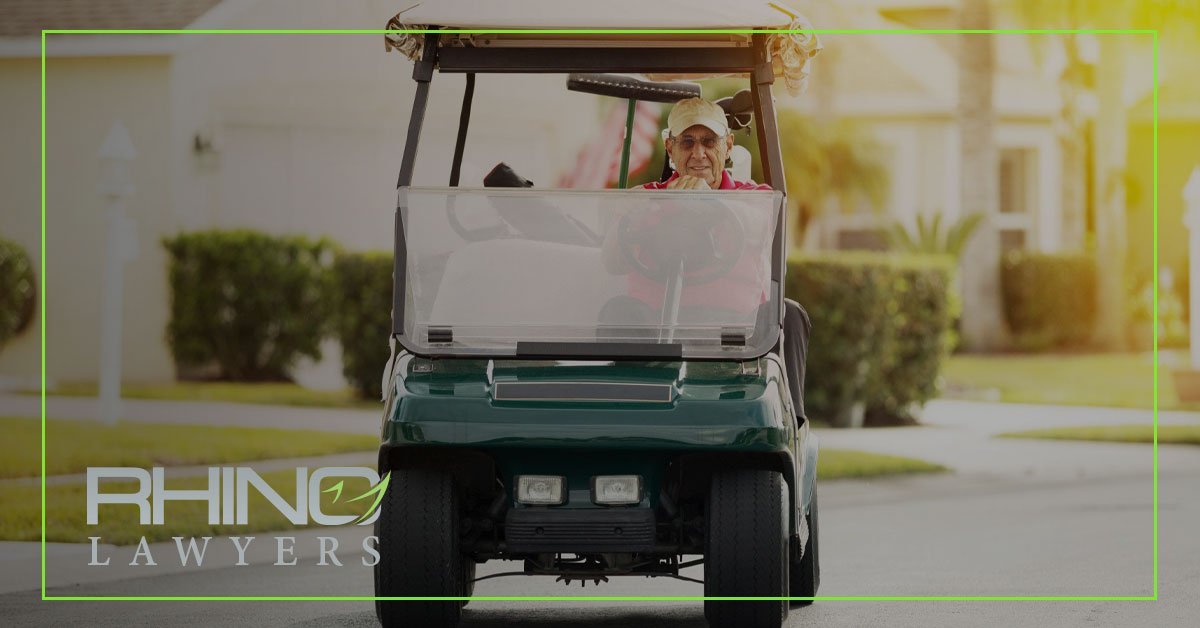
The Rules of the Road for Golf Carts
Annually, fifteen thousand people obtain a golf cart accident injury. That’s about 288 people per week. But it’s easy to avoid becoming an accident victim when you follow the rules of the road- both on and off the golf course.
Keep reading to learn about age requirements, equipment rules, and registration golf cart laws in Florida.
Is a Golf Cart a Motor Vehicle?
Florida Statute §320.01(41) classifies golf carts as low-speed vehicles (LSV). This means vehicles with four wheels traveling at a maximum speed of 20-25 mph.
These are motor vehicles designed for operating on golf courses and for recreational purposes. They cannot go over 20 mph, per Fla. Stat. §320.01(22).
The vehicle has three or more wheels and weighs 1,800 lbs. or less. It can carry a maximum of four passengers, including the driver.
A roadway is the width between the boundary lines available for public vehicle traffic per Fla. Stat. §320.01(16). You can only cross a street with your golf cart under specific conditions. Operation is only permitted on roads with posted speeds of 30 mph or below when the road contains signage stating use is for automobiles and golf carts.
Conditions of Operating on Roadways
You can’t drive them on public roads in Florida, except under specific conditions found in Fla. Stat. 316.212. According to law, golf cart usage on public roads is not permitted except for the following:
- On a county road or municipal street designated for use by golf carts
- To cross a state highway intersecting a county road or municipal street designated for golf cart usage
- Crossing a state highway at midblock when a golf course is on both sides of the highway
- On a state road, if the DOT determines golf cart use does not impede traffic flow
- Crossing a street or highway where a single mobile home park is on both sides of the roadway
- On a state park road system, if the speed limit is 35 mph or less
- Operation only allowable from sunrise to sunset
- Nighttime driving is only allowable with government authorization and on carts equipped with headlights, brake lights, turn signals, and a windshield
Golf carts operating on public roads must have efficient brakes, safe tires, reliable steering, rearview mirrors, and reflectorized warning devices on the rear and front. Drivers must follow all traffic laws and maintain the posted speed.
When using designated golf cart crosswalks intersecting a roadway, you must yield to pedestrians and cross-vehicle traffic.
Avoid operating golf carts in bad weather. Heavy rain can cause slick roads and flooding, increasing safety risks.
Prohibited Areas
You cannot operate golf carts on roads with speeds over 30 mph. It is illegal to drive on sidewalks unless designated for that purpose. Local government entities may obtain authorization from the Department of Transportation to allow the use on sidewalks.
Local ordinances must restrict the golf cart speed to 15 mph, and the sidewalks must be at least eight feet wide. Fla. Stat §316.212(b) requires posting signs that usage includes golf carts.
Golf carts using sidewalks must meet all equipment requirements for street usage. Additional safety requirements may include a horn or other warning device.
Licensing Requirements
Adults aren’t the only ones at risk of golf cart accidents. Every year over 6,500 children suffer golf cart injuries; over half of those under 12. That’s why there are age restrictions around driving these vehicles.
The allowance for teens 14 years and over to drive is now void. Beginning July 2023, golf cart laws in Florida mandate teens be at least 15 years old and have a learner’s permit or 16 and above with a driver’s license.
Anyone over 18 must have a valid ID or driver’s license from the government to operate a golf cart.
Operating Under the Influence
You cannot operate your golf cart on public roads when under the influence of drugs or alcohol. Law enforcement may pull you over and conduct a sobriety test if they believe you are intoxicated. If the officer determines you are under the influence, he or she can charge you with a DUI.
Passengers
Florida law requires every person in a golf cart to have their own seat. There is no seat sharing or holding children on a lap.
Every seat must have a seatbelt, and all occupants must wear seatbelts on roadways. Children three years or under must be in a car seat. The state recommends using a booster seat for children over age four, but this is not a legal requirement.
Equipment Requirements
To operate a golf cart on public roads in Florida, it must have all of the following:
- Headlights
- Taillights
- Front and rear turn signals
- Brake lights
- Windshield
- Parking brake
- Red reflex reflectors on each side and the rear
- Driver’s side exterior mirror
- Interior rearview mirror or passenger side exterior mirror
- Seat belt for each designated seat
- Vehicle identification number (VIN)
If you have a valid disability placard for your automobile, you may park your golf cart in accessible parking spots. You must display your handicap placard. You can get a ticket for parking illegally if you do not display the placard.
Golf Cart Registration
Most golf carts in Florida do not have titles because they are designed for off-road use. Titles and registration are not a requirement unless operating on the road.
You must register your golf cart with the Florida Department of Highway Safety and Motor Vehicles for road use. The registration must show the vehicle identification number (VIN). It must always display an up-to-date registration decal.
To register and title yours as an LSV, ensure it meets the equipment requirements above. Visit a Motor Vehicle Service Center with the following:
- Manufacturer’s Certificate of Origin
- Application For Title Form HSMV 82040
- Proof of minimum PDL and PIP insurance
- Personal identification-ID card, driver’s license, or passport
- Necessary Fees-title fee, plate fee, initial registration fee, registration fee (based on vehicle weight)
If you modify your golf cart into an LSV, the registration and title reflect the date of registration and title, not the manufacturing date. If purchasing a street-ready version, it may be older than the date on its title.
Golf Cart Insurance
To operate yours on public roads, you must have at least $10,000 in property damage liability (PDL) and $10,000 in personal injury protection (PIP).
One of the most common accidents on the road is the T-bone collision. People incur serious, life-altering injuries when an automobile crashes into the side of another vehicle or golf cart. This includes spinal cord injuries, traumatic brain injuries, broken bones, and tissue injuries.
When operating one on private property, insurance is not mandatory but is advisable. Golf cart accidents cause 10-15% of the personal injury claims on a course. About 70% of these accidents happen on private golf courses, and 40% involve experienced operators.
When recovering from personal injuries, accepting an insurance settlement offer that sounds fair is easy. Insurance companies know accident victims lack legal knowledge about what constitutes a fair settlement offer. Always consult a personal injury attorney before agreeing to a settlement.
If You Are in an Accident
When operating a golf cart on public roads in Florida, it is essential to comply with all Florida laws. Even the most cautious driver can become the victim of an accident.
If you suffer injuries in a golf cart accident, contact RHINO Lawyers for a free case analysis. We will negotiate your settlement or take the matter to trial while you recover. Call 844.RHINO.77 today.
CONTACT A TAMPA AUTO ACCIDENT ATTORNEY
In short, after a car accident, you may not know your rights. Above all, don’t struggle through the process alone. Actually, our personal injury team is here to help you with any legal needs you might have regarding your accident.
Lastly, let RHINO Lawyers answer your questions and review the facts of your case with a Free Consultation. So, get started by completing the “Free Instant Case Evaluation” or by calling us any time, day or night, at 844.RHINO.77.
Read More
What Is the RIDR Program and How Can I Benefit From It?
Driving under the influence is becoming a bigger and bigger problem in Florida. In 2021, there were nearly 44,000 drivers in the Sunshine State charged with a DUI.
To address this problem, Florida came up with a DUI diversion program called the Reducing Impaired Driving Recidivism Initiative (RIDR) to discourage people from doing this again.
Depending on your type of DUI, you could become eligible for this program. You increase your chances of this even further when you have the proper lawyer by your side.
What is this program? Who is eligible? How can a lawyer help you get into a RIDR program in Florida?
Read on for a guide that answers all of those questions and more.
What Is the DUI Diversion Program?
The DUI diversion program is a program that Florida came up with to try to help people charged with a DUI avoid getting charged with it again. Also, it is to educate drivers who are facing this charge about the dangers of driving under the influence.
Hillsborough happens to be one of the only counties in the state that currently offers this type of program. This program directly targets people who are just facing DUI charges.
Eligibility
There are certain requirements that you have to meet to be eligible for this program.
For starters, you can only enter this program if it is your first DUI. If you or a loved one have a past with DUI charges, you are not going to be eligible for the RIDR program this time around.
Then, you have to consider what type of DUI charge that you may be facing. That is because Florida only allows people with certain DUI charges to participate in this program.
The main requirement here is that this is a misdemeanor DUI. If you or a loved one have a felony DUI charge pending, you are not eligible to participate in this program.
Then, you have to account for who was in your vehicle at the time of this DUI. If there was any sort of minor in the vehicle, you lose your eligibility for this program.
Your BAC level can play a role in your eligibility as well. To meet this requirement, your BAC level had to have been under .20.
Review your case and consider talking to a DUI lawyer to see if your case is eligible for this program.
Program Levels
Another important thing you need to know about this program is that there are three different levels that the program offers. This depends on what kind of DUI charge you are facing.
However, there are a few things that apply to each one of the levels mentioned. The first is that if you have prior felony charges, you are not eligible for any of these program levels.
Level 1
This tends to be reserved for the least serious DUI charges.
The main thing you need here is a BAC level below .15. So, what do you have to do to complete the Level 1 program?
You have to have continuous alcohol monitoring and an ignition interlock alcohol device in your vehicle for at least three months. You will also have to complete 50 hours of community service.
Level 2
People who enter the Level 2 program are those with a BAC above .15 during their DUI conviction. The main differences are that community service hours increase to 75 and the ignition interlock alcohol device has to be on your vehicle for six months.
Level 3
Finally, this level is reserved for those who are facing drug charges surrounding their DUI rather than just alcohol.
With this level, people have to complete 50 hours of community service. On top of this, people at this level are required to wear an Abuse Patch for three months to make sure that they are not using drugs.
How a Lawyer Can Help
Now that you have a better understanding of what the RIDR program is, you may be wondering how a lawyer can help you with this. Well, there are a few big ways that they can have an influence with this case.
The first part of this is just having knowledge about this program. Since this is something that is only available in certain parts of Florida, it may not be given that a defendant knows about this program.
A lawyer is likely to have extensive knowledge of this program and what type of clients they have who can end up eligible for this. A lawyer has enough experience to pursue this option on your behalf if you meet the criteria mentioned above.
Also, lawyers can provide you with the legal counsel that you need to get a lighter sentence here. This can be anything from your behavior in court to what you need to confess to, what your options are, why this is the best option for you, and more.
Finally, lawyers can act as your voice when it comes time to talk to a prosecutor and a judge. During a certain point in this proceeding, a lawyer and a prosecutor are likely going to sit down and negotiate what your penalties will be for a DUI.
A lawyer is the person who will vouch for you and provide the best argument as to why you deserve to be part of this program. To take this a step further, your lawyer may even try to get you into the program at a lower level compared to what you may get on your own.
In other words, lawyers tend to be great negotiators. Let one with this talent act on your behalf.
Hire a DUI Lawyer
This is some information that you could use when it comes to the DUI diversion program.
You need to be aware of what criteria you need to meet to even enter this program. Then, get an understanding of what you have to do at each level of the program. Finally, let a lawyer negotiate the right program level for you.
If you or a loved one is facing a DUI charge, you should talk to a DUI lawyer about your options. Get a free case review from us here.
CONTACT TAMPA TRAFFIC TICKET ATTORNEY
RHINO Lawyers can help and guide you through a system molded by law enforcement, judges, and lawyers for decades. Having won cases for our clients in similar circumstances, our criminal defense team knows what it takes to fight on your behalf.
Let RHINO Lawyers answer your questions and review the facts of your case with a Free Consultation. So, get started by completing the “Free Instant Case Evaluation” or by calling us any time, day or night, at (844) RHINO-77.
Read More
DUI Penalties in Florida and How to Handle Them
The DUI laws in Florida aren’t quite as strict as they are in states like Arizona, Georgia, and Alaska. Florida DUI laws tend to fall somewhere in the middle of the pack when it comes to strictness.
But that doesn’t mean getting a DUI in Florida will be a walk in the park. Like most other states, Florida has put serious DUI consequences into place to deter people from driving under the influence of alcohol and/or drugs. As a result, you will face harsh Florida DUI penalties if you’re ever convicted of DUI.
This Florida DUI penalty chart that we’ve put together shows the potential penalties you may face if you’re ever arrested for DUI in the state. It’ll help show you why you should hire a Florida DUI lawyer immediately to handle your DUI case and hopefully help you avoid having to deal with the worst Florida DUI penalties possible.
Check out our Florida DUI penalty chart below.
First Offense
After getting a DUI in Florida for the first time, you’ll face a handful of DUI penalties that will be designed to make you think twice before you ever get behind the wheel after using alcohol and/or drugs again. From fines to jail time to community service, you’ll likely have to deal with a variety of DUI consequences.
The first entry on our Florida DUI penalty chart looks like this:
Fines: $500 to $1,000
Jail Time: 1 day to 6 months
Probation: Up to 1 year
Loss of License: 180 days to 1 year
Impounded Vehicle: 10 days
Breath Alcohol Ignition Interlock Device Installation: 0 days to 6 months
Other Florida DUI Penalties: 50 hours of community service, required substance abuse counseling, and DUI school
First Offense With a Minor in Vehicle or BAC Level of 0.15
If you get a DUI in Florida for the first time while you have a minor in your vehicle or while your blood alcohol content level is at or above 0.15, you’ll face harsher Florida DUI penalties than usual. Each of the DUI consequences that we just discussed will be ratcheted up to the next level.
This is what these Florida DUI penalties will look like:
Fines: $1,000 to $2,000
Jail Time: 1 day to 9 months
Probation: Up to 1 year
Loss of License: 180 days to 1 year
Impounded Vehicle: 10 days
Breath Alcohol Ignition Interlock Device Installation: 6 months to 1 year
Other Florida DUI Penalties: 50 hours of community service, required substance abuse counseling, and DUI school
Second Offense Within 5 Years
If you get a second DUI offense in Florida, the timing of it will impact the DUI consequences you’ll face. These consequences will be on the stricter side if your second DUI arrest occurs within 5 years of the first one.
Here are the Florida DUI penalties you’ll be looking at if you’re convicted of DUI twice in the state:
Fines: $1,000 to $2,000
Jail Time: Minimum 10 days to 9 months
Probation: Up to 1 year
Loss of License: 5 years or more
Impounded Vehicle: 30 days
Breath Alcohol Ignition Interlock Device Installation: At least 1 year
Other Florida DUI Penalties: Required substance abuse counseling and DUI school
Second Offense Within 5 Years With a Minor in Vehicle or BAC Level of 0.15
The Florida DUI penalties for someone who has been convicted for a second time in 5 years are already very harsh. Because of this, the DUI consequences for getting a second offense within 5 years with a minor in your vehicle or a BAC level of 0.15 or higher aren’t that dramatically different.
Take a look at the penalties you’ll face in this instance:
Fines: $2,000 to $4,000
Jail Time: Minimum 10 days to 12 months
Probation: Up to 1 year
Loss of License: 5 years or more
Impounded Vehicle: 30 days
Breath Alcohol Ignition Interlock Device Installation: At least 1 year
Other Florida DUI Penalties: Required substance abuse counseling and DUI school
Second Offense After 5 Years
If you end up getting a DUI in Florida for the second time but it takes place at least 5 years after your first conviction, the Florida DUI penalties will be slightly less harsh than they would be otherwise. But you’ll still find yourself dealing with some serious DUI consequences.
This is how these consequences will break down:
Fines: $1,000 to $2,000
Jail Time: 1 day to 9 months
Probation: Up to 1 year
Loss of License: 180 days to 1 year
Impounded Vehicle: 10 days
Breath Alcohol Ignition Interlock Device Installation: At least 1 year
Other Florida DUI Penalties: Required substance abuse counseling and DUI school
Second Offense After 5 Years With a Minor in Vehicle or BAC Level of 0.15
If you get a DUI in Florida for the second time after 5 years but you have a minor in your vehicle or a BAC level of 0.15 or higher, your Florida DUI penalties will be slightly harsher than if you weren’t arrested under these circumstances. Florida does not take kindly to DUIs that involve minors being in a vehicle or an especially high BAC level.
Here is how you’ll be penalized in this case:
Fines: $2,000 to $4,000
Jail Time: 1 day to 12 months
Probation: Up to 1 year
Loss of License: 180 days to 1 year
Impounded Vehicle: 10 days
Breath Alcohol Ignition Interlock Device Installation: At least 1 year
Other Florida DUI Penalties: Required substance abuse counseling and DUI school
Third Offense Within 10 Years
Getting arrested for DUI in Florida for the third time within 10 years can carry some of the most serious DUI consequences of all. The Florida DUI penalties that you’ll face might have a huge impact on your lifestyle.
This is what you may be facing following a third DUI arrest in a decade:
Fines: $1,000 to $5,000
Jail Time: Minimum 30 days to 12 months
Probation: Up to 1 year
Loss of License: 10 years or more
Impounded Vehicle: 90 days
Breath Alcohol Ignition Interlock Device Installation: At least 2 years
Other Florida DUI Penalties: Required substance abuse counseling and DUI school
Third Offense Within 10 Years With a Minor in Vehicle or BAC Level of 0.15
Getting arrested for DUI in Florida for the third time within 10 years with either a minor in your vehicle or a BAC level of 0.15 will subject you to even more serious DUI consequences. Just like with the previous examples listed on this Florida DUI penalty chart, you’re going to face stricter penalties under these circumstances.
Here are the Florida DUI penalties you’ll face:
Fines: $4,000 to $5,000
Jail Time: Minimum 30 days to 12 months
Probation: Up to 1 year
Loss of License: 10 years or more
Impounded Vehicle: 90 days
Breath Alcohol Ignition Interlock Device Installation: At least 2 years
Other Florida DUI Penalties: Required substance abuse counseling and DUI school
Fourth Offense
If you happen to get arrested for DUI in Florida for a fourth time this can be considered a felony. You will run the risk of losing your driver’s license for good. You’ll also face other DUI consequences that could change your life forever, like extensive jail or prison time.
Check out the Florida DUI penalties for a fourth DUI offense and conviction:
Fines: $2,000 to $5,000
Jail Time: 1 day to 5 years
Probation: Up to 5 years
Loss of License: Permanent
Impounded Vehicle: 90 days
Breath Alcohol Ignition Interlock Device Installation: At least 5 years
Other Florida DUI Penalties: Required substance abuse counseling and DUI school
Getting a fourth offense with a minor in your vehicle or a BAC level of 0.15 or above will carry the same Florida DUI penalties. You will no longer be able to drive in the state after four DUI convictions. You could also be looking at serious jail or prison time.
Call Us for More Details on This Florida DUI Penalty Chart
This Florida DUI penalty chart shows how seriously the state of Florida takes DUI convictions. It has put strict DUI consequences in place in an attempt to stop people from drinking and driving or driving while under the influence of drugs.
But as you’ve seen after looking at this Florida DUI penalty chart, at least some of the Florida DUI penalties vary quite a bit. For instance, you could end up in jail for anywhere from just over a week to a full year following a second DUI arrest and conviction.
With this in mind, you should hire a great Florida DUI lawyer to help you if you’re ever arrested for DUI. They can work to minimize your DUI consequences or potentially even get your DUI case dismissed completely.
Contact RHINO Lawyers to learn how our law firm can help you.
CONTACT TAMPA TRAFFIC TICKET ATTORNEY
RHINO Lawyers can help and guide you through a system molded by law enforcement, judges, and lawyers for decades. Having won cases for our clients in similar circumstances, our criminal defense team knows what it takes to fight on your behalf.
Let RHINO Lawyers answer your questions and review the facts of your case with a Free Consultation. So, get started by completing the “Free Instant Case Evaluation” or by calling us any time, day or night, at (844) RHINO-77.
Read More
What Is a Fair Settlement for Pain and Suffering?
A personal injury can be a devastating event, leaving you with physical injuries and emotional turmoil. So, many auto accident victims experience life-changing repercussions that impact every area of their life.
Physical pain or disability, ongoing emotional distress, and other factors must be considered in a car accident settlement. More importantly, if you or a loved one were injured due to another’s driver’s negligence, you have rights.
In the aftermath of an accident, you may wonder what types of damages you’re entitled to. In addition, accident victims can receive compensation for medical expenses, lost wages, property damage, and pain and suffering.
Here’s a closer look at what a pain and suffering settlement is all about.
What Is Pain and Suffering?
Pain and suffering refer to the intangible injuries that accident victims suffer. Likewise, this may refer to physical pain and the psychological effects of a serious injury.
Some examples include:
- Depression and anxiety
- Loss of enjoyment in life
- Inconvenience
Also, loss of enjoyment can include the inability to participate in your daily activities. Such as caring for your family, maintaining a home, or participating in things you previously enjoyed.
Depending on the severity of your accident, you could receive damages for pain and suffering in addition to any financial losses.
Economic vs Non-Economic Damages
Pain and suffering are considered non-economic damages. There’s no dollar amount attached to emotional turmoil, and you can’t prove this type of damage with receipts.
Putting a monetary value on emotional suffering can be tricky. In fact, it depends on the victim’s previous abilities, lifestyle, and other factors. Economic damages may include:
- Medical bills
- Loss of wages
- Medical transport
- Home health aide
- Out-of-pocket expenses
Although an injury victim could file a claim for only pain and suffering damages, this is rare. Generally, accident victims hope to secure compensation for pain and suffering in addition to financial damages.
Many types of physical and mental effects from a serious injury qualify for pain and suffering damages.
Physical Effects
The effects of a serious injury can be long-lasting or even permanent. These injuries may change your lifestyle and alter your future plans.
Examples include:
- Neck and back pain
- Broken or crushed bones
- Chronic headaches
- Traumatic brain injury
- Internal organ damage
- Loss of limb
- Musculoskeletal injuries
- Paralysis
- Loss of hearing or eyesight
- Disfigurement or scarring
Emotional Effects
After an accident, emotional trauma can linger and affect your quality of life. Typically, these effects may range from short-term anxiety to severe post-traumatic stress disorder (PTSD).
Examples of emotional injury include:
- Panic attacks
- Psychological trauma
- Insomnia
- Grief
- Fear of leaving your home
- Anger
- Depression
- PTSD
Actually, some accident victims suffer ongoing psychological consequences following an accident. Moreover, they may need long-term mental health treatment and counseling.
Wrongful Death
Family members can suffer emotionally and financially when a loved one dies in an accident. In fact, depending on the situation, a family member may decide to file a wrongful death lawsuit.
In addition, they may be entitled to compensation for financial losses. As well as, “loss of consortium” due to the unexpected death of their loved one.
Some loss of consortium damages include:
- Loss of companionship (death of a spouse or life partner)
- Loss of parental guidance
- A loss of household support/services
- Loss of love and affection
Fair Settlement for Pain and Suffering
Each personal injury case is unique. In fact, car accident settlement amounts can vary significantly.
Now, the circumstances and facts of your case play an important role in determining your compensation for pain and suffering. Therefore, an accident lawyer will gather information about your case to ensure you’re receiving the maximum compensation you deserve.
There are two methods commonly used to calculate pain and suffering settlement amounts.
The Multiplier Method
Next, the multiplier method focuses on total economic damages such as medical bills and lost wages. As a result, this amount is multiplied by the level of severity of the injury or case. So, the number is generally between one and five.
Per Diem Method
The per diem method assigns a particular dollar amount per day. And this begins on the day of the accident and ends when the victim reaches maximum recovery.
How a Tampa Accident Law Firm Can Help
Have you been injured in an accident at no fault of your own? Because, if you’ve suffered physical and psychological injuries, a skilled personal injury lawyer can help you understand your rights. Plus, they will gather evidence, negotiate with all parties involved, and prove your case.
Proving Pain and Suffering
To receive compensation, you must prove pain and suffering. Therefore, an experienced personal injury lawyer can help.
At this stage, accident lawyers focus on establishing the facts of the case and quantifying the settlement amount.
Evidence of Pain and Suffering
Above all, documentation is vital in pain and suffering cases. In fact, the evidence may include:
- Medical records
- Doctor notes
- Personal journals
- Therapist or counselor notes
Your lawyer will work with you to gather as much evidence as possible to prove your case and secure compensation.
Securing a Pain and Suffering Settlement
Certainly, a serious accident can lead to devastating injuries, both physical and mental. So, some accident victims suffer psychological trauma for years to come following an accident.
In these cases, a pain and suffering settlement is an option. Thus, as an accident victim, you have rights. And, may be entitled to compensation for your medical bills, lost wages, pain & suffering, and more.
At RHINO Lawyers, we know how traumatizing a serious accident can be. And, our Tampa personal injury lawyers will evaluate your case and answer any questions you may have. So, you pay nothing unless you win.
Contact RHINO Lawyers today for a free consultation.
CONTACT A TAMPA AUTO ACCIDENT ATTORNEY
In short, after a car accident, you may not know your rights. Above all, don’t struggle through the process alone. Actually, our personal injury team is here to help you with any legal needs you might have regarding your accident.
Lastly, let RHINO Lawyers answer your questions and review the facts of your case with a Free Consultation. So, get started by completing the “Free Instant Case Evaluation” or by calling us any time, day or night, at 844.RHINO.77.
Read More
Common Motorcycle Accident Misconceptions
Motorcycle riding offers a sense of freedom and exhilaration that is unparalleled by any other mode of transportation. The wind in your hair and the world zooming past you is quite enlivening.
However, it also comes with inherent risks. Unfortunately, there are numerous misconceptions surrounding motorcycle accidents.
These misconceptions often contribute to a lack of understanding and empathy for motorcycle riders, leading to unsafe road behaviors and unfair blame during accidents.
In this article, we will debunk some of the most common motorcycle accident misconceptions. We will also shed light on the realities faced by motorcyclists on the road.
Misconception: Motorcycles are Inherently Dangerous
One of the most prevalent misconceptions is that motorcycles are dangerous vehicles. While it is true that motorcycles lack the protective features of cars, such as airbags and crumple zones, this does not make them intrinsically unsafe.
Reality
Motorcycle accidents often occur due to the negligence of other road users, such as car and truck drivers who fail to see or yield to motorcycles.
Defensive riding and proper training can mitigate these risks. This makes motorcycles a safe mode of transport when handled responsibly.
Responsible riding, wearing proper safety gear, and adhering to traffic laws significantly reduce the risk of accidents. Do not weave in and out of traffic. Follow the same rules of the road as a car would, no matter your size.
Also, make sure your passenger wears the appropriate gear as well.
Misconception: Most Motorcycle Accidents are the Rider’s Fault
A common misconception is that motorcycle accidents are predominantly the fault of the rider. While some motorcycle accidents may indeed result from rider error, many occur due to the actions of other drivers or external factors beyond the rider’s control.
Reality
Studies show that two-thirds of motorcycle accidents are caused by drivers of other vehicles violating the right-of-way of motorcyclists. In such cases, the rider bears little to no responsibility for the accident.
One reason for this might be that there are fewer motorcycles in the U.S. than in other places around the world. Research shows that more than half (58%) of motorcycles in the world are located in the Asian market. With mostly cars on the road, drivers aren’t always as proactive about watching for motorcyclists as they should be.
Misconception: Motorcycle Riders are Daredevils and Risk-Takers
Motorcycle riders are sometimes stereotyped as reckless daredevils who take unnecessary risks on the road. This misconception unfairly tarnishes the reputation of responsible motorcyclists who prioritize safety.
Reality
The majority of motorcycle riders are law-abiding citizens who take safety seriously. Many motorcyclists undergo extensive training and participate in safety courses to enhance their riding skills and reduce the risk of accidents.
They don’t necessarily wish to put others in danger just because they are riding on a motorcycle. They have the same instincts for safety as everyone else does.
Misconception: Motorcycle Accidents are Rare and Insignificant
There is a common belief that motorcycle accidents are relatively rare and do not pose a significant threat compared to other types of accidents.
Reality
Sadly, motorcycle accidents are more common than most people realize. One report from the National Highway Traffic Safety Administration (NHTSA) shows that motorcyclists are 27 times more likely to be involved in a fatal accident than occupants of cars.
These accidents can have severe consequences for riders, including life-altering injuries or death. At least in a car, you are partly protected by the four walls and also all the safety mechanisms, such as airbags.
On a motorcycle, you are quite open to the world around you. Even with safety gear on, it can be extremely dangerous to be in a collision.
Misconception: Helmets are Sufficient for Rider Safety
Some individuals believe that wearing a helmet is all that is needed to ensure a rider’s safety. While helmets are undoubtedly essential, they are not a foolproof solution for preventing accidents.
Reality
Helmets protect against head injuries and reduce the risk of fatalities. However, they do not prevent accidents from occurring.
Riders must adopt a comprehensive approach to motorcycle safety. This includes:
- Defensive riding
- Wearing appropriate protective gear
- Staying vigilant on the road
It might seem counterproductive to say this all over again, but it’s absolutely critical to follow defensive driving tactics any time you get on a motorcycle.
Misconception: Motorcyclists are Easily Visible
Another common misconception is that motorcyclists are easily visible on the road and that accidents occur because riders fail to make themselves seen.
Reality
Motorcycles are relatively smaller in size compared to cars and trucks. This makes them more challenging to spot. This is even more true in blind spots or during adverse weather conditions.
Drivers must remain attentive and check their surroundings thoroughly to avoid colliding with motorcycles. Do not let your attention meander from the road for even a second.
Misconception: Loud Pipes Prevent Accidents
There is a belief among some motorcyclists that having loud exhaust pipes not only sounds cool. It could also make them more noticeable and help prevent accidents.
Reality
Louder exhaust pipes might grab the attention of nearby drivers. Yet, relying solely on noise is not a substitute for safe riding practices. The primary focus should be on visibility, defensive riding, and adhering to traffic laws.
Avoid Motorcycle Accident Misconceptions With Better Judgment
Now that you are aware of the various motorcycle accident misconceptions, you can use them to make better driving decisions. It starts with every driver out there.
Motorcycles are going to become more common on the roads in the future. This means everyone has to be more careful driving around them. Responsibility can’t solely rest on motorcyclists.
If you were involved in a motorcycle accident, then contact our law firm. We help support victims of all kinds of accidents, including motorcycles, and we’re here to help you take those next steps.
CONTACT A TAMPA Motorcycle ACCIDENT ATTORNEY
In short, after a motorcycle accident, you may not know your rights. Above all, don’t struggle through the process alone. Actually, our personal injury team is here to help you with any legal needs you might have regarding your accident.
Lastly, let RHINO Lawyers answer your questions and review the facts of your case with a Free Consultation. So, get started by completing the “Free Instant Case Evaluation” or by calling us any time, day or night, at 844.RHINO.77.
Read More