
Establishing a Medical Malpractice Case in Florida
Months ago, your doctor convinced you that you needed surgery to repair your back. But now, your back is in worse condition than before. And you’re convinced that the doctor’s incompetence is to blame.
You’re not the only one. Research shows that about 400,000 patients who are hospitalized experience preventable harm every year.
Fortunately, it is within your rights to seek compensation for any injuries that a negligent doctor has caused you. The question is, how do you establish a medical malpractice case in Florida?
Here’s a rundown on how to navigate a malpractice case.
Let’s jump in!
Breaching Standard of Care Caused Injury
To establish a medical malpractice case in Florida, you must first offer evidence that your doctor breached the established standard of care.
To do this, you must find a medical professional who is currently practicing in the field that your allegedly at-fault doctor is. Then, you will need to ask that medical expert for an affidavit.
An affidavit is a document that indicates that the medical expert swears to be truthful about the nature of their work, just as they would when testifying in court.
Without an affidavit, your Florida malpractice claim will not move forward as this is a requirement in Florida before bringing your claim.
Note that for specialists, they require you to have an affidavit from a similar type of specialist. So, if a specialist has injured you, be sure to get an affidavit from a similar specialist.
In addition to acquiring an affidavit, you need to prove causation as part of your claim. Specifically, you have the burden of proving that your physician’s breach primarily caused your injury, or was your injury’s “proximate cause.”
Put another way, you need to prove that more likely than not your injury would not have occurred had your doctor not acted negligently.
Medical Malpractice Led to Damages
Another important step in establishing your medical malpractice case is to prove that the allegedly at-fault doctor caused your injury.
For instance, be prepared to demonstrate that you accrued hefty medical expenses as a result of their negligence. Although not required, it is also helpful to prove that your injuries caused you to miss work for a long period of time. Finally, you’ll need to demonstrate that the doctor’s actions caused you extensive pain and suffering.
Doctor Ignored Your Medical History
If your doctor disregarded your medical history, proof of this should also be submitted as part of your Florida malpractice claim.
For example, let’s say you notified your physician that you were taking a particular medicine. However, your doctor prescribes another medicine that interacts with your first medicine in an adverse way.
In this situation, your doctor could be held liable for your medication’s reaction. That’s because the doctor received enough information to provide reasonable care to you and failed to do so.
Doctor Caused Avoidable Injuries
When filing a medical malpractice case, you must also prove that you sustained injuries that were not inevitable or reasonably foreseeable.
For example, let’s say you undergo heart surgery. To reach the heart, your surgeon has to cut through the breastbone.
In this situation, pain is inevitable. For this reason, you cannot sue the doctor for causing pain in your breastbone area. However, you can sue them if you are able to prove that they did not perform your surgery properly.
Investigating Your Case
When it comes to establishing your malpractice case, it is essential that you hire an attorney right away. A lawyer can conduct a thorough investigation of what took place to determine if you have a case.
For starters, they’ll speak with you or your family members to obtain a detailed timeline and story.
Next, the attorney will review your medical records. This can be a complex and challenging process, which is why it’s best to leave this job to your attorney.
Your attorney can then speak with a medical expert and review your medical records with them. Through this process, they can determine if the allegedly at-fault doctor failed to care for you properly and thus caused your injuries. If this is the case, then you’ll enter the pre-suit period.
The Pre-Suit Period
The pre-suit period is a period of 90 days during which the reportedly negligent doctor can do their own investigation of what happened in your case.
Once the 90 days are up, the doctor may offer you a monetary settlement, or they may simply deny your claim.
If your claim is denied or the settlement isn’t large enough to resolve your case, then your attorney may recommend filing a formal lawsuit against the doctor.
Filing a Lawsuit
Note that you have two years after you knew or should have known of the alleged medical malpractice to file your malpractice suit in Florida.
Note that the doctors prevail in eight out of 10 medical malpractice cases that end up going to trial. For this reason, it is critical that you choose a reputable attorney to represent you in court.
Fortunately, if you win your case in Florida, there is no maximum amount of damages you may receive for injuries stemming from medical malpractice.
How We Can Help with Your Medical Malpractice Case
It may be in your best interest to file a Florida malpractice claim if you suffer an injury at the hands of a Florida doctor. As long as you can demonstrate that the doctor caused your injuries due to breaching the established standard of care, you likely have a medical malpractice case.
At RHINO Lawyers, we have represented numerous victims of medical malpractice ranging from birth injury to cosmetic surgery malpractice. Get in touch with us for a free consultation regarding your case today.
CONTACT A TAMPA Medical Malpractice ATTORNEY
In short, if you believe you’re a victim of medical malpractice, you may not know your rights. Above all, don’t struggle through the process alone. Actually, our personal injury team is here to help you with any legal needs you might have regarding your case.
Lastly, let RHINO Lawyers answer your questions and review the facts of your case with a Free Consultation. So, get started by completing the “Free Instant Case Evaluation” or by calling us any time, day or night, at 844.RHINO.77.
Read More
Commercial Truck Weight Enforcement In Florida
Over 20 million commercial vehicles are weighed yearly at the Florida highway weigh stations. Commercial truck weight enforcement keeps these extra-large vehicles in line and your roads safe. It may not seem important, but trucks could easily get overloaded without this enforcement.
This could significantly damage the roads and put other drivers in danger. As a commercial truck driver, it’s important to know and follow Florida’s maximum weight limits.
Florida Vehicle Restrictions
The Florida statutes outline how physically large a vehicle can be when operating on Florida highways. However, it isn’t just the height, width, and length limits that commercial truck drivers must consider. There are also weight limits.
The state imposes commercial truck weight restrictions because highways are designed to withstand a certain amount of weight. Drive on them with weight over this limit, and the road can prematurely break apart. This creates a dangerous surface for other drivers and increases maintenance costs for the state.
Maximum Weight Allowed
These are the maximum weight limits that all vehicles driving on Florida highways must abide by. While these maximum limits are far beyond what a passenger vehicle weighs, they apply to commercial trucks.
As you can see, there is an overall maximum weight. There is also a maximum weight for the vehicle’s number of axles. The axle is the central shaft or bar that goes under the vehicle and connects the wheels on either side.
A standard semi truck with an attached trailer will have five axles. Knowing the distance between the first and last axles is also important.
- Gross Vehicle Weight – 80,000 pounds
- Single Axle – 22,000 pounds maximum
- Tandem Axle – 44,000 pounds maximum
Van Straight Truck
A straight van truck looks like a local delivery truck or moving truck. The cab is permanently connected to the cargo box.
- The maximum weight allowed is 53,141 pounds.
- Single Axle – 22,000 pounds
- Tandem Axle – 44,000 pounds
- Length – 14 feet
Tractor Semi-Trailer
A tractor semi-trailer is a cab with a trailer attached. These are the semi trucks that you typically see driving freight and cargo on the highway. The cab can separate from the trailer and drop it off at the delivery destination.
- Single Axle – 22,000 pounds
- Tandem Axle – 44,000 pounds
- Length – 51 feet
- Internal bridge 1 – 16 feet
- Internal bridge 2 – 40 feet
Tractor Tanker Semi-Trailer
This style of commercial truck uses a similar semi-cab as a tractor-trailer combo. However, instead of the trailer, it attaches to a large tank. These trucks haul milk, gasoline, and other large quantities of liquid.
- The maximum weight allowed is 73,271 pounds.
- Single Axle – 22,000 pounds
- Tandem Axle – 44,000 pounds
- Bridge Length – 36 feet
Truck Exceptions
Some exceptions to the maximum vehicle weight include dump trucks, concrete mixers, and waste collection vehicles. These vehicles’ sole purpose is to haul extremely heavy cargo. Because of this, special weight and size limits apply.
- Maximum Gross Weight – 70,000 pounds
- Maximum Weight on Front Axle – 14,520 pounds
Motor Carrier Size and Weight Program
The Florida Department of Transportation (FDOT) follows the Motor Carrier Size and Weight Program (MCSAW) to enforce maximum weight limits. The weight enforcement program aims to protect Florida’s highways and bridges from damage.
Weigh Stations
Florida commercial truck weight limits are informed with the use of weigh stations. They are located throughout the state and are open 24/7. While there are some exceptions, all commercial trucks are required to stop at all weigh stations.
Commercial truck drivers who fail to stop when required can find themselves heavily fined.
Weigh-In-Motion Interstate-Based Weigh Stations
Modern weight stations use weight-in-motion systems. These are sensors placed on the road’s surface. As the truck drives over the sensors, they weigh the truck.
Trucks that are within an acceptable range are green-lighted. Trucks that fall outside of the threshold get red-flagged and pulled to the side for a more accurate weighing and inspection.
These sensors have sophisticated calibration. They can detect the axel spacing to determine the truck’s weight class correctly. Several of these weigh station systems are in place throughout the state.
- Flagler
- Madison
- Martin
- Pensacola
- Punta Gorda
- Seffner
- Sneads
- White Springs
- Wildwood
- Yulee
Static Station Non-Interstate Based Weigh Stations
Static weight stations are located on the side of interstate highways throughout Florida and other states. The truck pulls off the highway onto an access road. The driver pulls the truck onto the large-scale plates when it’s their turn.
This large weighing system determines the entire weight of the truck. Often, they inspect the rest of the truck during the weighing process.
- Hilliard
- Hopewell
- Lake City
- MacClenny
- Old Town
- Palatka
- Palm Coast
- Pensacola
- Plantation Key
- Yulee
Dangers of Overweight or Improperly Loaded Trucks
An improperly loaded commercial truck creates a high truck accident risk. This could be an overweight commercial truckload or improperly loaded cargo.
A commercial truck could roll over during sharp turns or in high wind. There is also a greater danger when navigating steep hills. Finally, emergency or sudden stopping becomes significantly harder.
Unfortunately, passenger vehicles can also suffer the consequences when these dangerous situations happen. Passenger vehicle drivers and passengers suffer increased property damage and injuries because of the significant size and weight difference.
Thankfully, some personal injury attorneys focus on helping victims of these trucking accidents. This involves recovery from physical injuries and property damage.
Commercial Truck Weight Enforcement
Florida’s commercial truck weight enforcement program helps to protect the roads and drivers. Overweight vehicles create unnecessary wear and tear and increase safety risks. If you have experienced a commercial truck accident, you may have a claim for recovery.
If you’ve experienced an accident involving a commercial truck, schedule a free consultation with one of our experienced attorneys.
CONTACT A TAMPA AUTO ACCIDENT ATTORNEY
In short, after a truck accident, you may not know your rights. Above all, don’t struggle through the process alone. Actually, our personal injury team is here to help you with any legal needs you might have regarding your accident.
Lastly, let RHINO Lawyers answer your questions and review the facts of your case with a Free Consultation. So, get started by completing the “Free Instant Case Evaluation” or by calling us any time, day or night, at 844.RHINO.77.
Read More
Know Your Rights When Stopped at a Florida DUI Checkpoint
Even with fewer drivers on the road, alcohol is the leading cause of traffic fatalities. Every year, we lose over 10,000 people to drunk driving.
One way to combat drunk driving is to use DUI checkpoints, also known as sobriety checkpoints. Unfortunately, these checkpoints can be very stressful. If you’re not sure how to behave, you can easily incriminate yourself.
Want to prepare for encountering a Florida DUI checkpoint? Here’s all you need to know about what to expect and how to protect your rights.
Are DUI Checkpoints Legal?
Some states lack the statutory authority to conduct DUI checkpoints. That said, Florida is on the list of 38 states where these checkpoints are legal.
According to the GHSA, there are about 15 to 20 DUI checkpoints set up in Florida each month. Some of these checkpoints are permanently manned. Others are set up in random locations, usually in high-risk areas.
It’s important to remember that DUI checkpoints serve a valuable purpose. Still, the officer conducting them may violate your constitutional rights. If you believe this is the case, contact a professional Florida DUI lawyer.
DUI Checkpoint Laws
Not sure which procedures officers must follow while manning a DUI checkpoint in Florida? Here are three common examples.
The Three-Minute Rule
As the name implies, Florida officers can’t detain a motorist at a sobriety checkpoint for more than three minutes. If they determine probable cause, however, they can keep a vehicle for much longer.
If a stop takes longer than three minutes without cause, the officer must suspend the diversion of vehicles. A checkpoint may also be unreasonable if it ends up holding up upcoming traffic.
Checkpoint Scheduling
Law enforcement agencies must provide information about any scheduled DUI checkpoints. If you don’t want to deal with this inconvenience, you can simply avoid those areas. This information is available at DUIBlock.
Determining the DUI Formula
Officers must determine the procedure for pulling drivers over before establishing the checkpoint. Their selection must be fair and random. For example, they may decide to pull over every third car passing through.
Avoiding the Checkpoint
A DUI checkpoint is legal, but avoiding it is legal as well. If an officer doesn’t have probable cause, they can’t pull you over for avoiding a checkpoint.
Doing this is easier than it may seem. According to Florida law, officers must set up signs that warn drivers of the checkpoint. Once you see these signs, you can make legal traffic maneuvers to turn around.
Sometimes, though, there will be no legal way to avoid a checkpoint. In this situation, your best option is to go through it. Making an illegal U-turn to avoid a checkpoint will likely result in getting pulled over.
Answering Questions
A DUI checkpoint starts like any other traffic stop you’ll encounter. An officer will ask you to pull to the side and provide identification.
At this point, the officer will ask you some questions. Depending on your answers and behavior, they may find probable cause to investigate further. Not having the necessary documents may also nudge them in this direction.
What you may not know is that you don’t have to answer these questions. Instead, you can say that you don’t wish to say more without an attorney present. You can also show them your “Know Your Rights” card.
Some drivers keep their windows rolled up at checkpoints and don’t interact at all. Though this is legal, it’s not the best course of action. By being polite, you can make sure an officer won’t mistake your silence for non-compliance.
Consenting to Tests
Regardless of whether you talk to them, the officer may believe you’re driving under the influence. If so, they can ask you to perform some tests.
Field Sobriety Test
The first test you’ll need to perform is the field sobriety test. That involves doing a series of three field sobriety exercises (FSEs):
- Horizontal Gaze Nystagmus (Follow-the-Pen)
- Walk-and-Turn
- One-Leg Stand
A field sobriety test can be a double-edged sword. If you haven’t consumed any alcohol, it may be wise to take part in it. That said, many sober drivers find it hard to perform this test while facing arrest.
Of course, you also have the right to refuse to take part in the test. Many officers will neglect to mention this option while making their requests. Doing so, however, may give the officers probable cause to do a chemical test.
Chemical Testing
Chemical testing may involve a breathalyzer or blood test. Under Florida’s implied consent law, you can’t refuse a chemical test. Doing so is a misdemeanor offense and makes you subject to the following penalties:
- 12-month license suspension for a first-time refusal
- 18-month license suspension for a previous refusal
Keep in mind that a breathalyzer test can be wrong. Many factors can cause a positive reading, from poor calibration to certain medical conditions. Blood tests tend to be more accurate, but they aren’t used as often.
Protecting Your Rights
Even if you’ve done nothing wrong, DUI checkpoints can be intimidating. If you’re charged with a DUI, though, it’s essential to protect your rights.
First, keep in mind that getting arrested for a DUI in Florida can lead to severe penalties. Many of these penalties have long-term implications. That’s particularly true for pilots and other specific professions.
If you’re arrested at a DUI checkpoint, it’s in your best interest to talk to a DUI lawyer right away. In fact, you should contact a lawyer as soon as you’re pulled over. That’s the easiest way to ensure you’re treated fairly.
A DUI lawyer can do a lot for your case. They’ll request the police report from your arrest, which can impact your defense. They can also ensure that the officers used the appropriate checkpoint procedures.
This Is What to Do at a DUI Checkpoint
As you can see, there are many things you should keep in mind if you’re stopped at a DUI checkpoint. If you ever need a refresher on what to do in this situation, this guide is the perfect starting point!
Were you arrested for a DUI in Florida? If so, our experienced DUI attorneys will do everything they can to mitigate the impact of these charges. Contact us here to learn more about your legal options!
CONTACT TAMPA TRAFFIC TICKET ATTORNEY
RHINO Lawyers can help and guide you through a system molded by law enforcement, judges, and lawyers for decades. Having won cases for our clients in similar circumstances, our criminal defense team knows what it takes to fight on your behalf.
Let RHINO Lawyers answer your questions and review the facts of your case with a Free Consultation. So, get started by completing the “Free Instant Case Evaluation” or by calling us any time, day or night, at (844) RHINO-77.
Read More
How Fast Can Commercial Trucks Safely Travel On Florida Highways?
In 2020, 4,842 commercial trucks were involved in accidents resulting in fatalities. One of the most common reasons for a trucking accident is speeding. This could be the truck traveling faster than the posted speed limit or faster than the road conditions allow.
As a truck driver operating a large vehicle on Florida highways, you need to know what is a safe speed.
Florida Speed Limit Laws
Any vehicle, commercial or not that operates on Florida highways must follow the Florida speed statutes. In the state of Florida, the speed limit will never be more than 70 miles per hour. You will see this maximum speed limit on Florida highways and major toll roads.
However, not all areas of all highways and tolls are 70 miles per hour. Always look for a sign when entering the road to ensure you know the applicable speed limit.
Minimum Speed Law
There is also a minimum speed limit of 40 miles per hour. Traveling too slowly is just as dangerous as going too fast when driving on highways. Often, it isn’t the truck driver but a passenger vehicle traveling too slowly that causes a highway accident.
You won’t see specific commercial truck speed limits because all vehicles must follow the same speed laws. Truck drivers involved in accidents can speak with a truck accident lawyer. This helps them understand their rights and responsibilities.
Reasons a Commercial Truck Should Slow Down
Just because the speed limit states 70 miles per hour does not mean that a truck driver should always travel at that speed. The Federal Motor Carrier Safety Administration (FMCSA) recommends that drivers reduce their speed in certain circumstances.
- Traffic conditions
- Construction zones
- Conditions of low visibility
- Uneven roads or gravel roads
- Road conditions and road hazards, including debris
- Vehicle mechanical issues or failure
- On and off-highway exit ramps
- Curves, road bends, and sharp turns
- Hills and inclines
- Unfamiliar roads
If heavy traffic is on the highway, you may be unable to drive at the speed you want. The other traffic will dictate how fast you can travel. Despite multiple lanes, traffic can become heavy and block a truck’s ability to navigate the road.
Road conditions can also create a temporary hazard that requires traffic to reduce its speed. For example, construction, an accident, or debris on the road. These are all conditions that can be unpredictable but present a hazard.
Types of Accidents Caused by Speed
When traveling too fast, you reduce the time available for a response. Humans can only react so quickly, and this action time becomes longer when tired or distracted. Accidents can happen simply because you cannot act quickly enough for the speed traveled.
Mechanical Failure
Faster speeds come with additional heat. The faster the speed traveled, the more friction that gets created, and the more heat generated.
This increased heat puts more wear and tear on the truck. Engine failure or a tire blowout from the additional heat can cause an accident.
Loss of Control
High speeds make it more difficult to control a truck. Large commercial vehicles weigh tens of thousands of pounds. This is a lot of weight to control.
Combine that weight with forwarding motion, and you get a physical force that has more momentum than you can handle. Should you need to turn or stop quickly, the trailer will continue moving forward.
This could cause a rollover, jackknife, skidding, or swaying. All of these are extremely dangerous and can cause accidents.
Driving in Bad Weather
When the weather becomes bad, drivers should reduce their speed. This applies to commercial trucks just as it does to passenger cars. When visibility gets reduced, it becomes harder for a driver to see the road ahead.
This reduces reaction time and increases the risk of an accident. Florida also experiences high amounts of rain. Rainwater on the road mixes with the oil dropped by vehicles. The mixture creates a slick surface that reduces the traction of the rubber tires.
When there’s limited traction, stopping times increase. Drivers should reduce their speed to compensate for this. Otherwise, they risk getting into an accident because they didn’t have complete control of the truck at the speed they are traveling.
Night Driving
Even if the weather is clear, driving at night presents unique risks that require you to slow down. First, less light makes it harder to see the road ahead and reduces your available reaction time.
Second, headlights from oncoming traffic make it harder to see the road. Third, the night is when many wild animals become active. Should a large animal venture onto the highway, it can create a risk of an accident.
Driving late at night can also make drivers more drowsy and less alert than they would be during the day. This slows their response time and increases the risk of an accident.
Commercial Truck Speed Limiters
In order to ensure safe travel, the Federal Motor Carrier Safety Administration (FMCSA) announced earlier this year its intent to move forward with rules enforcing speed limiters on heavy commercial trucks. The goal would be to enforce speed limit laws by not allowing large trucks to travel over a predetermined speed.
Hold Commercial Trucks Accountable
Just like passenger vehicles, commercial trucks can cause accidents. However, if speed is the reason for the accident, the damage and injuries can become significantly greater. As a truck driver, knowing your rights and protecting yourself from accident claims is important.
Speaking with an experienced personal injury lawyer can help you understand your rights. They may also be able to secure compensation for your loss.
Schedule a free consultation to speak with a knowledgeable lawyer about your accident and possible claims.
Read More
What Is the Difference Between a DUI and a BUI?
Did you know that operating a vessel while impaired by alcohol or other drugs is a major violation of Florida law?
Believe it or not, it’s true. And, if suspected of operating a boat under the influence, officers can require you to pass a sobriety test. Failure will result in a specific boating ticket, known as a BUI – boating under the influence.
This offense is actually just as serious as a DUI, issued for drunk driving. And it can have major impacts on your future, especially if you’re an avid boater. Read on to learn about the difference between these two charges, and the penalties associated with both.
Boating Under the Influence
Under Florida statutes, any boater suspected of operating a vessel while intoxicated can be subjected to either a physical or chemical test to determine how much alcohol is in their breath or blood. This could include field sobriety tests. Like blowing into a breathalyzer and even having blood drawn.
If they determined that the operator is legally intoxicated. Meaning they have a blood or breath alcohol level at or above .08. Then the officers could charge them with a BUI offense.
Also, they can file BUI charges under some special circumstances. Like, when a boat driver has less alcohol in their system. For example, if they determined that the operator is under the influence of drugs other than alcohol.
Also, if they find any boat operator under 21 years of age to have a blood or breath alcohol level of .02 or higher. They can charge them with a BUI.
Understanding BUI Charges
If you have a BUI charge in Florida, you can expect the state to prosecute your case aggressively. In most cases, they will seek the maximum penalty. This varies based on how many BUI offenses you have received.
- First BUI Offense – This misdemeanor may result in a fine of up to $1,000, and up to 6 months of jail time
- Second BUI Offense – Also a misdemeanor, this charge is associated with fines of up to $2,000, and up to 9 months in jail
- Third BUI Offense Within 10 Years – This third-degree felony charge can result in up to $5,000 in fines, and 5 years of jail time
- Third BUI Offense More Than Ten Years After Prior Conviction – This misdemeanor charge is associated with a fine of up to $2,000, and up to 1 year in jail
In addition to the penalties listed above, all Florida BUI convictions are associated with a minimum probation period of one year per offense. Terms will include monthly reporting to an assigned officer, community service, and drug and alcohol counseling.
This probationary period may be extended for repeat BUI convictions.
Aggravated BUI Charges
In some cases, they might consider BUI charges aggravated. For example, if the vessel operator has a blood or breath alcohol level of .15 or higher. Plus, they can apply these more serious charges if the person suspected of BUI has prior DUI convictions. Or if they have another drug-related offense on their record.
The term aggravated may also indicate that a BUI incident involved other factors that enhance the severity of the crime and its penalties. This might include:
- BUI incidents resulting in property damage
- BUI incidents that cause bodily injury or death
- If the BUI incidents involve a minor
Aggravated BUI charges associated with property damage are first-degree misdemeanors. And they carry maximum penalties of $1,000 in fines and a one-year jail sentence. If you cause bodily injury, this is a third-degree felony, which could lead to a fine of up to $5,000, and jail time of up to 5 years.
A BUI that leads to the death of another person the law may consider BUI manslaughter. This second-degree felony can result in fines of up to $10,000 and up to 15 years in jail. And, if a BUI suspect leaves the scene of a boating accident. Rather than rendering aid to injured victims. Then they could face a first-degree felony, with fines of up to $10,000 and jail time of up to 30 years.
The Difference Between DUI and BUI
Simply put, the primary difference between boating and driving under the influence is what kind of transportation is being used – a boat or a car.
The two crimes carry similarly serious penalties. Though a BUI won’t necessarily impact your legal ability to drive. And unfortunately, in both DUI and BUI cases, the punishment begins well before conviction. Because they will likely arrest you, impound your vessel or vehicle, and face serious financial consequences.
Both first-time DUI and BUI charges will result in hefty fines, probation, a tarnished legal record, and potentially court-ordered counseling. Even worse, repeated DUI and BUI offenses can lead to felony charges and extended jail sentences.
No matter which type of charges you’re facing, it’s essential to act quickly. Your criminal record will show both misdemeanor and felony offenses. Potentially making it difficult to rent or buy a home, find a good job, or attend college.
It’s also important to note that the court can combine a history of DUI and BUI convictions, leading to aggravated charges and higher penalties. And, you’re unlikely to win your case without legal aid!
Florida BUI Defense
If you’ve received a charge of DUI or BUI, or need legal defense in Florida, you’re in the right place.
We have a team of dedicated attorneys and legal professionals at RHINO Lawyers to help each client win their case. And, we have decades of experience working with people just like you.
Contact us or call (844) RHINO-77 today for a free case review or virtual consultation. We can help with auto accident and personal injury claims, criminal defense, and much more.
CONTACT TAMPA TRAFFIC TICKET ATTORNEY
RHINO Lawyers can help and guide you through a system molded by law enforcement, judges, and lawyers for decades. Having won cases for our clients in similar circumstances, our criminal defense team knows what it takes to fight on your behalf.
Let RHINO Lawyers answer your questions and review the facts of your case with a Free Consultation. So, get started by completing the “Free Instant Case Evaluation” or by calling us any time, day or night, at (844) RHINO-77.
Read More
How to Calculate a Medical Malpractice Settlement
Around 20,000 medical malpractice claims are filed every year in the United States. Each of these claims seeks justice for suffering and damages caused by medical negligence.
While a successful claim won’t reverse the damage that has been done, it can provide valuable compensation. A successful claim will result in a settlement or a judgment following a jury verdict, which can provide financial stability as you adjust to life after your injuries.
Knowing what you can claim in your medical malpractice settlement will ensure that you get a fair deal if your case is successful. So how do you calculate a medical malpractice settlement? Read on to find out everything you need to know.
What is Medical Malpractice?
Medical malpractice is also known as medical negligence.
This occurs when a medical professional fails to provide a good standard of care to their patients. This can directly harm patients in their care.
If you have suffered harm as a result of medical negligence then you could have a medical malpractice case.
When you make a claim, a time will come when you will need to consider a potential settlement amount. This is the amount of compensation that you are seeking for your injuries.
In that case, you will need to carefully calculate how much compensation you want for your injuries. This must be based on the impact that your injuries have had on your life, as well as many other factors.
With that in mind, let’s take a closer look at how to calculate your medical malpractice settlement figure.
Calculating Your Medical Malpractice Settlement
Settlement laws in Florida used to set a $500,000 cap on medical malpractice cases in Florida.
However, now there is arguably no cap for medical malpractice claims so, in theory, you can make a claim for as much as you want. However, the settlement you ask for should reflect the severity of your injuries and their impact on your life.
Because of this, each medical malpractice settlement is unique. So to calculate an accurate settlement you and your lawyers will need to examine to main areas:
- Economic damages of your injuries (now and in the future)
- Non-Economic damages of your injuries (now and in the future)
When calculating your claim it is essential to think about how your injuries might impact your life in the future as well as how they impacted you in the past.
Once you have accepted a settlement you cannot revise this figure or make another claim for your case in the future. Thinking about the long-term impact of your case and figuring out your needs will ensure you get a fair settlement.
Economic Damages (Special Damages)
Economic damages in your medical malpractice case focus on how your injuries have affected you financially. This might include:
- Surgery or treatment to repair the damage caused by medical malpractice
- On-going treatment or medication for chronic issues caused by your injuries
- Specialist equipment that you need for treatment or in daily life
- Hiring live-in care
Managing your injuries alone can cost thousands of dollars and this can all be included in your claim settlement.
Your injuries may also affect your ability to work now and in the future. This can have a huge impact on your financial stability for years to come. So you can also include lost income in your economic damages.
Non-Economic Damages (General Damages)
Non-economic damages look at the way your injuries have affected your life in a wider sense.
This can include pain and suffering or damage to your personal relationships. To prove these kinds of damages, your lawyer may ask for testimony from your loved ones or a professional psychologist.
Of course, it is harder to put pinpoint the exact value of these damages. Once you have gathered everything you want to claim, lawyers will look at comparable cases and their settlements. They can use these to find a realistic figure for your claim.
What is the Average Settlement For a Medical Malpractice Claim?
The average medical malpractice settlement for an out-of-court case in America is $242,000. Taking your case to court can be risky and will cost you more.
The amount that you can expect as a malpractice settlement depends on many factors including, the amount of available insurance coverage and the severity of your injuries.
Minor Medical Malpractice Cases
Minor cases don’t tend to have a long-term impact on your life. However, they can still cause serious discomfort and distress.
These cases can include resolved allergic reactions or shots that were administered incorrectly. Settlements for these cases are generally much lower than significant medical malpractice cases.
Cases Resulting in Short-Term Disabilities or Illnesses
Short-term disabilities or illnesses last for up to six months. After this, you should have recovered without your injuries having an impact on your long-term health.
Common causes of short-term disabilities can include misdiagnoses or missed diagnoses. They can also include minor prenatal errors or minor surgical mistakes.
The average settlement for these kinds of cases is higher than minor medical malpractice cases but lower than cases that require surgery or result in permanent injuries.
Cases That Require Surgery or Rehab
Some medical malpractice injuries will require serious intervention. If you have to have surgery to correct an error or attend rehab, you could be awarded a significant settlement commensurate with the amount of your injuries.
Medical Malpractice Cases With Long-Term Consequences
Severe medical malpractice cases can result in serious injuries, illness, or infections, as well as pain and suffering. This goes on for six months or more and may require ongoing treatment.
Cases involving severe medical malpractice can be awarded substantial settlements depending on the severity of the injuries.
Cases Resulting in Permanent Injuries
Unfortunately, some medical malpractice injuries will be permanent. The most serious cases result in permanent disabilities. Wrongful death suits can also be included in this area of medical malpractice.
These kinds of cases can be awarded settlements of $1,000,000 or more. So far, the largest medical malpractice settlement in US history is $229,000,000. This was awarded to a mother whose baby suffered brain damage during childbirth after the hospital failed to monitor her.
Get Help Calculating Your Medical Malpractice Settlement Today
As you can see, calculating your medical malpractice settlement depends a lot on the severity of your injuries and how they impact your life. Your figure can account for a range of damage caused by your injuries. So you don’t just have to focus on their financial impact.
If you have been the victim of medical malpractice then you should seek legal support when calculating your settlement. An experienced medical malpractice lawyer will understand everything about your claim and ensure you get a fair settlement.
Get in touch with RHINO Lawyers for a free consultation about your case today we’re happy to help.
CONTACT A TAMPA Medical Malpractice ATTORNEY
In short, if you believe you’re a victim of medical malpractice, you may not know your rights. Above all, don’t struggle through the process alone. Actually, our personal injury team is here to help you with any legal needs you might have regarding your case.
Lastly, let RHINO Lawyers answer your questions and review the facts of your case with a Free Consultation. So, get started by completing the “Free Instant Case Evaluation” or by calling us any time, day or night, at 844.RHINO.77.
Read More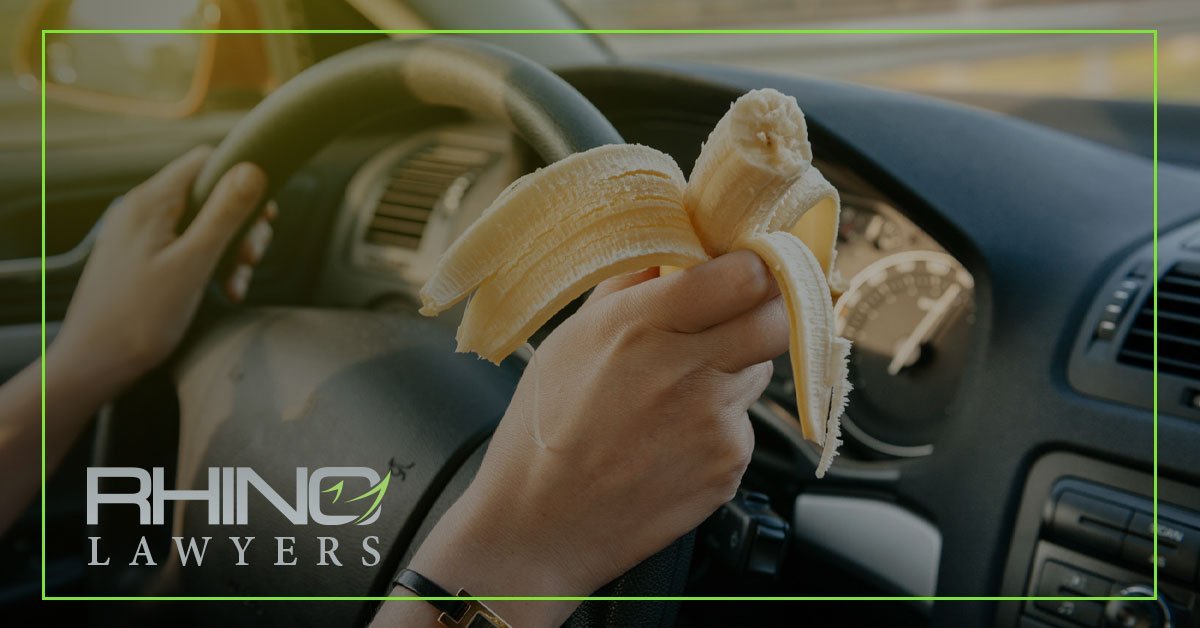
Is it Illegal to Eat While Driving in Florida?
Distracted driving isn’t just fiddling with the radio. More than 3,100 Americans were killed due to distracted drivers in 2020 alone.
Most people assume that these accidents had to do with cell phones. Many of them did.
But thousands of distracted driving accidents occur every year because the driver is eating while they are driving. If you eat while driving, you need to know about the dangers that simple action can cause.
Is it illegal to eat while driving? Can eating in your car affect your odds of winning a civil case? What should you do to stay safe while driving on Florida roads?
Answer these questions and you can become a smart and focused driver in no time. Here is your quick guide.
Florida Traffic Laws
There is no law specifically against eating while driving. Distracted driving laws apply to driving with an electronic device or cell phone in your car, not food or drinks.
However, other traffic laws may impact you. Section 316.1925 of the Florida Statutes applies to careless driving. Any person who operates a car in a way that endangers someone else’s life and property can be cited for a moving violation. If your food distracts you and causes you to speed or swerve, you may receive a careless driving citation.
Section 316.192 applies to reckless driving. This occurs when a driver operates their vehicle with “willful or wanton disregard for the safety of persons or property.”
If you take your hands off the wheel to hold your food or if you look away from the road, you may crash your car and receive a reckless driving charge. A first-time conviction of reckless driving can lead to a prison sentence of up to 90 days, even if you don’t hurt anyone.
Civil Liability
Florida is a comparative negligence state. This means that someone can claim damages from you based on how much responsibility you bear for the accident. Even if the other driver was mostly at fault, they can receive some money from you.
The plaintiff can build a strong auto accident case against you using surveillance footage and eyewitnesses. They can show you were looking at your food or had your hand off the wheel when the accident happened. This may be enough evidence to establish fault.
The worse the car accident is, the more money you may need to pay. Juries can give money to plaintiffs based on their pain and suffering.
They can also assign damages based on lost income, mental health problems, and vehicle damage. Damages can total thousands of dollars, even if the collision was a complete accident.
Insurance companies will also look at your degree of fault in an accident. If they find out you were eating while driving, they can deny you a claim for compensation, forcing you to pay out of pocket.
Tips to Avoid Problems
You should avoid all types of distracted driving, including eating while driving. The key to being an attentive driver is to eliminate all sources of distractions. You should follow several steps simultaneously so there is no chance that food distracts you.
Pull Over to Eat
When you need to eat, you should pull your car over. Park in a parking lot or in a roadside parking spot and eat there.
Turn your vehicle off so there is no chance of your car moving while you are eating. You can step outside your car or remain inside to eat, though you may want to sit in the passenger seat so a police officer doesn’t think you are idling.
You should also pull over to have a beverage, as drinks can be as distracting as food. Never drink alcohol inside your car, even if the car is off and you are not driving. Carrying an open container of alcohol in your car is a criminal offense in Florida.
Do Not Keep Food in Your Car
You are more likely to eat while driving when there is food in your car. While you are driving in Florida, you should keep food out of arm’s reach. Do not put any snacks in your glove box, side compartments, or cup holders.
If you are bringing home groceries, you should put them in the back seat or trunk instead of in the passenger seat. Store your items in coolers so they are harder to access.
Do Not Drive While You Are Hungry
Though you should not drive while you are eating, you should also not drive while you are hungry. Hunger can be as distracting as food, and significant hunger can cause lightheadedness and drowsiness.
Eat a big meal before you start driving. Try to eat foods that are high in protein and whole grains, as they burn slowly and keep you full for a long period of time.
Nut and fruit mixes offer protein with healthy sugars that create energy for hours. You can also eat a meat sandwich with whole wheat bread.
Can You Eat While Driving?
You take a big risk when you eat while driving. There is no law against it.
But food can take your eyes off the road, leading to a careless driving or reckless driving charge. Food can increase your fault percentage for the accident, driving up how much money you need to pay in a civil case. Always pull over to eat or drink, and eat something before you get behind the wheel.
If you get into an accident, you need a smart lawyer to avoid damages and charges. RHINO Lawyers serves Florida residents. Contact us today.
CONTACT A TAMPA AUTO ACCIDENT ATTORNEY
In short, after a car accident, you may not know your rights. Above all, don’t struggle through the process alone. Actually, our personal injury team is here to help you with any legal needs you might have regarding your accident.
Lastly, let RHINO Lawyers answer your questions and review the facts of your case with a Free Consultation. So, get started by completing the “Free Instant Case Evaluation” or by calling us any time, day or night, at 844.RHINO.77.
Read More
Is There a Cap on Medical Malpractice Damages?
Medical malpractice cases are taking Florida by storm. Between 2009 and 2019, Florida doctors paid more than $460 million to settle malpractice claims.
You could be entitled to a significant recovery based on your negligent doctor’s mistakes. Yet you can’t just file a lawsuit and expect to win big. Medical malpractice lawsuits require extensive knowledge of the laws, including those that may impose caps on medical damages.
Do Florida laws impose limitations on malpractice damages? How do you prove that you experienced an act of malpractice? What documents do you need to prove economic and non-economic damages?
Answer these questions and we may be able to file a medical malpractice case on your behalf. Here is your quick guide.
Florida Malpractice Laws
In medical negligence claims, plaintiffs can claim money from defendants based on their economic losses and non-economic losses. Economic losses are past and future medical expenses and lost wages. Non-economic losses are based on pain, suffering, inconvenience, and the loss of enjoyment of life.
Florida Statute 766.118 imposed a limitation on non-economic damages. Most cases were capped at $500,000. Cases involving death or permanent vegetative state could have non-economic damages of up to $1 million.
However, a Florida Supreme Court case concluded this limitation was unconstitutional. The statute is still technically on the books. But arguably, there is no current cap on non-economic damages in medical malpractice cases at this time.
The Florida House of Representatives tried to pass a new law with caps in 2019. The law died in committee. Yet the law may be introduced again in another session, so you should follow the news to see if it will affect your case.
Keep in mind that each state has its own malpractice laws. Some states impose a cap on non-economic damages while others impose a cap on all damages. Talk to a lawyer in your state for more details.
Proving Malpractice
The striking down of the cap on medical damages can help the damages in your case, but you still need to provide proof of your malpractice claims. You must meet several legal requirements in order to win your case.
You must prove that the defendant violated a standard of care. Examples, include misdiagnosing you or causing an unnecessary injury during a medical procedure.
You can ask a medical professional to testify for you and describe in detail how the doctor made a mistake.
Causation is proof that the defendant caused your injury. You can use paperwork from the hospital to show that they were in charge of your surgery or medication. If you are suing multiple people, you need to provide evidence of causation for each defendant.
Your injuries must be unnecessary based on the treatment you received. Many people experience bleeding or bruising after surgery, but that doesn’t necessarily mean that there was malpractice.
But nerve damage and long-term mobility problems can be unnecessary, and you could potentially sue based on them. You must provide your medical records to your lawyer, who will work to hire the appropriate expert medical professionals to support your claims.
Proving Economic Damages
Economic damages may be very easy to prove. To show how much you spent on your medical expenses, you can provide your hospital bills and receipts.
You can claim money based on ongoing treatments, including rehabilitative therapy. You can use bills and expense paperwork from your therapist or personal doctor to show how much you are paying.
If you suffered a mental health problem due to the malpractice, you can claim money for your mental health treatment. You must prove a direct link between the malpractice and your health problem, which you can do through an expert witness. You should then provide receipts or bills related to your treatment.
To prove lost wages, you can use tax forms, pay stubs, and time cards. You can also ask your boss to testify on your behalf, explaining how your injuries have affected your work performance.
Asserting Non-economic Damages
Non-economic damages are hard to quantify. The key is to be specific with your claim and attach your claim to your physical condition.
You should be able to clearly describe how your physical problems have impacted your ability to live your life to the fullest. Physical pain may make it harder for you to sleep, walk, or eat. You may be unable to attend to your family or friends because you are struggling with your symptoms.
Create a picture of your life before the malpractice and after. Make it clear that your life has changed significantly since the incident and that you need compensation to return to your previous standard of living. You can describe how you will use the money to reach the stage of maximum medical improvement.
Your loved ones can also help. They should describe their loss of companionship and their anxiety over their physical and mental health.
The Basics of Malpractice Laws and Caps
Malpractice laws are always evolving. Florida laws did cap non-economic damages, but the cap arguably no longer exists. There has never been a cap in Florida on economic damages.
You still need to prove that your doctor was negligent and that you can claim specific damages. Your lawyer will hire an expert witness who can describe your injuries and your doctor’s mistake. Use your medical bills, receipts, and work stubs to show how much money you lost.
Find a lawyer who knows all about Florida malpractice regulations. RHINO Lawyers serves Tampa patients and families. Contact us today.
CONTACT A TAMPA Medical Malpractice ATTORNEY
In short, if you believe you’re a victim of medical malpractice, you may not know your rights. Above all, don’t struggle through the process alone. Actually, our personal injury team is here to help you with any legal needs you might have regarding your case.
Lastly, let RHINO Lawyers answer your questions and review the facts of your case with a Free Consultation. So, get started by completing the “Free Instant Case Evaluation” or by calling us any time, day or night, at 844.RHINO.77.
Read More
Is Fleeing and Eluding a Felony?
Fleeing and eluding a police officer is a felony in Florida. If you receive a conviction for this offense, you could face jail time, fines, or probation. So, it is important to understand the consequences of fleeing and eluding so you can make an informed decision about how to respond if the police stop you.
Here are a few tips from an experienced criminal defense attorney about charges for eluding a police officer.
Definition of Fleeing and Eluding
Section 316.1935 of the Florida Statutes defines the crime of fleeing and eluding as the failure to stop your vehicle in a timely and safe manner when ordered to do so by a law enforcement officer.
This officer must have emergency lights activated while in a fully marked patrol car. Thus failure to stop is often considered a felony offense. And punishable by fines, imprisonment, or both.
In some states, they consider fleeing and eluding a crime of violence. Which can result in enhanced penalties. If you receive accusations of fleeing and eluding, it is important to contact an experienced criminal defense attorney as soon as possible. Because they can help you understand the charges against you and your legal options.
Categories of Fleeing and Eluding
There are several categories of fleeing and eluding offenses in Florida. Let’s take a look at some of these charges.
Without Sirens Activated
This is a different charge if the officer’s sirens are not activated. It is a first-degree misdemeanor punishable by up to one year in jail and a $1,000 fine.
With Sirens Activated
The penalty for fleeing and eluding with sirens activated is a felony third-degree charge. This is punishable by a prison term of up to 5 years and a $5,000 fine.
Aggravated Fleeing and Eluding
Fleeing and eluding with wanton disregard for the safety of others is aggravated fleeing and eluding. This is a felony third-degree charge punishable by a prison term of up to 15 years and a $10,000 fine.
High Speed or Reckless Driving
If you receive an accusation of fleeing and eluding while driving at a high rate of speed or in a reckless manner, you will be charged with a felony third-degree. This is punishable by a prison term of up to five years and a $5,000 fine.
Causing Property Damage or Personal Injury
Now, if you receive an accusation of fleeing and eluding and causing damage to someone else’s property or personal injury. Then they will charge you with a felony of the first degree. This is punishable by a prison term of up to thirty years and a $10,000 fine.
Causing Serious Bodily Harm or Death
The penalties for this offense are much harsher as it is classified as a first-degree felony. It is punishable by a prison term of up to 30 years and a $10,000 fine. If the victim suffers permanent disability or disfigurement, the penalties increase to up to life in prison.
If you receive a conviction of fleeing and eluding, you may also have your driver’s license suspended for up to five years. In addition, your vehicle may be impounded for up to 90 days.
Possible Defenses to Fleeing and Eluding Charges
There are several possible defenses to fleeing and eluding charges. Some of these defenses include the following.
The police officer did not have probable cause to stop your vehicle. Or, you were not given a clear and concise order to stop your vehicle. You did not have the opportunity to safely stop your vehicle.
You were not fleeing or eluding, but rather were trying to comply with the officer’s orders in a safe and reasonable manner. The police officer used excessive force in attempting to stop your vehicle. You were not the driver of the vehicle at the time of the incident.
There is insufficient evidence to prove that you committed the offense beyond a reasonable doubt. You suffer from a mental illness or were under the influence of drugs or alcohol at the time of the incident, which prevented you from understanding the police officer’s orders or acting in a reasonable manner.
You were a victim of entrapment by the police. Mistaken identity, lack of knowledge (the defendant didn’t know the officer was trying to pull them over), or there was a medical emergency.
Mandatory Adjudication of Guilt for Fleeing or Eluding
This means that you receive a conviction and will have a criminal record. A conviction for fleeing or eluding can have significant consequences, including jail time, a loss of driving privileges, and a permanent criminal record.
In Florida, if you receive a conviction of a felony, you must serve a mandatory minimum sentence. This means that you will not be eligible for probation or any other form of early release.
What Is the Prosecutor’s Responsibility?
To convict you of fleeing or eluding, the prosecutor must prove that you willfully and knowingly violated the law. The prosecutor must also prove that you had the opportunity to stop your vehicle in a safe and reasonable manner, but failed to do so.
If the prosecutor cannot prove these elements beyond a reasonable doubt, then you cannot receive a conviction of fleeing or eluding. To receive a conviction of fleeing or eluding, the prosecutor must prove the following elements beyond a reasonable doubt:
- You were driving a vehicle
- A law enforcement officer gave you a visual or audible signal to stop your vehicle
- You willfully failed or refused to stop your vehicle in compliance with the signal
The prosecutor does not have to prove that you intended to flee or elude the police officer.
Criminal Defense Attorney
If you face a fleeing and eluding charge, hire an experienced criminal defense attorney. Because they can review the facts of your case and develop a strong defense. Plus, an experienced attorney will also be able to negotiate with prosecutors for a reduced sentence or dismissal of charges.
The penalties for fleeing and eluding are severe and can have a lasting impact on your life. Do not face these charges alone. An experienced criminal defense attorney will fight for you. Consult with us today.
CONTACT TAMPA TRAFFIC TICKET ATTORNEY
RHINO Lawyers can help and guide you through a system molded by law enforcement, judges, and lawyers for decades. Having won cases for our clients in similar circumstances, our criminal defense team knows what it takes to fight on your behalf.
Let RHINO Lawyers answer your questions and review the facts of your case with a Free Consultation. So, get started by completing the “Free Instant Case Evaluation” or by calling us any time, day or night, at (844) RHINO-77.
Read More
What Is the Difference Between Careless and Reckless Driving in Florida?
Did you know that Florida hit-and-run crashes went up by 17% in 2021?
Reckless driving in Florida is an increasing problem. A car accident in Florida is already a big financial burden to shoulder, but it could be a lot worse. A reckless driver could jeopardize your life and your property.
Reckless driving and careless driving in Florida might seem like the same thing. But both have a unique classification under the law. It pays to know the difference for your case.
In this guide, we’ll discuss the Florida driving laws on careless and reckless driving. Keep reading for more details.
What Is Careless Driving in Florida?
According to § 316.1925, careless driving is to do the following:
- Not drive in a prudent and careful manner
- Display no regard for different aspects of driving such as lane width or traffic density
- Endanger human life or property as a result of this careless behavior
To put it simply, careless driving in Florida is when you’re not making an effort to drive well. You show disregard for traffic laws or drive in a way that threatens cars and their occupants.
However, a careless driver is not someone who does so with the intention to hard. A careless driver disregards the law out of a lack of concern. They don’t wish for others to suffer as a result of their actions.
Often, a careless driving ticket will happen as a result of a car accident in Florida. However, you should drive carefully as this can happen without any crash.
Examples of Careless Driving
Careless driving is a “catch-all” that police officers may use for many traffic violations. This can happen if you rear-end someone, or fail to yield when the signs are clear. In some cases, they may charge you with careless driving if you are distracted.
Here are a few more examples of careless driving:
- Making a sudden lane change without a blinker
- Tailgating the cars in front of you
- Speeding
- Not making an effort to obey traffic signs
- Passing a driver in an unsafe manner
Consequences of Careless Driving
Careless driving is a type of moving violation. The result will be heavy fines. In most cases, you will receive points on your license.
Depending on the severity, this could lead to license suspension. This may cause your insurance company to hike up your premiums. Whatever the case, it’s well worth the effort to be a good driver and pay attention.
What Is Reckless Driving in Florida?
According to § 316.192, reckless driving is a matter of intention. Unlike careless driving, this isn’t an issue of lackadaisical concern while behind the wheel. If you are “willful or wanton” in your disregard, then you risk a reckless driving charge.
Careless driving is more an example of poor behavior, without seeking to harm or cause damage. Reckless driving is where this harm and damage happens on purpose.
You are a reckless driver if you drive in a dangerous way while knowing the consequences. You are indifferent to these consequences, whether they be harmful to life or property.
Examples of Reckless Driving
The law for reckless driving is a general law that applies to any sort of driving with that wanton disregard. However, it also outlines a few specific crimes:
- Trying to flee or evade a pursuing police officer
- Illegal street racing, such as drag racing
- Traveling at speeds well above the speed limit and weaving through traffic while doing so
- Driving 20 mph or more above the speed limit in the area
These are just a few examples of what might constitute reckless driving. You might suffer a reckless driving charge if you speed through a pedestrian crosswalk or ride up on the sidewalk. Attempting to run someone over may include a reckless driving charge.
This charge can apply to a Florida car crash as well. Being intoxicated over the legal limit will only make the repercussions worse.
Consequences of Reckless Driving
A big difference between careless and reckless driving is that reckless driving is a criminal offense. Careless driving is just a moving violation, which incurs penalties that are far less steep.
The penalties for reckless driving are harsh. For your first offense, the state of Florida could imprison you for up to 90 days. Otherwise, they might fine you between $25-500.
Things get worse for a second offense. The state could imprison you for up to 6 months, twice as long as the first sentence. The fine could be between $50 and $1,000.
That’s not to mention that this could result in license suspension and points on your license. A reckless driving offense could make it very difficult for you to drive again. You may struggle to find insurance that would cover you.
What to Do as a Victim of Careless or Reckless Driving
Being on the road in Florida is getting more dangerous than ever. The increase in hit-and-run incidents is just one piece of evidence that you need to keep up your guard. Unfortunately, a Florida car crash is something you may not be able to avoid.
A car accident in Florida can be a devastating thing. And when the accident involves a careless or reckless driver, the damage could be catastrophic. You may suffer an injury and require a lawyer to fight your case.
In the event a driver threatens your life, you should contact a professional. Penalties are high for both careless and reckless driving. There’s a good chance a lawyer can get you the compensation you deserve.
Further, you’ll feel the satisfaction of taking a terrible driver off the streets. A reckless driver that’s in prison is one that cannot harm anyone else.
TAMPA Criminal Defense Lawyers
Reckless driving in Florida is a criminal offense. However, it differs from a similar careless driving law. Reckless driving is about intent to do harm, so it pays to know the difference in the event of an accident.
Looking for representation after a crash? You’ve come to the right place. Contact RHINO Lawyers and get a free case review.
CONTACT TAMPA TRAFFIC TICKET ATTORNEY
RHINO Lawyers can help and guide you through a system molded by law enforcement, judges, and lawyers for decades. Having won cases for our clients in similar circumstances, our criminal defense team knows what it takes to fight on your behalf.
Let RHINO Lawyers answer your questions and review the facts of your case with a Free Consultation. So, get started by completing the “Free Instant Case Evaluation” or by calling us any time, day or night, at (844) RHINO-77.
Read More