

The Rules of the Road for Golf Carts
Annually, fifteen thousand people obtain a golf cart accident injury. That’s about 288 people per week. But it’s easy to avoid becoming an accident victim when you follow the rules of the road- both on and off the golf course.
Keep reading to learn about age requirements, equipment rules, and registration golf cart laws in Florida.
Is a Golf Cart a Motor Vehicle?
Florida Statute §320.01(41) classifies golf carts as low-speed vehicles (LSV). This means vehicles with four wheels traveling at a maximum speed of 20-25 mph.
These are motor vehicles designed for operating on golf courses and for recreational purposes. They cannot go over 20 mph, per Fla. Stat. §320.01(22).
The vehicle has three or more wheels and weighs 1,800 lbs. or less. It can carry a maximum of four passengers, including the driver.
A roadway is the width between the boundary lines available for public vehicle traffic per Fla. Stat. §320.01(16). You can only cross a street with your golf cart under specific conditions. Operation is only permitted on roads with posted speeds of 30 mph or below when the road contains signage stating use is for automobiles and golf carts.
Conditions of Operating on Roadways
You can’t drive them on public roads in Florida, except under specific conditions found in Fla. Stat. 316.212. According to law, golf cart usage on public roads is not permitted except for the following:
- On a county road or municipal street designated for use by golf carts
- To cross a state highway intersecting a county road or municipal street designated for golf cart usage
- Crossing a state highway at midblock when a golf course is on both sides of the highway
- On a state road, if the DOT determines golf cart use does not impede traffic flow
- Crossing a street or highway where a single mobile home park is on both sides of the roadway
- On a state park road system, if the speed limit is 35 mph or less
- Operation only allowable from sunrise to sunset
- Nighttime driving is only allowable with government authorization and on carts equipped with headlights, brake lights, turn signals, and a windshield
Golf carts operating on public roads must have efficient brakes, safe tires, reliable steering, rearview mirrors, and reflectorized warning devices on the rear and front. Drivers must follow all traffic laws and maintain the posted speed.
When using designated golf cart crosswalks intersecting a roadway, you must yield to pedestrians and cross-vehicle traffic.
Avoid operating golf carts in bad weather. Heavy rain can cause slick roads and flooding, increasing safety risks.
Prohibited Areas
You cannot operate golf carts on roads with speeds over 30 mph. It is illegal to drive on sidewalks unless designated for that purpose. Local government entities may obtain authorization from the Department of Transportation to allow the use on sidewalks.
Local ordinances must restrict the golf cart speed to 15 mph, and the sidewalks must be at least eight feet wide. Fla. Stat §316.212(b) requires posting signs that usage includes golf carts.
Golf carts using sidewalks must meet all equipment requirements for street usage. Additional safety requirements may include a horn or other warning device.
Licensing Requirements
Adults aren’t the only ones at risk of golf cart accidents. Every year over 6,500 children suffer golf cart injuries; over half of those under 12. That’s why there are age restrictions around driving these vehicles.
The allowance for teens 14 years and over to drive is now void. Beginning July 2023, golf cart laws in Florida mandate teens be at least 15 years old and have a learner’s permit or 16 and above with a driver’s license.
Anyone over 18 must have a valid ID or driver’s license from the government to operate a golf cart.
Operating Under the Influence
You cannot operate your golf cart on public roads when under the influence of drugs or alcohol. Law enforcement may pull you over and conduct a sobriety test if they believe you are intoxicated. If the officer determines you are under the influence, he or she can charge you with a DUI.
Passengers
Florida law requires every person in a golf cart to have their own seat. There is no seat sharing or holding children on a lap.
Every seat must have a seatbelt, and all occupants must wear seatbelts on roadways. Children three years or under must be in a car seat. The state recommends using a booster seat for children over age four, but this is not a legal requirement.
Equipment Requirements
To operate a golf cart on public roads in Florida, it must have all of the following:
- Headlights
- Taillights
- Front and rear turn signals
- Brake lights
- Windshield
- Parking brake
- Red reflex reflectors on each side and the rear
- Driver’s side exterior mirror
- Interior rearview mirror or passenger side exterior mirror
- Seat belt for each designated seat
- Vehicle identification number (VIN)
If you have a valid disability placard for your automobile, you may park your golf cart in accessible parking spots. You must display your handicap placard. You can get a ticket for parking illegally if you do not display the placard.
Golf Cart Registration
Most golf carts in Florida do not have titles because they are designed for off-road use. Titles and registration are not a requirement unless operating on the road.
You must register your golf cart with the Florida Department of Highway Safety and Motor Vehicles for road use. The registration must show the vehicle identification number (VIN). It must always display an up-to-date registration decal.
To register and title yours as an LSV, ensure it meets the equipment requirements above. Visit a Motor Vehicle Service Center with the following:
- Manufacturer’s Certificate of Origin
- Application For Title Form HSMV 82040
- Proof of minimum PDL and PIP insurance
- Personal identification-ID card, driver’s license, or passport
- Necessary Fees-title fee, plate fee, initial registration fee, registration fee (based on vehicle weight)
If you modify your golf cart into an LSV, the registration and title reflect the date of registration and title, not the manufacturing date. If purchasing a street-ready version, it may be older than the date on its title.
Golf Cart Insurance
To operate yours on public roads, you must have at least $10,000 in property damage liability (PDL) and $10,000 in personal injury protection (PIP).
One of the most common accidents on the road is the T-bone collision. People incur serious, life-altering injuries when an automobile crashes into the side of another vehicle or golf cart. This includes spinal cord injuries, traumatic brain injuries, broken bones, and tissue injuries.
When operating one on private property, insurance is not mandatory but is advisable. Golf cart accidents cause 10-15% of the personal injury claims on a course. About 70% of these accidents happen on private golf courses, and 40% involve experienced operators.
When recovering from personal injuries, accepting an insurance settlement offer that sounds fair is easy. Insurance companies know accident victims lack legal knowledge about what constitutes a fair settlement offer. Always consult a personal injury attorney before agreeing to a settlement.
If You Are in an Accident
When operating a golf cart on public roads in Florida, it is essential to comply with all Florida laws. Even the most cautious driver can become the victim of an accident.
If you suffer injuries in a golf cart accident, contact RHINO Lawyers for a free case analysis. We will negotiate your settlement or take the matter to trial while you recover. Call 844.RHINO.77 today.
CONTACT A TAMPA AUTO ACCIDENT ATTORNEY
In short, after a car accident, you may not know your rights. Above all, don’t struggle through the process alone. Actually, our personal injury team is here to help you with any legal needs you might have regarding your accident.
Lastly, let RHINO Lawyers answer your questions and review the facts of your case with a Free Consultation. So, get started by completing the “Free Instant Case Evaluation” or by calling us any time, day or night, at 844.RHINO.77.
Read More
What Is the RIDR Program and How Can I Benefit From It?
Driving under the influence is becoming a bigger and bigger problem in Florida. In 2021, there were nearly 44,000 drivers in the Sunshine State charged with a DUI.
To address this problem, Florida came up with a DUI diversion program called the Reducing Impaired Driving Recidivism Initiative (RIDR) to discourage people from doing this again.
Depending on your type of DUI, you could become eligible for this program. You increase your chances of this even further when you have the proper lawyer by your side.
What is this program? Who is eligible? How can a lawyer help you get into a RIDR program in Florida?
Read on for a guide that answers all of those questions and more.
What Is the DUI Diversion Program?
The DUI diversion program is a program that Florida came up with to try to help people charged with a DUI avoid getting charged with it again. Also, it is to educate drivers who are facing this charge about the dangers of driving under the influence.
Hillsborough happens to be one of the only counties in the state that currently offers this type of program. This program directly targets people who are just facing DUI charges.
Eligibility
There are certain requirements that you have to meet to be eligible for this program.
For starters, you can only enter this program if it is your first DUI. If you or a loved one have a past with DUI charges, you are not going to be eligible for the RIDR program this time around.
Then, you have to consider what type of DUI charge that you may be facing. That is because Florida only allows people with certain DUI charges to participate in this program.
The main requirement here is that this is a misdemeanor DUI. If you or a loved one have a felony DUI charge pending, you are not eligible to participate in this program.
Then, you have to account for who was in your vehicle at the time of this DUI. If there was any sort of minor in the vehicle, you lose your eligibility for this program.
Your BAC level can play a role in your eligibility as well. To meet this requirement, your BAC level had to have been under .20.
Review your case and consider talking to a DUI lawyer to see if your case is eligible for this program.
Program Levels
Another important thing you need to know about this program is that there are three different levels that the program offers. This depends on what kind of DUI charge you are facing.
However, there are a few things that apply to each one of the levels mentioned. The first is that if you have prior felony charges, you are not eligible for any of these program levels.
Level 1
This tends to be reserved for the least serious DUI charges.
The main thing you need here is a BAC level below .15. So, what do you have to do to complete the Level 1 program?
You have to have continuous alcohol monitoring and an ignition interlock alcohol device in your vehicle for at least three months. You will also have to complete 50 hours of community service.
Level 2
People who enter the Level 2 program are those with a BAC above .15 during their DUI conviction. The main differences are that community service hours increase to 75 and the ignition interlock alcohol device has to be on your vehicle for six months.
Level 3
Finally, this level is reserved for those who are facing drug charges surrounding their DUI rather than just alcohol.
With this level, people have to complete 50 hours of community service. On top of this, people at this level are required to wear an Abuse Patch for three months to make sure that they are not using drugs.
How a Lawyer Can Help
Now that you have a better understanding of what the RIDR program is, you may be wondering how a lawyer can help you with this. Well, there are a few big ways that they can have an influence with this case.
The first part of this is just having knowledge about this program. Since this is something that is only available in certain parts of Florida, it may not be given that a defendant knows about this program.
A lawyer is likely to have extensive knowledge of this program and what type of clients they have who can end up eligible for this. A lawyer has enough experience to pursue this option on your behalf if you meet the criteria mentioned above.
Also, lawyers can provide you with the legal counsel that you need to get a lighter sentence here. This can be anything from your behavior in court to what you need to confess to, what your options are, why this is the best option for you, and more.
Finally, lawyers can act as your voice when it comes time to talk to a prosecutor and a judge. During a certain point in this proceeding, a lawyer and a prosecutor are likely going to sit down and negotiate what your penalties will be for a DUI.
A lawyer is the person who will vouch for you and provide the best argument as to why you deserve to be part of this program. To take this a step further, your lawyer may even try to get you into the program at a lower level compared to what you may get on your own.
In other words, lawyers tend to be great negotiators. Let one with this talent act on your behalf.
Hire a DUI Lawyer
This is some information that you could use when it comes to the DUI diversion program.
You need to be aware of what criteria you need to meet to even enter this program. Then, get an understanding of what you have to do at each level of the program. Finally, let a lawyer negotiate the right program level for you.
If you or a loved one is facing a DUI charge, you should talk to a DUI lawyer about your options. Get a free case review from us here.
CONTACT TAMPA TRAFFIC TICKET ATTORNEY
RHINO Lawyers can help and guide you through a system molded by law enforcement, judges, and lawyers for decades. Having won cases for our clients in similar circumstances, our criminal defense team knows what it takes to fight on your behalf.
Let RHINO Lawyers answer your questions and review the facts of your case with a Free Consultation. So, get started by completing the “Free Instant Case Evaluation” or by calling us any time, day or night, at (844) RHINO-77.
Read More
DUI Penalties in Florida and How to Handle Them
The DUI laws in Florida aren’t quite as strict as they are in states like Arizona, Georgia, and Alaska. Florida DUI laws tend to fall somewhere in the middle of the pack when it comes to strictness.
But that doesn’t mean getting a DUI in Florida will be a walk in the park. Like most other states, Florida has put serious DUI consequences into place to deter people from driving under the influence of alcohol and/or drugs. As a result, you will face harsh Florida DUI penalties if you’re ever convicted of DUI.
This Florida DUI penalty chart that we’ve put together shows the potential penalties you may face if you’re ever arrested for DUI in the state. It’ll help show you why you should hire a Florida DUI lawyer immediately to handle your DUI case and hopefully help you avoid having to deal with the worst Florida DUI penalties possible.
Check out our Florida DUI penalty chart below.
First Offense
After getting a DUI in Florida for the first time, you’ll face a handful of DUI penalties that will be designed to make you think twice before you ever get behind the wheel after using alcohol and/or drugs again. From fines to jail time to community service, you’ll likely have to deal with a variety of DUI consequences.
The first entry on our Florida DUI penalty chart looks like this:
Fines: $500 to $1,000
Jail Time: 1 day to 6 months
Probation: Up to 1 year
Loss of License: 180 days to 1 year
Impounded Vehicle: 10 days
Breath Alcohol Ignition Interlock Device Installation: 0 days to 6 months
Other Florida DUI Penalties: 50 hours of community service, required substance abuse counseling, and DUI school
First Offense With a Minor in Vehicle or BAC Level of 0.15
If you get a DUI in Florida for the first time while you have a minor in your vehicle or while your blood alcohol content level is at or above 0.15, you’ll face harsher Florida DUI penalties than usual. Each of the DUI consequences that we just discussed will be ratcheted up to the next level.
This is what these Florida DUI penalties will look like:
Fines: $1,000 to $2,000
Jail Time: 1 day to 9 months
Probation: Up to 1 year
Loss of License: 180 days to 1 year
Impounded Vehicle: 10 days
Breath Alcohol Ignition Interlock Device Installation: 6 months to 1 year
Other Florida DUI Penalties: 50 hours of community service, required substance abuse counseling, and DUI school
Second Offense Within 5 Years
If you get a second DUI offense in Florida, the timing of it will impact the DUI consequences you’ll face. These consequences will be on the stricter side if your second DUI arrest occurs within 5 years of the first one.
Here are the Florida DUI penalties you’ll be looking at if you’re convicted of DUI twice in the state:
Fines: $1,000 to $2,000
Jail Time: Minimum 10 days to 9 months
Probation: Up to 1 year
Loss of License: 5 years or more
Impounded Vehicle: 30 days
Breath Alcohol Ignition Interlock Device Installation: At least 1 year
Other Florida DUI Penalties: Required substance abuse counseling and DUI school
Second Offense Within 5 Years With a Minor in Vehicle or BAC Level of 0.15
The Florida DUI penalties for someone who has been convicted for a second time in 5 years are already very harsh. Because of this, the DUI consequences for getting a second offense within 5 years with a minor in your vehicle or a BAC level of 0.15 or higher aren’t that dramatically different.
Take a look at the penalties you’ll face in this instance:
Fines: $2,000 to $4,000
Jail Time: Minimum 10 days to 12 months
Probation: Up to 1 year
Loss of License: 5 years or more
Impounded Vehicle: 30 days
Breath Alcohol Ignition Interlock Device Installation: At least 1 year
Other Florida DUI Penalties: Required substance abuse counseling and DUI school
Second Offense After 5 Years
If you end up getting a DUI in Florida for the second time but it takes place at least 5 years after your first conviction, the Florida DUI penalties will be slightly less harsh than they would be otherwise. But you’ll still find yourself dealing with some serious DUI consequences.
This is how these consequences will break down:
Fines: $1,000 to $2,000
Jail Time: 1 day to 9 months
Probation: Up to 1 year
Loss of License: 180 days to 1 year
Impounded Vehicle: 10 days
Breath Alcohol Ignition Interlock Device Installation: At least 1 year
Other Florida DUI Penalties: Required substance abuse counseling and DUI school
Second Offense After 5 Years With a Minor in Vehicle or BAC Level of 0.15
If you get a DUI in Florida for the second time after 5 years but you have a minor in your vehicle or a BAC level of 0.15 or higher, your Florida DUI penalties will be slightly harsher than if you weren’t arrested under these circumstances. Florida does not take kindly to DUIs that involve minors being in a vehicle or an especially high BAC level.
Here is how you’ll be penalized in this case:
Fines: $2,000 to $4,000
Jail Time: 1 day to 12 months
Probation: Up to 1 year
Loss of License: 180 days to 1 year
Impounded Vehicle: 10 days
Breath Alcohol Ignition Interlock Device Installation: At least 1 year
Other Florida DUI Penalties: Required substance abuse counseling and DUI school
Third Offense Within 10 Years
Getting arrested for DUI in Florida for the third time within 10 years can carry some of the most serious DUI consequences of all. The Florida DUI penalties that you’ll face might have a huge impact on your lifestyle.
This is what you may be facing following a third DUI arrest in a decade:
Fines: $1,000 to $5,000
Jail Time: Minimum 30 days to 12 months
Probation: Up to 1 year
Loss of License: 10 years or more
Impounded Vehicle: 90 days
Breath Alcohol Ignition Interlock Device Installation: At least 2 years
Other Florida DUI Penalties: Required substance abuse counseling and DUI school
Third Offense Within 10 Years With a Minor in Vehicle or BAC Level of 0.15
Getting arrested for DUI in Florida for the third time within 10 years with either a minor in your vehicle or a BAC level of 0.15 will subject you to even more serious DUI consequences. Just like with the previous examples listed on this Florida DUI penalty chart, you’re going to face stricter penalties under these circumstances.
Here are the Florida DUI penalties you’ll face:
Fines: $4,000 to $5,000
Jail Time: Minimum 30 days to 12 months
Probation: Up to 1 year
Loss of License: 10 years or more
Impounded Vehicle: 90 days
Breath Alcohol Ignition Interlock Device Installation: At least 2 years
Other Florida DUI Penalties: Required substance abuse counseling and DUI school
Fourth Offense
If you happen to get arrested for DUI in Florida for a fourth time this can be considered a felony. You will run the risk of losing your driver’s license for good. You’ll also face other DUI consequences that could change your life forever, like extensive jail or prison time.
Check out the Florida DUI penalties for a fourth DUI offense and conviction:
Fines: $2,000 to $5,000
Jail Time: 1 day to 5 years
Probation: Up to 5 years
Loss of License: Permanent
Impounded Vehicle: 90 days
Breath Alcohol Ignition Interlock Device Installation: At least 5 years
Other Florida DUI Penalties: Required substance abuse counseling and DUI school
Getting a fourth offense with a minor in your vehicle or a BAC level of 0.15 or above will carry the same Florida DUI penalties. You will no longer be able to drive in the state after four DUI convictions. You could also be looking at serious jail or prison time.
Call Us for More Details on This Florida DUI Penalty Chart
This Florida DUI penalty chart shows how seriously the state of Florida takes DUI convictions. It has put strict DUI consequences in place in an attempt to stop people from drinking and driving or driving while under the influence of drugs.
But as you’ve seen after looking at this Florida DUI penalty chart, at least some of the Florida DUI penalties vary quite a bit. For instance, you could end up in jail for anywhere from just over a week to a full year following a second DUI arrest and conviction.
With this in mind, you should hire a great Florida DUI lawyer to help you if you’re ever arrested for DUI. They can work to minimize your DUI consequences or potentially even get your DUI case dismissed completely.
Contact RHINO Lawyers to learn how our law firm can help you.
CONTACT TAMPA TRAFFIC TICKET ATTORNEY
RHINO Lawyers can help and guide you through a system molded by law enforcement, judges, and lawyers for decades. Having won cases for our clients in similar circumstances, our criminal defense team knows what it takes to fight on your behalf.
Let RHINO Lawyers answer your questions and review the facts of your case with a Free Consultation. So, get started by completing the “Free Instant Case Evaluation” or by calling us any time, day or night, at (844) RHINO-77.
Read More
What Is a Fair Settlement for Pain and Suffering?
A personal injury can be a devastating event, leaving you with physical injuries and emotional turmoil. So, many auto accident victims experience life-changing repercussions that impact every area of their life.
Physical pain or disability, ongoing emotional distress, and other factors must be considered in a car accident settlement. More importantly, if you or a loved one were injured due to another’s driver’s negligence, you have rights.
In the aftermath of an accident, you may wonder what types of damages you’re entitled to. In addition, accident victims can receive compensation for medical expenses, lost wages, property damage, and pain and suffering.
Here’s a closer look at what a pain and suffering settlement is all about.
What Is Pain and Suffering?
Pain and suffering refer to the intangible injuries that accident victims suffer. Likewise, this may refer to physical pain and the psychological effects of a serious injury.
Some examples include:
- Depression and anxiety
- Loss of enjoyment in life
- Inconvenience
Also, loss of enjoyment can include the inability to participate in your daily activities. Such as caring for your family, maintaining a home, or participating in things you previously enjoyed.
Depending on the severity of your accident, you could receive damages for pain and suffering in addition to any financial losses.
Economic vs Non-Economic Damages
Pain and suffering are considered non-economic damages. There’s no dollar amount attached to emotional turmoil, and you can’t prove this type of damage with receipts.
Putting a monetary value on emotional suffering can be tricky. In fact, it depends on the victim’s previous abilities, lifestyle, and other factors. Economic damages may include:
- Medical bills
- Loss of wages
- Medical transport
- Home health aide
- Out-of-pocket expenses
Although an injury victim could file a claim for only pain and suffering damages, this is rare. Generally, accident victims hope to secure compensation for pain and suffering in addition to financial damages.
Many types of physical and mental effects from a serious injury qualify for pain and suffering damages.
Physical Effects
The effects of a serious injury can be long-lasting or even permanent. These injuries may change your lifestyle and alter your future plans.
Examples include:
- Neck and back pain
- Broken or crushed bones
- Chronic headaches
- Traumatic brain injury
- Internal organ damage
- Loss of limb
- Musculoskeletal injuries
- Paralysis
- Loss of hearing or eyesight
- Disfigurement or scarring
Emotional Effects
After an accident, emotional trauma can linger and affect your quality of life. Typically, these effects may range from short-term anxiety to severe post-traumatic stress disorder (PTSD).
Examples of emotional injury include:
- Panic attacks
- Psychological trauma
- Insomnia
- Grief
- Fear of leaving your home
- Anger
- Depression
- PTSD
Actually, some accident victims suffer ongoing psychological consequences following an accident. Moreover, they may need long-term mental health treatment and counseling.
Wrongful Death
Family members can suffer emotionally and financially when a loved one dies in an accident. In fact, depending on the situation, a family member may decide to file a wrongful death lawsuit.
In addition, they may be entitled to compensation for financial losses. As well as, “loss of consortium” due to the unexpected death of their loved one.
Some loss of consortium damages include:
- Loss of companionship (death of a spouse or life partner)
- Loss of parental guidance
- A loss of household support/services
- Loss of love and affection
Fair Settlement for Pain and Suffering
Each personal injury case is unique. In fact, car accident settlement amounts can vary significantly.
Now, the circumstances and facts of your case play an important role in determining your compensation for pain and suffering. Therefore, an accident lawyer will gather information about your case to ensure you’re receiving the maximum compensation you deserve.
There are two methods commonly used to calculate pain and suffering settlement amounts.
The Multiplier Method
Next, the multiplier method focuses on total economic damages such as medical bills and lost wages. As a result, this amount is multiplied by the level of severity of the injury or case. So, the number is generally between one and five.
Per Diem Method
The per diem method assigns a particular dollar amount per day. And this begins on the day of the accident and ends when the victim reaches maximum recovery.
How a Tampa Accident Law Firm Can Help
Have you been injured in an accident at no fault of your own? Because, if you’ve suffered physical and psychological injuries, a skilled personal injury lawyer can help you understand your rights. Plus, they will gather evidence, negotiate with all parties involved, and prove your case.
Proving Pain and Suffering
To receive compensation, you must prove pain and suffering. Therefore, an experienced personal injury lawyer can help.
At this stage, accident lawyers focus on establishing the facts of the case and quantifying the settlement amount.
Evidence of Pain and Suffering
Above all, documentation is vital in pain and suffering cases. In fact, the evidence may include:
- Medical records
- Doctor notes
- Personal journals
- Therapist or counselor notes
Your lawyer will work with you to gather as much evidence as possible to prove your case and secure compensation.
Securing a Pain and Suffering Settlement
Certainly, a serious accident can lead to devastating injuries, both physical and mental. So, some accident victims suffer psychological trauma for years to come following an accident.
In these cases, a pain and suffering settlement is an option. Thus, as an accident victim, you have rights. And, may be entitled to compensation for your medical bills, lost wages, pain & suffering, and more.
At RHINO Lawyers, we know how traumatizing a serious accident can be. And, our Tampa personal injury lawyers will evaluate your case and answer any questions you may have. So, you pay nothing unless you win.
Contact RHINO Lawyers today for a free consultation.
CONTACT A TAMPA AUTO ACCIDENT ATTORNEY
In short, after a car accident, you may not know your rights. Above all, don’t struggle through the process alone. Actually, our personal injury team is here to help you with any legal needs you might have regarding your accident.
Lastly, let RHINO Lawyers answer your questions and review the facts of your case with a Free Consultation. So, get started by completing the “Free Instant Case Evaluation” or by calling us any time, day or night, at 844.RHINO.77.
Read More
Common Motorcycle Accident Misconceptions
Motorcycle riding offers a sense of freedom and exhilaration that is unparalleled by any other mode of transportation. The wind in your hair and the world zooming past you is quite enlivening.
However, it also comes with inherent risks. Unfortunately, there are numerous misconceptions surrounding motorcycle accidents.
These misconceptions often contribute to a lack of understanding and empathy for motorcycle riders, leading to unsafe road behaviors and unfair blame during accidents.
In this article, we will debunk some of the most common motorcycle accident misconceptions. We will also shed light on the realities faced by motorcyclists on the road.
Misconception: Motorcycles are Inherently Dangerous
One of the most prevalent misconceptions is that motorcycles are dangerous vehicles. While it is true that motorcycles lack the protective features of cars, such as airbags and crumple zones, this does not make them intrinsically unsafe.
Reality
Motorcycle accidents often occur due to the negligence of other road users, such as car and truck drivers who fail to see or yield to motorcycles.
Defensive riding and proper training can mitigate these risks. This makes motorcycles a safe mode of transport when handled responsibly.
Responsible riding, wearing proper safety gear, and adhering to traffic laws significantly reduce the risk of accidents. Do not weave in and out of traffic. Follow the same rules of the road as a car would, no matter your size.
Also, make sure your passenger wears the appropriate gear as well.
Misconception: Most Motorcycle Accidents are the Rider’s Fault
A common misconception is that motorcycle accidents are predominantly the fault of the rider. While some motorcycle accidents may indeed result from rider error, many occur due to the actions of other drivers or external factors beyond the rider’s control.
Reality
Studies show that two-thirds of motorcycle accidents are caused by drivers of other vehicles violating the right-of-way of motorcyclists. In such cases, the rider bears little to no responsibility for the accident.
One reason for this might be that there are fewer motorcycles in the U.S. than in other places around the world. Research shows that more than half (58%) of motorcycles in the world are located in the Asian market. With mostly cars on the road, drivers aren’t always as proactive about watching for motorcyclists as they should be.
Misconception: Motorcycle Riders are Daredevils and Risk-Takers
Motorcycle riders are sometimes stereotyped as reckless daredevils who take unnecessary risks on the road. This misconception unfairly tarnishes the reputation of responsible motorcyclists who prioritize safety.
Reality
The majority of motorcycle riders are law-abiding citizens who take safety seriously. Many motorcyclists undergo extensive training and participate in safety courses to enhance their riding skills and reduce the risk of accidents.
They don’t necessarily wish to put others in danger just because they are riding on a motorcycle. They have the same instincts for safety as everyone else does.
Misconception: Motorcycle Accidents are Rare and Insignificant
There is a common belief that motorcycle accidents are relatively rare and do not pose a significant threat compared to other types of accidents.
Reality
Sadly, motorcycle accidents are more common than most people realize. One report from the National Highway Traffic Safety Administration (NHTSA) shows that motorcyclists are 27 times more likely to be involved in a fatal accident than occupants of cars.
These accidents can have severe consequences for riders, including life-altering injuries or death. At least in a car, you are partly protected by the four walls and also all the safety mechanisms, such as airbags.
On a motorcycle, you are quite open to the world around you. Even with safety gear on, it can be extremely dangerous to be in a collision.
Misconception: Helmets are Sufficient for Rider Safety
Some individuals believe that wearing a helmet is all that is needed to ensure a rider’s safety. While helmets are undoubtedly essential, they are not a foolproof solution for preventing accidents.
Reality
Helmets protect against head injuries and reduce the risk of fatalities. However, they do not prevent accidents from occurring.
Riders must adopt a comprehensive approach to motorcycle safety. This includes:
- Defensive riding
- Wearing appropriate protective gear
- Staying vigilant on the road
It might seem counterproductive to say this all over again, but it’s absolutely critical to follow defensive driving tactics any time you get on a motorcycle.
Misconception: Motorcyclists are Easily Visible
Another common misconception is that motorcyclists are easily visible on the road and that accidents occur because riders fail to make themselves seen.
Reality
Motorcycles are relatively smaller in size compared to cars and trucks. This makes them more challenging to spot. This is even more true in blind spots or during adverse weather conditions.
Drivers must remain attentive and check their surroundings thoroughly to avoid colliding with motorcycles. Do not let your attention meander from the road for even a second.
Misconception: Loud Pipes Prevent Accidents
There is a belief among some motorcyclists that having loud exhaust pipes not only sounds cool. It could also make them more noticeable and help prevent accidents.
Reality
Louder exhaust pipes might grab the attention of nearby drivers. Yet, relying solely on noise is not a substitute for safe riding practices. The primary focus should be on visibility, defensive riding, and adhering to traffic laws.
Avoid Motorcycle Accident Misconceptions With Better Judgment
Now that you are aware of the various motorcycle accident misconceptions, you can use them to make better driving decisions. It starts with every driver out there.
Motorcycles are going to become more common on the roads in the future. This means everyone has to be more careful driving around them. Responsibility can’t solely rest on motorcyclists.
If you were involved in a motorcycle accident, then contact our law firm. We help support victims of all kinds of accidents, including motorcycles, and we’re here to help you take those next steps.
CONTACT A TAMPA Motorcycle ACCIDENT ATTORNEY
In short, after a motorcycle accident, you may not know your rights. Above all, don’t struggle through the process alone. Actually, our personal injury team is here to help you with any legal needs you might have regarding your accident.
Lastly, let RHINO Lawyers answer your questions and review the facts of your case with a Free Consultation. So, get started by completing the “Free Instant Case Evaluation” or by calling us any time, day or night, at 844.RHINO.77.
Read More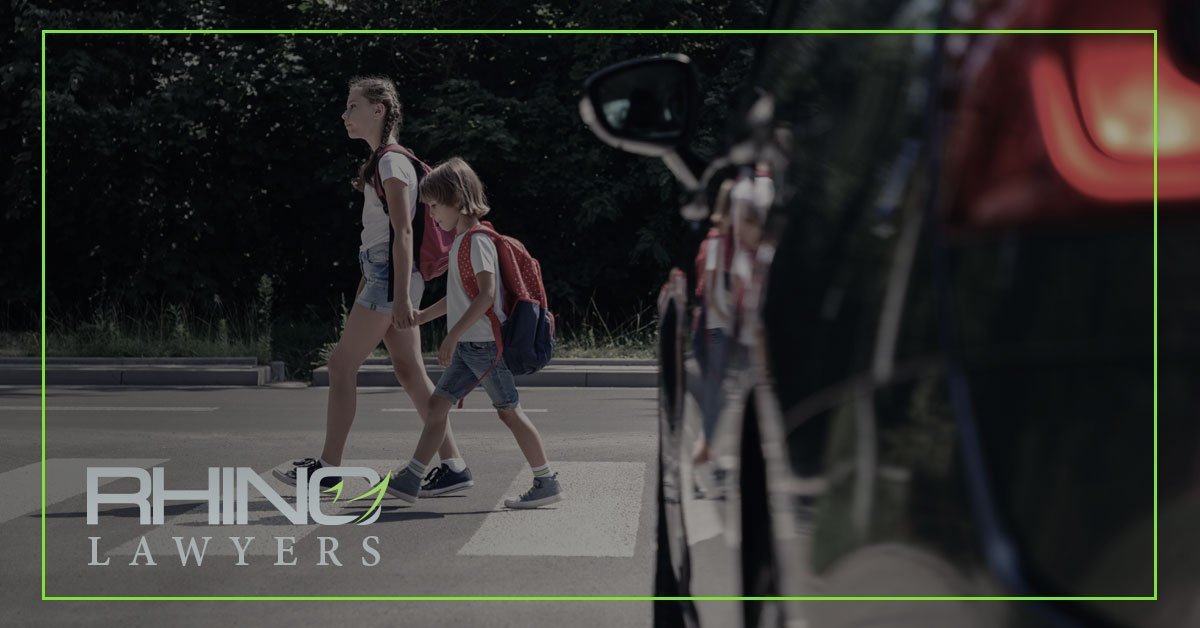
What Are the Laws for Driving in a School Zone?
Did you know there are over 100,000 schools in the United States? The sheer number of schools in our country means that sooner or later, you’re bound to drive through a school zone. Whenever you see school zone signs, you can adjust your speed and be alert for children. But what are the speed limit restrictions for Florida school zones? And what happens if you commit an infraction while driving in one of these zones?
If you want to discover the answers to these questions, you’re in the perfect place. This guide will help teach you everything you need to know about the laws for driving in a Florida school zone. That way, you can drive safely whenever you approach a school.
What Are School Zones?
School zones refer to either the immediate areas around a school or crosswalks near a facility. When a driver enters a school zone, they need to pay extra attention to potential children and parents crossing the street.
Sometimes there are crossing guards in school zones to facilitate the safe flow of traffic. A driver will also need to reduce their speed when driving in a school zone.
However, usually these speed restrictions only occur in the morning and afternoon, when kids are being dropped off and picked up. School zones are marked either by school zone signs or flashing lights.
What Do School Zone Signs Look Like?
School zone signs are shaped like an irregular pentagon. That means that it has a triangle on the top, with a square shape on the bottom. The fluorescent yellow signs also contain black symbols of people crossing the street.
These signs are placed all around the school. However, they’re usually confined to crosswalks and places where children often play.
What Are the Speed Limit Restrictions for These Zones?
The laws surrounding Florida school zone speed limits come from the state’s statute 316.1895. This law states that the maximum speed limit in a school zone is twenty MPH. Why is this law needed?
If a child runs into the middle of the street, it gives drivers enough time to react and brake. Additional state school zone driving laws also state that it’s illegal to use your cell phone and text/drive while in a school zone.
You can also get violations if you refuse to follow a crossing guard’s instruction or fail to yield to pedestrians. If you want to read the Florida statutes in their entirety, you can do so by visiting this resource here.
Fines for School Zone Driving Infractions
When you get an infraction in a school zone, it’s counted as a moving violation. Usually, the moving violation fine will start at $50. However, if it occurs in a school zone, then it’s doubled.
It’s also important to note that it can increase depending on how fast you were going by five MPH increments. So if you fly through a school zone going fifty MPH, you can expect some pretty hefty fines.
If you get a traffic ticket in a school zone, we don’t recommend paying it right away. Why? Because it can lead to an automatic conviction and points on your driver’s license.
If you get enough points on your driver’s license, it can result in the suspension of your license. Instead, contact a lawyer who focuses on traffic tickets. They can advise you on the best course of action for your specific circumstances.
What Are Common Accidents That Occur in a School Zone
School zones are there for a reason: they are extremely vulnerable to accidents. Not only are people frequently crossing the street, but vehicles are also stopping suddenly to unload children.
Some of the more common accidents you’re likely to encounter include things like:
- Car door accidents occur when a cyclist or vehicle hits an open car door
- Pedestrian accidents occur when someone is hit on a busy road
- Rear-end collisions from sudden stops to drop off or pick up children
- Bicycle accidents from children biking to school
If you’ve been involved in one of these accidents, it’s vital to contact a personal injury attorney as soon as you’re able. You can avoid these costly accidents by following the tips laid out in the next section.
Tips for Driving Safely in a School Zone
Obeying the speed limit in a school zone is one of the main things you can do to prevent accidents. However, there are other precautions you can take to drive safely in these zones.
For starters, never try to pass a stopped vehicle in a school zone. There’s a good chance that this parked car is either loading or unloading children. As such, you could hit them if you try to pass. It’s also important to be alert when in these zones.
Children aren’t like adults. They often move unpredictably. They might try to cross in an area that doesn’t have a crosswalk. Or they might run into the street to grab something.
Be on the lookout to avoid these hazards. Lastly, if you stop at an intersection, make sure your vehicle isn’t blocking the crosswalk. This will force children and other pedestrians into the street, which can make them a potential hazard for other vehicles.
Got a Traffic Ticket From Driving in a School Zone? Contact RHINO Lawyers
We hope this guide helped you learn more about school zone signs, speed limits, and infractions. As we mentioned before, if you have multiple points on your license, then a school zone traffic ticket could result in either civil penalties or a potential suspension of your license.
If you find yourself in this situation, it’s important to contact a professional like the kind found at RHINO Lawyers. Our team has extensive experience when it comes to auto laws in the state of Florida.
So, whether you’ve been injured in an accident, or need help dealing with traffic tickets, we can help you. Contact us today to schedule your free video consultation.
CONTACT TAMPA TRAFFIC TICKET ATTORNEY
RHINO Lawyers can help and guide you through a system molded by law enforcement, judges, and lawyers for decades. Having won cases for our clients in similar circumstances, our criminal defense team knows what it takes to fight on your behalf.
Let RHINO Lawyers answer your questions and review the facts of your case with a Free Consultation. So, get started by completing the “Free Instant Case Evaluation” or by calling us any time, day or night, at (844) RHINO-77.
Read More
The Hidden Costs of Speeding Tickets in Florida
Most speeding tickets in Florida come with a $200 to $300 price tag. And if you thought that amount was high, take note. Play your cards wrong, and you could find yourself paying up to $1,000 if caught going 50mph over the speed limit. The fees you pay vary according to how fast you’re going. As well as, if they catch you speeding in a specific zone. When it comes to speeding, the best way to protect yourself is to drive within the speed limit. If you thought fines were hefty, there is a pretty good reason why. Speeding comes within the top five most common causes of car accidents, after distracted driving, drunk driving, poor weather, and reckless driving or road rage. If you do tend to push the pedal to the metal, then be aware of the hidden costs that can accompany a speeding ticket.
The Hefty Costs of Point Suspensions
When you receive a ticket, you can earn points which, when accumulated, can cause your license to be suspended. If you receive 12 points within 12 months, you receive a 30-day suspension. For 18 points within 18 months, you get a 3-month suspension. Meanwhile, for 24 points within 36 months, you can receive a 1-year suspension. Simply add up how much taking a car saves you time on public transport, and taxis or Uber. Can you afford to lose your license by racking up points?
Paying More for Insurance
If you are budget-conscious, then one area you may try to save on is insurance. You might do this by choosing a vehicle type that is generally cheaper to insure—for instance, an SUV with a positive rating and reputation for safety or a safe family sedan, as opposed to a car known for its speed. What’s more, is that some brands (including Dodge and Tesla—known for speed—and whose vehicles can be expensive to repair) are pricier than others to insure. If you are looking to save unnecessary expenditures, be aware that in Florida. There is an average 22% increase in a driver’s insurance rate if they get a speeding ticket. This makes sense considering the big role that speeding has played in countless accidents.
Additional Penalties
Drivers have an obligation to stick to speed limits regardless of where they are driving. However, with a view to keeping children safe, Florida lawmakers have created more serious consequences for those violating the law in zones where children are going to and coming from school. As such, you will have to pay a higher fine than average if you get caught speeding in one of these zones. And you can also cause you to lose more points. In general, you can expect to pay double the amount you would for a standard speeding ticket. Moreover, you will have obtained at least 3 points on your license, or 4 points if you’re going 16mph or over the limit, and 6 points if speeding leads to a crash.
More Hidden Costs
Be careful of pleading guilty to speeding in Florida. Doing so will mean you will have a conviction on your record. Seek the help of a traffic lawyer to avoid indirect costs. The latter can range from out-of-pocket costs for Uber and Lyft to strained relationships with family and friends who you may ask to help you out. While many people would undoubtedly like to ease your burden. Everyone has their own obligations and needs, and they may be unable to adapt to your schedule.
Why Is it Wise to Hire a Lawyer if You Get a Speeding Ticket?
Convictions can have a big impact on your life. So it is always a good idea to hire a traffic lawyer who knows the rules of the road to help reduce the negative consequences. And potentially get your ticket reduced or dismissed. Lawyers who practice in this field know the ins and outs of the relevant legislation. Plus, they rely on various strategies to help their clients. For instance, they may see it fit to challenge the validity of a radar or laser that was used to record your speed.
Clearly, the costs of receiving a citation for speeding in Florida can go way beyond the cost of the fine itself. You can rack up points, end up paying higher insurance premiums, and ultimately find yourself with a suspended license. Therefore, avoid turning your life upside down by sticking to the speed limit and seek legal advice if you are ticketed.
CONTACT TAMPA TRAFFIC TICKET ATTORNEY
RHINO Lawyers can help and guide you through a system molded by law enforcement, judges, and lawyers for decades. Having won cases for our clients in similar circumstances, our criminal defense team knows what it takes to fight on your behalf.
Let RHINO Lawyers answer your questions and review the facts of your case with a Free Consultation. So, get started by completing the “Free Instant Case Evaluation” or by calling us any time, day or night, at (844) RHINO-77.
Read More
Can Stress Affect Driving Enough to Cause an Accident?
When you think of auto accidents, you probably think of tangible causes such as the weather, distracted driving, and the like. What you might not think about, however, is physiological causes.
Physiological stress, in particular, can have a seismic impact on a person’s state of being. It can make a person nervous, distracted, and irrational, to name just a few characteristics.
That said, can stress and driving lead to car accidents? Can it result in a car accident injury? We’re going to dive into that topic below, helping you determine whether you’re fit to be on the road.
Let’s begin!
Can Stress Lead to Auto Accidents?
Put simply, yes, stress can lead to auto accidents. Stress is defined as physical or mental tension. When a person is in a state of tension, they’re not operating at the max capacity.
As such, they could very easily do things they wouldn’t normally do. For instance, they could turn in front of another driver who’s coming up on them fast. Or, they could hit the gas pedal when they would normally ease back.
It’s important to note, though, that if your stress results in you causing an accident, you won’t be able to use stress as an excuse to escape liability. You will still be held liable for causing the accident.
In What Ways Can Stress Lead to Auto Accidents?
As noted above, stress can absolutely lead to auto accidents. To better illustrate this, we’re going to discuss how exactly it does so. Stress:
Impairs Your Decision Making
First and foremost, stress impairs your decision-making. When you’re under stress, you’re essentially being overwhelmed by many thoughts at once. If you’re overwhelmed by many thoughts, you won’t be able to make quick decisions on the road.
Let’s say that you don’t notice your turn until the last second. In a state of non-stress, you might just drive past it and turn around. In a stressed state, however, you might try to slam on your brakes and make the turn, thus resulting in a car accident.
Slows Your Reaction Time
Not only does stress impair your decision making but it also slows your reaction time. Because your mind is stuck on other things, you’re not able to process stimuli as quickly. As such, you are much slower to react when unexpected things come your way.
So, let’s say that someone slams their brakes on in front of you. In a non-stressed state, you would respond almost immediately. In a stressed state, however, you’re more apt to wait a second or two. That additional 1 or 2 seconds could easily result in an accident.
Results in Road Rage
Another way that stress can lead to auto accidents is that it can result in road rage. When you’re stressed, you’re more apt to get angry at other drivers.
As such, you might, for instance, tailgate a driver that just cut you off. Or, you might give an offensive hand gesture to a driver, resulting in that driver driving in a way that puts you in a dangerous situation. These situations could very easily end in an accident.
Creates Physical Impairment
Oftentimes, when mental stress becomes extreme enough, it ends up manifesting itself in physical symptoms. These run the gamut from headaches to light sensitivity to general fatigue and more.
Of course, all of these physical impairments have the potential to negatively affect one’s driving. It wouldn’t be a surprise if they resulted in an auto accident.
Keeping Stress to a Minimum
As you can see, stress most certainly leads to auto accidents. The issue, of course, is that, at certain times, we have to drive in order to tend to specific responsibilities. So, we can’t always refrain from driving just because we’re stressed out.
This is why we must make decisions that keep our stress levels to a minimum. Some ways of keeping stress levels low include:
Exercising on a Regular Basis
Exercise isn’t just good for your physical health but also for your mental well-being. Aerobic exercise literally reduces the amount of stress hormones in the body, thereby helping a person to feel more calm.
So, if you want to keep stress levels low, you need to be exercising regularly. Ideally, you’ll exercise 3 to 5 times a week for 30 minutes to 90 minutes at a time.
Getting Ample Sleep
Driving when you’re tired is always a dangerous prospect. Not only could it cause you to fall asleep behind the wheel but it could also result in you experiencing stress while you drive.
This is why it’s important to get ample sleep night in and night out. Try to get 7 to 9 hours of sleep daily.
Eat Right
Eating right is also key to maintaining stress levels. This includes keeping a balanced diet according to the food pyramid. It also includes keeping things in moderation, such as alcohol and junk food.
Sugary and processed foods, in particular, tend to cause stress. So, only eat these sparingly, if you can help it.
Keep a Good Social Life
Human beings are, indeed, social creatures. If we don’t socialize on a regular basis, we tend to feel depressed and, well, stressed. Our anxiety levels spike and our moods plummet.
So, keep a good social life. Hang out with your friends regularly and make sure your life is more than work.
Stress and Driving Are a Bad Combo
While stress isn’t one of the most obvious car accident causes, it’s a cause nonetheless. As such, as much as possible, you should avoid stress and driving.
Were you recently involved in a stress-related car accident? Looking to file a claim over injuries? If so, it would be wise to speak with a car accident attorney.
An auto accident attorney can help you obtain a settlement, helping to pay for your hospital bills and other related expenses.
Looking for Tampa accident lawyers? Look no further than RHINO Lawyers. Contact us now for a free consultation!
CONTACT A TAMPA AUTO ACCIDENT ATTORNEY
In short, after a car accident, you may not know your rights. Above all, don’t struggle through the process alone. Actually, our personal injury team is here to help you with any legal needs you might have regarding your accident.
Lastly, let RHINO Lawyers answer your questions and review the facts of your case with a Free Consultation. So, get started by completing the “Free Instant Case Evaluation” or by calling us any time, day or night, at 844.RHINO.77.
Read More
What’s the Difference Between ‘Nolo Contendere,’ ‘Nolle Prosequi,’ and ‘Guilty Plea?’
Going to court in Florida can be daunting. After all, the Sunshine State has 94 different courts, each with different personalities and oppositions you have to deal with.
If you have never been to court, you may think there are only guilty and not guilty pleas as options. As any good lawyer will tell you, these pleas only scratch the surface.
What are the biggest differences between guilty vs. no contest and the other types of pleas available? Read on to find out the answers to these questions and more.
Guilty vs. No Contest
Before we get into the biggest differences between these pleas, let’s go over what guilty and no-contest pleas share in common.
The main thing that these two have in common is that with both pleas, the defendant accepts a conviction and the consequences that go with it by the court. That’s about where the similarities end. Below, we spell out the main differences between these pleas.
Guilty
First, what is the guilty plea? When you plead guilty, you fully admit to the crimes or civil charges against you. You are also owning up to your actions and accepting responsibility.
Someone might plead guilty if it’s the best way to negotiate in a plea bargain. For example, the plaintiff or prosecutor may offer the defendant a better deal with their punishment or charges if the defendant pleads ‘guilty’ to a charge. This saves everyone time and effort to pursue this case further and allows both sides to reach some sort of compromise.
If a defendant pleads ‘not guilty’ in a case, then the defendant can face more severe penalties if they are still ruled guilty. Because of this, they may plead guilty to prevent the possible penalties associated with the crime. It could reduce fines and keep them out of jail.
No Contest – nolo contendere
The other option that some people may choose to go with is a no-contest plea. Also known as “nolo contendere,” many people fail to understand the difference between nolo contendere vs. not guilty pleas, so here’s a quick explainer.
With the not guilty plea, you admit guilt to the charges against you. Comparably, with a nolo contendere plea, you are not admitting guilt. The only thing you are doing is accepting the penalties the court applies to you.
Let’s say that you got charged with a DUI. However, you are a public figure in your local area. As such, you are concerned about what this could do to your reputation, your social life, and even your career.
A no-contest plea here allows you to accept similar penalties without fully admitting that you did anything wrong. As a result, this can make it more difficult for someone to face civil penalties or consequences.
Some people may choose this as an alternative to going to trial. Considering that defendants lose 90% of cases that go to trial in civil lawsuits, they may look at it as a way to avoid losing a lot more down the road.
What Is Nolle Prosequi?
Nolle prosequi means “unwilling to pursue.” It refers to a formal notice from a plaintiff or prosecutor that they will be abandoning their civil or criminal lawsuit. However, it must be entered before the judge returns the verdict.
How a Lawyer Can Help With Guilty and No Contest Pleas
Now that you understand the differences between each of these pleas, it is time to discuss how a good lawyer comes into play for a guilty plea and a no-contest plea. Let’s take a look at what lawyers do for each plea.
Lawyers and Guilty Pleas
What can a lawyer do for someone who is pleading guilty to charges presented to them? The two biggest things are convincing the defendant that this is the best move for them as well as negotiating the penalties down.
Let’s go back to the DUI example. If a court wants to rule you guilty, you may be thinking about how unfair it is and that something went wrong during the process.
Two things can happen here. A lawyer can look at the case and tell a defendant that there is nothing more that they can do. They can also provide legal counsel and tell the defendant how much more severe the penalties can get if a defendant continues to pursue this.
Then, a lawyer can sit with a prosecutor and discuss terms. Once a lawyer can get a defendant on board with pleading guilty, it becomes easier to negotiate said penalties.
Examples can be that the defendant does not spend any time in jail rather than up to a year. Or their community hours are about 20% of the maximum amount allowed in the state.
In other words, the right lawyer helps keep penalties down to a minimum.
Lawyers and No Contest Pleas
One of the biggest things a lawyer can do in this position is to let a defendant know that they even have this option. The right legal counsel can explain the benefits of a public figure doing this rather than pleading guilty.
If a lawyer is set on this being the best move for their client, they can also use this as part of a negotiation tactic. Just like the above, they are eventually going to have to sit in the same room as a prosecutor and talk about this case.
They can talk to a prosecutor and get an idea of what the penalties might be for their client.
Also, a lawyer is more likely to see what the future consequences could be for either plea. If they can see a civil lawsuit coming after this case, they will know that a no-contest plea can help someone down the road.
Hire the Right Lawyer
These are the main things you need to know about a guilty vs. nolo contendere plea. With the former, you are admitting that you committed a crime or a wrong action. With the latter, you are merely accepting the consequences that would likely come from a guilty plea without admitting the actual guilt.
A good lawyer can help you decide which plea is right for your case. Get a free case review from us today.
CONTACT TAMPA TRAFFIC TICKET ATTORNEY
RHINO Lawyers can help and guide you through a system molded by law enforcement, judges, and lawyers for decades. Having won cases for our clients in similar circumstances, our criminal defense team knows what it takes to fight on your behalf.
Let RHINO Lawyers answer your questions and review the facts of your case with a Free Consultation. So, get started by completing the “Free Instant Case Evaluation” or by calling us any time, day or night, at (844) RHINO-77.
Read More