
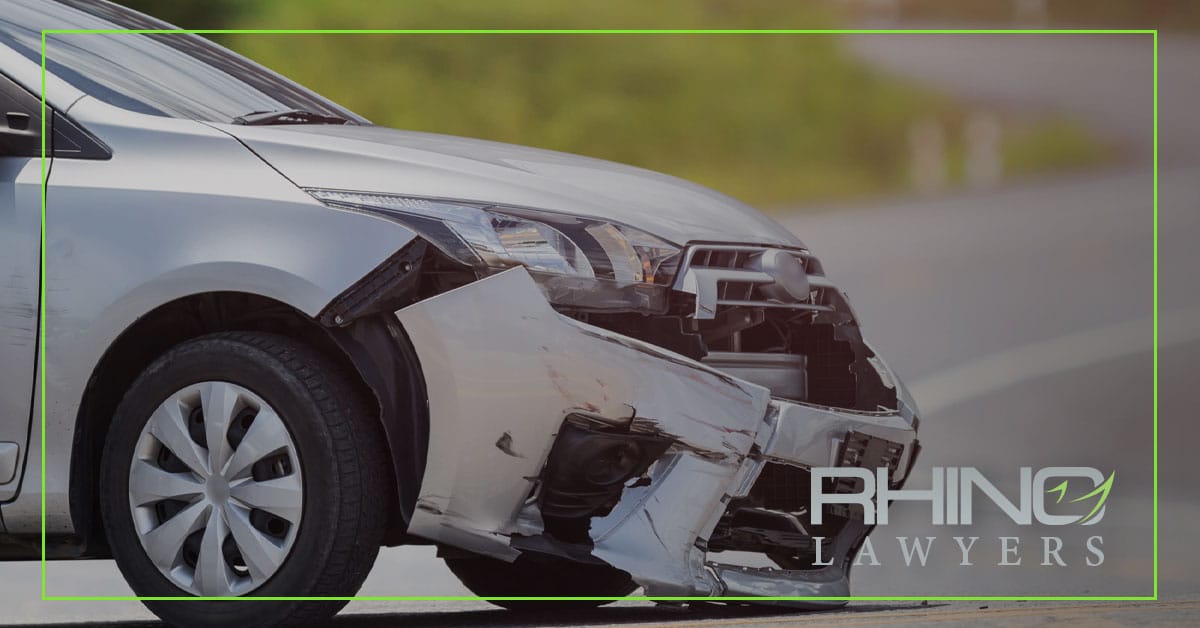
The Complete Guide on What to Do After a Hit and Run Accident

About one hit-and-run crash occurs every minute in the country. Do you know what to do if you’re in a hit-and-run accident? The steps you take following the accident could make a big difference in your future.
You could make a case for yourself and file a lawsuit. With a lawyer’s help, you can make a claim to receive compensation.
Otherwise, you’ll need to pay for any expenses out of pocket.
Don’t take the wrong steps after a hit-and-run car accident. Instead, have a plan!
Read on to learn more.
1. Move to a Safe Area
First, take a breath and try to remain calm. It’s normal to feel intense emotions, especially when you process what happened. Anxiety, fear, and anger are all common responses after a hit-and-run accident.
Remaining calm is essential. Otherwise, you could fail to use these steps. You’ll need to think with a clear head.
Do not leave the scene of the crash. Don’t drive your car or rush after the other driver, either.
By staying behind, you can use the rest of these steps to build your claim. Otherwise, you might incur penalties as well.
Is your car safe enough to drive? Take photos of your car first. If you think it’s safe, move to the side of the road.
Moving your car will ensure you’re out of the way of incoming traffic.
If you’re not sure, wait until the police arrive on the scene. They’ll know what to do next.
2. Call for Medical Help
Make sure to get checked out by a medical professional as soon as possible. You might think your injuries are only a few scrapes and bruises. It’s common for adrenaline to cover the full extent of your pain.
For example, did your head snaps forward and back during the collision? You might have sustained whiplash injuries. If you have musculoskeletal injuries, you might want to consult a chiropractor.
A doctor might suggest you visit a physical therapist as well.
Make a list of every specialist, treatment, and medication. Your lawyer will use this information when building your personal injury claim. These medical treatments will prove you were injured and help determine your losses.
Visiting a doctor will also prove you’re taking this situation seriously.
If your symptoms change, make a note and contact your doctor.
3. Assess the Damages
It’s important to take full stock of all damages after a hit-and-run auto accident. Your lawyer will use these records to determine your losses.
Remember, it’s important not to move your car until you take photos first.
After you move your car, complete a full walkaround.
Look for any leaking fluids. If you see a lot of leaking fluids near the front of your car, don’t move it.
Do you smell or see gasoline or smoke? Move away from the car immediately. Don’t drive it.
Does your car have a flat tire? Don’t move it. Instead, take photos of everything.
Start with taking photos about four feet away. Then, move closer when there’s a specific issue.
For example, you might notice there’s damage to the rear bumper or a headlight.
Make sure to gather photos from all four sides.
4. Gather Evidence
Were you able to catch any evidence regarding the other driver before they drove off? If you can, write down any information as soon as possible. That can include the:
- Color, make, and model of the vehicle
- Gender and any physical qualities of the other driver
- License plate number
Did anyone witness the crash? Speak with them. Ask if they saw any valuable information that can help your case.
Don’t forget to write down the witness’ contact information. Your lawyer might want to contact them later on.
Take a look around. Do you see any security cameras? If so, write down the name and address of the building.
If you can, try to get a photo of the car before it drives off.
In the meantime, make sure to gather photo and video evidence regarding your car. That can include damages and the location of the hit-and-run accident.
Take photos of any street signs as well.
5. Contact the Police
Make sure the police arrive at the scene of your car crash. Don’t leave before they file an official police report. Your lawyer will need a copy when filing your lawsuit.
Let them know exactly what happened without embellishing. If you saw anything to indicate who the driver was, let them know.
Ask the police for a copy of their report.
6. File an Insurance Claim
While you’re still at the scene of the accident, call your insurance company. Let them know you were involved in a hit-and-run. They’ll let you know how to proceed with your claim.
7. Call a Lawyer
Before filing a lawsuit, make sure to find a lawyer who is experienced with hit-and-run car accident cases. Their previous experience can help you avoid any costly mistakes.
There are over 135,221 personal injury lawyers. Not all of them focus on hit-and-run car accident cases, though.
Look for someone who has years of experience as an attorney. They should have years of experience in their focus area, too.
Make sure they’ve practiced in your state for a long period of time. Some driving laws differ based on where the accident occurred.
As you develop a list of lawyers, look online for reviews. Speak with some of their previous clients if you can. Speaking with previous clients will help you learn more about their abilities.
Schedule an in-person consultation. Let them know what happened. Bring the evidence with you as well.
Your lawyer can help you receive compensation for property damages, medical expenses, and pain and suffering.
Economic damages include your lost wages, car repair bills, and any medical bills. Non-economic damages, on the other hand, cover pain and suffering. Make sure to find an experienced lawyer who can calculate your losses properly.
Make a Case: 7 What to Do After a Hit-and-Run Accident
Do you know what to do after a hit-and-run accident? Keep this guide handy. With these tips, you can take every essential step when building your case.
Want to discuss the specifics of your case? We can help.
Schedule a free virtual consultation with a lawyer today!
CONTACT A TAMPA AUTO ACCIDENT ATTORNEY
In short, after a car accident, you may not know your rights. Above all, don’t struggle through the process alone. Actually, our personal injury team is here to help you with any legal needs you might have regarding your accident.
Lastly, let RHINO Lawyers answer your questions and review the facts of your case with a Free Consultation. So, get started by completing the “Free Instant Case Evaluation” or by calling us any time, day or night, at 844.329.3491.
Read More
What Are the Common Causes of Motorcycle Accidents?
A motorcycle is one of the most exhilarating vehicles to drive on the open road, but it’s also one of the most dangerous. Bikes represent a huge proportion of vehicle accidents and fatalities. In fact, motorcycle deaths are 28 times more frequent than deaths in any other vehicle—cars included. Are you a biker trying to stay safe on your commute, long trips, or quick zips through town? If so, keep reading for some of the most common causes of motorcycle accidents and how to avoid them.
Turning Left
Making a tight left turn on a motorcycle is dangerous enough, but there’s an even higher risk of an accident when a rider is near a car that’s turning left. According to data from the NHTSA, 42% of fatal accidents between a vehicle and a motorcycle happened as the other vehicle made a left turn. These motorcyclists were either passing that vehicle, passing another vehicle, or driving straight ahead when the accidents occurred.
The reason left turns are so dangerous all comes down to visibility. Many drivers aren’t expecting to see a motorcycle in their path when making a turn, and most bikes are small enough to fit within a car’s blind spot. The majority of left-turn collisions happen when the vehicle driver fails to see the motorcyclist before turning.
To avoid a left turn accident, always stay to the right side of the road and avoid passing near intersections.
Poor Road Conditions
Vehicle handling is a lot more challenging on two wheels than on four. As such, bikers need to always be aware of possible weather events and poor road conditions before driving anywhere. These could include:
- rain
- high wind speeds or gusts
- snow
- ice
- flooding
- storms
- road resurfacing or construction
- gravel or dirt roads
Unless you’re confident in your experience and sure you can safely navigate a slippery road surface, consider taking alternate routes or transportation in these conditions. Another clear, sunny day will come soon enough.
Inexperienced Riders
Even if they have a license, not every motorcycle rider is experienced enough to drive in heavy traffic. If you’re young and new to driving or just new to riding a bike, you should plan to spend dozens of hours practicing on backroads and in parking lots before you ever drive through town. Have an experienced rider or professional instructor help you gauge your ability to respond to situations and operate your vehicle.
Riding Under the Influence
Drugs and alcohol are even more dangerous for motorcycle riders than they are for other drivers. According to 2018 statistics from the Insurance Institute for Highway Safety, intoxication was behind almost 40% of all single-vehicle motorcycle deaths.
Because riding a motorcycle takes total concentration and heightened reflex speed, even a single drink is enough to render you incapable of riding safely. You should also avoid other drugs that slow your reaction time and judgment, like marijuana and narcotics.
Distracted Driving
Driving any vehicle on the road requires complete focus to avoid accidents. As such, anything that takes your eyes, minds, or hands away from driving is a no-go. This includes, but isn’t limited to:
- texting
- taking phone calls
- snapping photos
- using social media
- adjusting the radio
- eating or drinking
- fiddling with clothing or objects
If you see any other drivers doing these things while operating their vehicles, try to steer clear of them and stay aware of what they’re doing. If you’re tempted to do these things yourself, find a safe spot to pull over and completely stop your bike. Otherwise, try to have everything set and adjusted before you leave home.
Speeding
Because they’re so nimble, it’s easy to speed on a motorcycle without even realizing it. However, speeding is something you should avoid at all costs, even when there are no other cars in sight.
Why? A lot of it has to do with the fact that motorcycles can’t make tight turns or swerve at high speeds. If you encounter an unexpected obstacle—a pedestrian, an animal, a pothole, or a hidden turn—you may not be able to adjust your direction fast enough to avoid it. This leaves you to either hit something, run off the road, or tip your bike while trying to swerve.
Speed limits can be annoying, but they’re posted for a reason. Always stay aware of the local speed limit and leave home with plenty of time to make it to your destination.
Riders Passing and Splitting Lanes
Another one of the most common more frequent motorcycle accident causes is passing and/or lane splitting. Lane splitting occurs when bikers drive through the space between lanes, often in slow or stopped traffic.
Even if it looks like you might be able to fit, exercise extreme caution when passing or splitting lanes. Avoid them both whenever possible. Even though they should be looking out for motorcycles, most drivers aren’t expecting a bike to drive past them in this manner and might not see you in time.
Opening Car Doors
Most motorcycle safety advice tells bikers to always stay to the right side of the road. While this will keep you safer in most regards, it does pose a unique risk in areas with parallel parking.
Drivers usually check for cars before opening their driver’s side door. However, they may not see a smaller motorcycle approaching them. If they open their door right in front of you, you may not be able to stop or swerve to avoid it.
Be careful and drive slowly whenever you’re driving next to parallel-parked cars. Try to stay in the center of the lane so you can move to avoid them if a driver does open their door unexpectedly.
Steer Clear of These Common Causes of Motorcycle Accidents
Motorcycles give you unmatched freedom on the road, but with that freedom comes great risk. Staying aware of these frequent causes of motorcycle accidents can help you avoid many of the dangerous situations discussed above. Even so, accidents can still happen to the most careful of riders.
If you’ve been injured in a bike crash, finding a reliable motorcycle accident lawyer to represent your case is crucial. The attorneys at RHINO Lawyers of Tampa can help you get compensation for the damages, injuries, and even lost wages you sustained. To request your free case evaluation or to speak with a live representative, call us any time at 844.246.1238 or contact us online today.
CONTACT A TAMPA MOTORCYCLE ACCIDENT ATTORNEY
In short, after a motorcycle accident, you may not know your rights. Above all, don’t struggle through the process alone. Actually, our personal injury team is here to help you with any legal needs you might have regarding your accident.
Lastly, let RHINO Lawyers answer your questions and review the facts of your case with a Free Consultation. So, get started by completing the “Free Instant Case Evaluation” or by calling us any time, day or night, at 844.329.3491.
Read More
How Long Does a Car Accident Stay on Your Record and Affect Insurance?

Each year there are an estimated 6 million auto accidents in the United States. But what happens with your auto insurance after an accident occurs? And how long does a car accident stay on your record as a driver?
It can be intimidating not knowing what will happen after you are in an auto accident. But you’ve come to the right place for answers to those questions.
Continue reading and you’ll learn all about how an auto accident affects car insurance rates, as well as how long an accident will stay on your car accident record.
Importance of Your Driving Record
Every driver knows that your driving record is crucial for a multitude of reasons.
Your driving record is the primary tool that insurance companies will use in order to determine what your car insurance rates will be as well as the cost of your premium.
There are other factors that play into your insurance costs, like your zip code and your credit score. But your driving record is the largest determining factor for what you will be paying.
The more accidents and traffic violations you have on your driving record, the more your insurance will cost you every month.
If you have been in a significant number of accidents or have a lot of violations you may even end up being categorized as a “high-risk” driver.
If that is the case, your insurance company might require that you get non-standard insurance.
Conversely, if you have a clean driving record you might qualify for cheaper rates and discounts as a reward for being a safe driver.
The good news is that even if you have accidents or violations on your driving record, it isn’t forever.
After a certain amount of time (usually 3-5 years) your violations and accidents will drop off and you will have a clean record. At that point, your insurance will no longer be affected.
How Long Does a Car Accident Stay on Your Record?
Any driver with a drivers’ license has a motor vehicle record or MVR. A motor vehicle record catalogs any accidents you may have as well as speeding tickets or other moving violations.
Luckily these incidents won’t stay on your record for eternity. The length of time that they remain on your record depends on how severe the accident or violation was, and the laws of the state that you live in.
Each state has its own Department of Motor Vehicles (DMV), and each DMV has its own policy regarding accidents and violations, and the length of time that they will remain on your driving record.
A lot of states utilize a point system, with certain violations causing you to accrue points. If you accrue too many points your license will be suspended and you will no longer be allowed to drive a motor vehicle.
Take Florida for example. In the state of Florida, speeding will get you 3 points on your driving record. Failure to obey a traffic signal is worth 4 points, and leaving the scene of an accident without providing your information is worth 6 points.
The suspension system for points in Florida works like this:
- 12 points in 12 months
- 18 points in 18 months
- 24 points in 36 months
If you accrue 12 points in a 12-month timespan, you will face a 30-day suspension of your drivers’ license.
If you accrue 18 points in 18 months the penalty is a 3-month suspension of your license, and if you accrue 24 points in 36 months your license will be suspended for an entire year.
So How Long Does an Accident Affect Your Insurance?
While an accident in recent years can still affect your insurance rates, at some point it will fall off of your record and no longer be taken into consideration by insurance companies.
The majority of insurance companies will look at the past 5 years of your driving record, so an accident 6 or more years ago would not be a factor in your insurance premium.
There are some insurance companies that will even look at just the past 3 years of your driving record.
Additionally, even with accidents or violations on your driving record, some car insurance companies will reward you for good driving over an extended period of time and your rates will begin to drop.
Depending on what state you live in. There may be laws about the kinds of accidents or violations that insurance companies can consider. As well as the length of time they are allowed to go back.
Does a No-Fault Accident Affect Your Insurance?
In the majority of cases, getting in a car accident that is not your fault will not increase your monthly auto insurance payments. This is due to the insurance of the at-fault driver handling the costs of the damages and medical bills.
As long as your insurance company doesn’t give you any money for handling the claim. Then your insurance rates will not change at all and you will not be punished.
You are at risk of your insurance increasing after a no-fault accident if you have a record of car accidents that were your fault. In these instances, drivers can see an increase in their payments of up to 10%.
If your rate does increase there are some ways that you can try to lower it. Bundling your insurance policies can save you money through discounts that your insurance provider may offer as an incentive.
Raising your deductible is another option for getting lower monthly payments if your insurance increases.
If you aren’t comfortable with those options you can always shop around for a better policy through a different provider.
Knowledge Is Power
The more knowledge you have the better off you are. Knowing the answer to questions like, “How long does a car accident stay on your record?” can save you time, stress, and money.
Read here for more helpful tips that will make your driving experience cheaper and stress-free.
CONTACT A TAMPA AUTO ACCIDENT ATTORNEY
In short, after a car accident, you may not know your rights. Above all, don’t struggle through the process alone. Actually, our personal injury team is here to help you with any legal needs you might have regarding your accident.
Lastly, let RHINO Lawyers answer your questions and review the facts of your case with a Free Consultation. So, get started by completing the “Free Instant Case Evaluation” or by calling us any time, day or night, at 844.RHINO.77.
Read More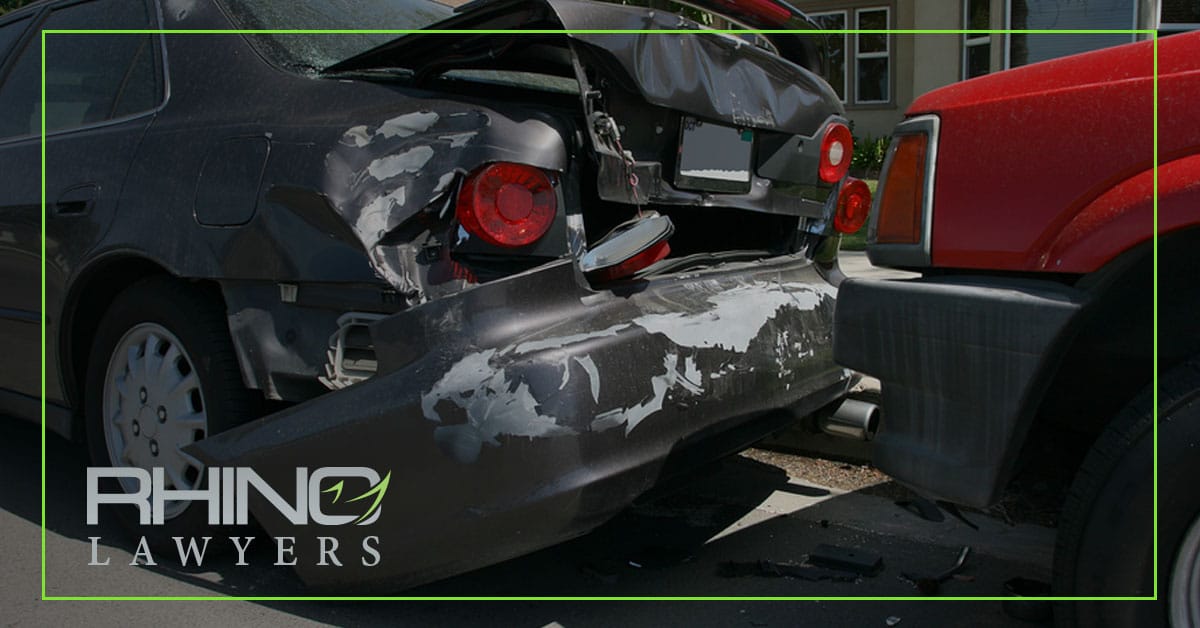
Determining Fault in a 3 Car Accident: The Ultimate Guide
Have you or a loved one recently been involved in a 3 car accident? Are you curious to learn how it’s determined which one of you will be held liable for the repairs? If so, then you need to learn all that you can about determining fault after a car accident with 3 vehicles.
Doing so can keep you well-informed throughout the process. You will learn the steps that you need to take—whether you think you’re at fault or not—to give yourself peace of mind.
See below for an in-depth guide highlighting the several things that you need to know when you are involved in a 3 car accident.
What Is a Chain Reaction Crash?
At its simplest definition, a chain reaction crash is any car crash or accident that involves more than two vehicles making contact with one another. However, even when there are multiple cars involved, there is often one driver that’s determined to be at fault for the accident.
So how do we sort this out? It depends on the situation. Generally, a chain reaction crash starts with two cars that hit each other. That collision leads to other cars getting involved in the accident after the initial crash occurs.
For example, let’s say there was a 3-car accident on the highway. The driver in car 1 doesn’t check his/her blind spot before merging over into the other lane—without using their turn signal. Causing car 2 to hit the bumper to bumper. Car 3, who is driving behind them at 65 miles per hour, slams on his brakes but still makes contact with both cars.
This is one example of a chain reaction crash. In this example, car 1 would likely be deemed the at-fault driver. Granted, most chain reaction crashes aren’t as easy to sort out. Oftentimes, there isn’t one clear-cut person at fault.
Possible 3 Car Accident Situations
There are many different ways in which a 3 car accident can occur. If you’ve been involved in one, view the list below to see if one applies to your situation. And what that might entail for you moving forward.
1. Malfunctioning Vehicle
This might be the cloudiest of all 3 car accidents. As the name would imply, this 3 car accident occurs when a vehicle malfunction is what led to the accident.
As an example, Driver 1’s vehicle gave out on him while driving. That causes Driver 2 to hit him and then Driver 3 to follow.
In this instance, the manufacturer of the car part is at fault. All three parties—and their car accident lawyer—will likely pursue legal action against the manufacturer to get compensated for their losses.
2. Phantom Car at Fault
Even if you feel that the at-fault driver in your 3 car accident has no option but to claim fault, don’t be so sure. It isn’t rare for an at-fault driver to pass the blame off to a fourth car.
This is what’s referred to as a “phantom car”. One that may have been at fault for the accident, but drove off without a scratch on them.
For example, if Driver 1 had a phantom car cut him off, he would’ve had to slam on his breaks. Which led to Driver 2 hitting him, then Driver 3 getting involved as well.
3. Rear Car At Fault
In this case, the “rear car” refers to the first car that made contact with the vehicle in the front of the chain reaction accident.
So if Driver 1 is hit in the back by Driver 2, who is then hit in the back by Driver 3, Driver 2 would be considered the “rear car”. There might also be a situation in which Driver 3 hits the back of Driver 2, which pushes their momentum forward to hit Driver 1 in front of them.
In these cases, the rear car is almost always considered to be at fault. However, there might always be the negligence of the other drivers that are to blame for the accident as well. This brings us to the last one…
4. Negligent Driving
Driver 2 or the “rear car” listed above, shouldn’t be held liable if Driver 1’s negligence led to the crash.
A common example of this is if Driver 1 was texting and driving. They could slam on their breaks just enough to cause Driver 2 to hit their bumper. Which then causes the chain reaction.
If this is your situation, then you and your car accident attorney need to compile evidence that proves another driver’s negligence was the root cause of the entire crash.
Hire a Trusted Car Accident Attorney
Regardless of the situation, you’re in with the crash, you need to find a trusted car accident attorney to represent you. This can give you the legal edge you need.
You can bet that the other two parties will lawyer up. So, to go through this process without one would be to sabotage your case.
The car accident attorney can use their resources and network to build evidence. As well as, prove the negligence of one of the other drivers. They can also provide direction on how much compensation you’re entitled to and take over communications during the settlement stage.
Find Legal Representation for Your 3 Car Accident Today
Now that you have seen an in-depth description of how the fault might be determined in your 3 car accident case, be sure to find the right lawyer to represent you.
Be sure to read this article for more information on how to become a better driver and minimize your risk of being involved in an accident.
To get started, please visit this page to schedule a free video consultation with our firm and we will be happy to assist you further.
CONTACT A TAMPA AUTO ACCIDENT ATTORNEY
In short, after a car accident, you may not know your rights. Above all, don’t struggle through the process alone. Actually, our personal injury team is here to help you with any legal needs you might have regarding your accident.
Lastly, let RHINO Lawyers answer your questions and review the facts of your case with a Free Consultation. So, get started by completing the “Free Instant Case Evaluation” or by calling us any time, day or night, at 844.RHINO.77.
Read More
What Is Considered Careless Driving?
Every year in Florida there are more than 400,000 car accidents. Many of these are careless driving antics.
As a driver, you must drive responsibly and courteously. When you’re behind the wheel of a car, you could cause an accident simply through carelessness. If you’re caught out driving in this fashion, you could receive a careless driving ticket.
If you have received a careless driving ticket, you may be wondering what the next step should be.
In this article, we’ll talk about careless driving in Florida and what you can do to defend yourself if you have a ticket.
What Is Careless Driving?
In Florida law, careless driving is defined as anyone not operating a vehicle on the roads in a careful and prudent manner.
The law states that you need to pay attention to the width, grade, curve, corners, and other traffic on the road. You must not endanger anyone else’s life, nor cause injury or damage to any person’s property.
To be clear though, no injury or harm needs to come to anyone and no damage needs to have occurred for the charge to be given.
How Much Is a Careless Driving Ticket?
Careless driving is a moving violation.
If you get caught and charged with it you can expect to receive a fine of up to $500 as well as any court costs if you are adjudicated guilty. Adjudication is a term that is used in place of ‘convicted’ on a non-criminal case.
The minimum fine that you can expect to receive for careless driving is $160.
How Many Points Is Careless Driving?
In addition to having a fine, you will also get points on your license.
You can expect to receive four points on your driver’s license if you are adjudicated guilty. In some cases, you can have the number of points you receive reduced if you are willing to take a driver education course.
Drivers who have had points applied to their license can expect to see an increase in the cost of their automobile insurance.
Careless Driving vs Reckless Driving
So what is the difference between careless driving and reckless driving?
Careless driving is not a criminal offense, whereas reckless driving is. Reckless driving is defined as driving a vehicle with a disregard for other people’s safety.
Some examples of reckless driving include:
- Drag racing on a public road
- Distracted driving
- Driving under the influence of drink or drugs
- Failure to yield to pedestrians or anyone that has the right of way
- Swerving through traffic in a dangerous way
- Running red lights and stop signs without any regard for the safety of others
The penalties for reckless driving could be up to 90 days in jail, and a fine of up to $500. If a person is convicted more than once, the penalties become steeper.
The fines could be up to $1,000 and a person may go to jail for up to six months.
In the event that a person’s reckless driving causes serious injury or death, they will face a fine of $5,000 and up to five years in prison.
Defending a Careless Driving Ticket
A careless driving charge is reliant on the opinion of the officer making the accusation. A person may face these charges when their driving was not actually a danger to other people.
Another reason that someone may face a careless driving ticket is if they were swerving to avoid a dangerous situation.
There may be times when a driver needs to make a decision that makes it look as though they were not driving with due care and attention when in reality they were trying to stop something bad from occurring.
Other defenses for careless driving tickets include:
- If you were wrongly accused as you were not the person who was driving
- You hit another vehicle, however, you were driving in a way that was careful and prudent
- If you hit another vehicle because of bad weather
- You hit another vehicle because another vehicle crashed into the back of yours
- There was a defect in your vehicle which caused you to drive in a way that looked like you were being careless
- Your mechanic failed to maintain your vehicle which caused an operating error that made it look as though you were driving carelessly
Regardless of the reason for the careless driving, a person being charged will be based on the opinion of the officer. This means that the case can be challenged and won with the right defense.
Challenging Your Careless Driving Ticket
If you get a careless driving ticket, you should challenge it. The first thing that you will need to do is to hire an experienced traffic defense lawyer.
Having a lawyer on your side that understands the specifics of the traffic laws and who has represented numerous clients in similar situations to yourself will put you in good stead for winning your case.
Hire an Experienced Lawyer
Careless driving is when you are driving without due care and attention.
Getting a careless driving ticket doesn’t necessarily mean that you’ll end up with a $500 fine and four points on your driver’s license. It is possible that with the right defense you can have your ticket overturned.
Have you had a careless driving ticket? Rhino Lawyers are here to help you. Get in touch today to find out how we can help you.
CONTACT TAMPA TRAFFIC TICKET ATTORNEY
RHINO Lawyers can help and guide you through a system molded by law enforcement, judges, and lawyers for decades. Having won cases for our clients in similar circumstances, our criminal defense team knows what it takes to fight on your behalf.
Let RHINO Lawyers answer your questions and review the facts of your case with a Free Consultation. So, get started by completing the “Free Instant Case Evaluation” or by calling us any time, day or night, at 844.329.3491.
Read More